
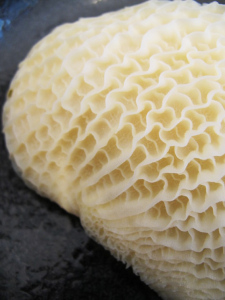
 Adventures in Offal, Part I
For some time now I’ve been thinking the origins and illogic about my squeamishness about offal. This was prompted by my coming across a rather wonderful essay titled ‘Picky Eating is a Moral Failing’, by Matthew J Brown, in this book, Food and Philosophy.
Brown’s essay elegantly articulates the frustrations I usually feel when I hear someone say “I don’t eat olives / oysters / pumpkin / spinach /whatever”. The crux of his argument is that to be a ‘picky eater’ - he exempts ethical vegetarians and people with physical conditions like peanut allergy or lactose intolerance - is not only to create distance between oneself and others (especially a host who may have offered the prohibited food), but to choose a narrow, ignorant path through life. He says picky eating is a wilful decision to close one’s mind, shutting down the possibility that a previously unpleasant experience could at another time be found bearable or even pleasurable, and leads to the limiting belief that obstacles should be avoided rather than overcome. In short, Brown believes that to cordon off various foods on the basis that you ‘don’t like’ them is generally to limit one’s potential to grow into an open-minded, generous, fully rounded human being. I love what he says, and agree with pretty much all of it. And I love the fact he’s prepared to take the risk of such a provocative title, too.
Anyway, of course the article challenged me to think about my own food aversions. I like to tell people I eat anything, and I certainly would eat any food offered to me by the person who cooked it - but reading this essay made me think more about my own quite extreme squeamishness where offal is concerned. Although I am an enthusiastic meat eater, I have never really eaten innards, apart from the odd taste here and there, when I have been surprised into enjoying some of it (most particularly in Asian restaurants, Chinese and Laotian especially). But I have certainly never cooked it, nor chosen it from a menu of my own volition.
At the same time as I became enamoured with Brown’s essay, I was reading a little about the US academic Paul Rozin’s research into the emotion of disgust - and how much of it relates to animality. After decades of research Rozin and his colleagues have concluded, it seems, that the things that most disgust us in Western society are those to do with what might be called base bodily functions - shit, piss, vomit, snot and so on - and with the breach or violation of the ‘body envelope’. With the deep taboo, that is, of innards. Rozin thinks we are disgusted by these things because they remind us of our own animality - and, closely related, our mortality.
So it would seem that according to Mr Rozin, my aversion to liver, kidneys, tongue, brains, gizzards and so on can be traced to a quite natural human fear of my own death. I see a cow’s tongue on the plate, which looks so like a tongue - looks, indeed, so like my tongue, with its entirely recognisable tongue-y shape and little bobbles of tastebuds. And so, deep in my mind is drawn a connection between the death of the creature who owned this tongue, and my own death.
It all makes perfect sense to me, this theory of disgust and my own fear of death - for my aversion to offal doesn’t extend to beef cheeks, say, or pig’s trotters. I love meat of all kinds - the outer casing, if you like, of an animal. But it’s the innardness that has always made me squirm.
But all of this makes no logical sense, of course. And it’s wasteful - to decide that some bits of an animal are perfectly fine to eat, but others taboo, goes against all the other views I have begun to hold dear about not wasting food. And surely eating meat is slightly more acceptable if the whole creature is put to use, rather than the more decadent-seeming practice of picking and choosing small bits and wasting the rest?
So far, so psychological.
In light of all this I decided it was time to have a good look at and begin to test these fears of mine, to see exactly how strong was my aversion to handling, cooking and eating offal - and whether my squeamishness was purely psychological or did have something to do with taste and texture after all.
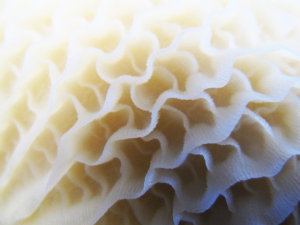 So begins, friends, my adventure into offal. Enter the frilliest of all innards - tripe.
I chose tripe (the lining of an animal’s stomach, as you all no doubt know - in this case, cow) as offal adventure number one for a couple of reasons. First, because I have only ever eaten it once before, as a child, and it was so disgusting (in sludgy white sauce, natch) that even my parents didn’t eat it and allowed us all to leave it on our plates - unheard of in our house. But as adulthood has brought many examples of how decent cooking methods and recipes can render previously disliked foods into new favourites, and if the Italians love tripe, smothered in tomato, garlic, parsley and so on, I figured - how bad could it be?
Second, I decided that tripe could surely be no more squidgy and bouncy and rubbery than squid or octopus, both of which I love, and must be bland enough in flavour to allow the aforementioned tomatoey goodness to mask any creepiness of taste.
So today, I tried Stephanie Alexander’s ‘beginner’ tripe recipe - “Tripe with tomato and lots of parsley”. Here is my introductory tripe dish, Ms Alexander writes, a blend of French and Italian traditions. It can be prepared well ahead and reheated before serving. If you don’t like this, you don’t like tripe.
First job was to thaw the tripe we bought from the ordinary butcher across the road - if I was going to do this thing, it was a case of seizing the moment and I hadn’t seen tripe on the list at www.featherandbone.com.au, though I’m sure they would have got me some if I’d asked. Tripe is often sold frozen, apparently - I guess because hardly anybody wants it anymore.
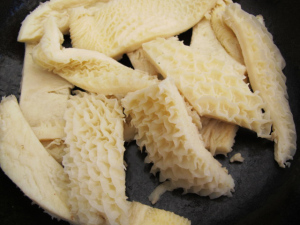 Stephanie makes it clear the tripe should be bleached and parboiled, though our butcher (who seemed quite averse to the whole thing himself) couldn’t tell us whether it had been parboiled. A re-reading of Stephanie’s tripe section seemed to indicate that if it’s white or creamy coloured you can assume it’s bleached and parboiled, but times vary (unbleached tripe is grey, apparently, and I can tell you now there is no way I would have managed to be grownup about this if I were faced with grey innards - euurrgggh).
Once thawed, the whole bit of tripe (about 200g) was quite a pretty little pouch of a thing - a kind of soft, frilly sea sponge, and lovely to the touch. Next step was to cut it into strips, make the soffrito, add some bacon (mmm), tomato & vinegar, and then bung in the tripe bits, cook for 30 to 45 minutes. This is where I grew a bit nervous, not knowing what exactly the texture should be.
I decided that I would pretend the tripe was squid - both as a textural guide and to start bending my resistant mind to the possibility of eating it - and was hoping for a similar texture once cooked to tenderness. I consulted Twitter’s resident expert on all things culinary, @crazybrave (aka Miz Zoe who you will recognise from the comments round these parts) who confirmed that I was on the right track. It should have ” a little resistance to the tooth and then be slippery and springy”, she said.
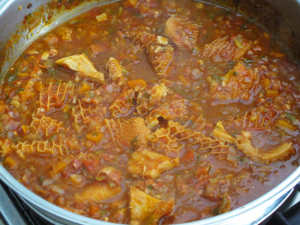 I ended up cooking it for a bit over an hour to get this texture, which was almost right I think. I wonder though if another 10 or 15 minutes might have made it just a tiny bit softer and more pleasing. I tossed a few big spoonsful into a ramekin, topped it with parmesan cheese and bunged it under the grill for a few minutes., as suggested by Stephanie.
Then came the big moment - I tried one piece, and found it really quite revoltingly springy and chewy, though it was tender enough. What was really quite fascinating to observe was how it was my mind that caused the problem. With every chew, my mind screamed: Stomach lining! Quivery Slimy Thing! Animal Innards! DEATH!
I decided the size of the piece was an issue, and cut the remaining pieces into much smaller ones - Stephanie recommends a strip 2cm by 6cm, but I would suggest for tripe novices these are too confronting. A much smaller slice, eaten with lots of the extremely delicious sauce, is far easier to contemplate. In this way, and by focusing very hard on imagining how my mind would be working if this were squid - Yum! Springy! Tender! Lovely Surprising Texture! - I chomped happily away on a small ramekin full of tripe. Yes, there was a teeny tiny odd twinge of an unusual flavour - which could just as easily have been my imagination - and yes, the frills certainly added a textural frisson that might take some getting used to. But all in all, it was completely fine.
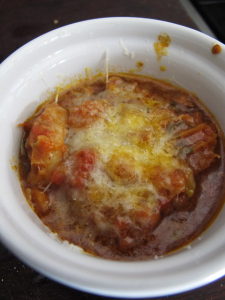 Senor arrived home just as the eating experiment began, and wolfed into a bowl of tripe himself. Being the iron-guts and utterly unflappable gourmand he is, of course he had no truck whatsoever with my mental carry-on, and pronounced it delicious. We still have three more bits of tripe in the freezer, and Senor has declared he’s going to get into a bit of tripey experimentation himself.
So what’s my verdict? What’s the disgust quotient? Well, it was perfectly fine. I was not revolted, as I had expected. But I didn’t love it, and I am fairly sure it will be a long while before I try cooking it again. I have other adventures in innards to pursue, after all.
But if I visited your house and you plonked down a huge bowlful of this stuff, I would no longer stiffen in terror and allow my stomach to flip over itself in panic and revulsion. I already feel much more grownup about tripe, and as a result have much more interest in exploring other offally avenues. And who knows, on another tasting or two (Senor’s cooking next time) I might even find, as I have with so many foods since childhood, from chilli to muesli to oysters, that it soon grows on me and I like it very much.
So what about you? Any offal fans? When was the first time you ate it, and what made you like it?
 I have a little quest, and I think all my beloved shuckers are just the folk to help me. I need to compile a list of novels in which food and cookery is central - can be any genre, any era, just so long as food is somehow inextricably linked to the story and the characters. Australian novels most particularly welcome, but all suggestions will be very warmly welcomed. As we’ve discussed before
  Earlier this year I happened to be travelling for a week in the company of two vegetarians, and was shocked by the severely limited options they had in restaurants.
 The topic of fondue arose recently, as it does now and then among friends when drink has been taken.
 So there we have it - a yicky gloopy mix borne of near-starvation becomes a classic fad for ‘entertaining of the more intimate type’, and into the bargain produces perhaps the earliest example of Fusion Food. As evidence, I leave you with the list of ingredients for my favourite recipe in this collection.
 Well, it doesn’t happen very often, but it did last night. I cooked a Truly Revolting meal for my beau and myself.
 Pollan’s essay goes on to discuss the exponential rise of television cookery, and how American studies show that people spend more time watching cooking being done than doing it themselves (particularly interesting given the popularity of Master Chef here, and the talk about how it’s supposedly got people back into the kitchen. I wonder…).
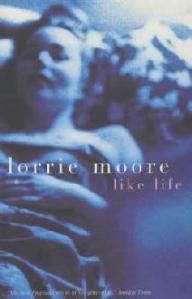 Another taste of food-in-fiction from the superlative
  The Empress and her
 subscribe
 How to shuck an oyster