Archive for the ‘ethics’ Category

h1

Use your mussels

August 7, 2011

It’s not often that Tim Winton gets together with my mother-in-law and Jared Ingersoll in our kitchen, but that’s what happened this week.
Tempted as I am to leave it at that, let me explain …

You may recall a little while ago I made this incredible – and, technique-wise, rather elaborate  – crab bisque from an Ingersoll  recipe. Soon after that we dined with Annie, my husband’s mum, who is a great cook and made the most delicious mussel soup for us (serving it from her beautiful old tureen). Annie’s bisque was just as velvety and rich as our crab version but, it seemed, involved rather less work. Getting the meat out of a mussel is rather easier than taking a hammer to a crab and picking out the shell, let’s face it, and I resolved to try it some time.

Meanwhile, returning home after a writing retreat, this week I checked out the Sustainable Seafood Guide produced by the Australian Marine Conservation Society – of which writer Tim Winton is patron (you really didn’t think I would be able to pull it all together, did you…).

I’m sorry to say that the SSG is a very depressing little booklet – you can buy a copy, or see the online version here.  Hoping for a few tips on the most ecologically sound fish to eat, I was completely stunned to find that almost every type of seafood I have ever eaten is on either the danger list (‘think twice’) or basically completely unsustainable (‘say no’). 

According to the AMCS we should Think Twice before eating wild version of prawns (also farmed ones), barramundi, blue eye trevalla, Balmain bugs, dory, flathead, lobster, ocean perch, among many others.

Even worse, the Say No list includes farmed Tasmanian salmon (or Atlantic or smoked salmon), imported farmed prawns, farmed barramundi, snapper, orange roughy (we knew about this one and haven’t eaten it in years), wild scallops, wild swordfish, farmed trout, wild tuna of various kinds, imported canned tuna, farmed yellowtail kingfish – among others.

Although wild fish populations are being decimated, if you were under the impression you were protecting the environment by eating farmed fish, as I vaguely was, think again.

As the AMCS and the excellent resource Good Fish Bad Fish explain, farmed fish are often  produced in open sea cages with potential for serious pollution and fish escapes into the wild, along with transfer of diseases into wild fish populations. Fish in sea cages are primarily “carnivorous species with significant reliance on wild fisheries to supply feed” – and up to 5kg of fish meal from wild sources is needed to produce 1kg farmed fish.

Other farming involves semi-closed aquaculture systems – like prawn farming – in which water is exchanged between the farm and a natural waterway. These pond systems are often located adjacent to waterways, where coastal wetlands and mangroves are reclaimed for development, resulting in “a vast loss of habitat which is critical for the juvenile stage of many species”. They can also pollute surrounding waterways, and like the cage fish, often rely on wild species to feed the stock.

More acceptable farming methods are the closed aquaculture systems – land-based ponds where there is no risk of pollution to open waters (although wild fish are still often used for feeding) – and “passive-feeding” open systems using sticks, ropes, racks and cages but natural feeding. The latter is used for oysters (hooray!), mussels and other filter-feeder species.

The Good Fish Bad Fish site is rather more cheering than AMCS site, with a brilliantly designed ‘seafood converter’ to push your dinner in a more sustainable direction. However, I can’t help but wonder if turning to the more flexible Good Fish Bad Fish because we don’t like the AMCS advice is simply burying our head in the sand of the sea floor even more. (That said, the GFBF site links to the AMCS site and other resources quite comprehensively, so they are on the same page.)

So far, so deeply dispiriting. But there is some good news –  there are lots of delicious seafood species on the AMCS  ‘Better Choice’ list – including various species of wild mahi mahi, moonfish, leatherjacket, King George whiting, oysters, mussels, squid, calamari, cuttlefish, octopus.

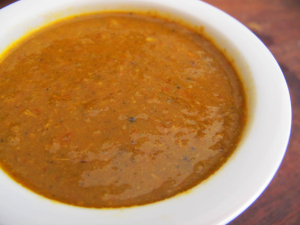
All of which brings me – slowly, I know! – back to my mussel soup. Inspired by Annie’s soup,  Tim’s commitment  and Jared’s recipe (as well as the quite magnificent lobster-topped soup tureen I was given by Annie and my lovely in-laws L&B for my birthday – thanks guys!), I adapted the crab bisque  to come up with an easy and very delicious spicy mussel version.

Before the recipe, a quick note on the texture – on this first attempt I began by using the mouli, then the stick blender, and finally the food processor, but the result was still a little fibrous, especially with strings of celery somehow escaping all pureeing methods. Next time I am going to simply puree all the vegetable and mussel mix before adding to the stock, which is what I’m advising in the recipe below. I would love to hear if you try it, and how it goes.

Spicy mussel bisque – serves 4

  • 1 teaspoon each cumin, caraway, coriander seeds and half a teaspoon fenugreek seeds
  • 1/3 cup soft brown sugar
  • pinch chilli flakes
  • salt and pepper
  • 150ml vegetable oil
  • 1.5 large red capsicums, seeded & chopped
  • 4 cloves garlic, squashed
  • 2 ripe tomatoes, chopped
  • 1 stick celery, roughly chopped (it may be worth peeling this first if you can be bothered)
  • 1 medium fennel bulb, roughly chopped
  • 1 red onion, chopped
  • ½  bunch coriander, leaves & stems separated
  • 1.5kg black (or ‘blue’ mussels)
  • 600ml chicken stock (I used homemade  - if you use packaged, lay off the seasoning of the soup)
  • (optional) 2 tablespoons Yalla harissa – I love this stuff and keep a pot of it in the freezer at all times for digging into to add extra kick to all kinds of dishes. If you don’t want or can’t find this, you could perhaps double the spice mix and chilli at the beginning for some extra kick

Method

  1. Toast the spices in a dry frying pan until fragrant, then grind in mortar & pestle or spice grinder.
  2. Heat a deep roasting tin in the oven or on the stove top and when hot, add the oil and all the vegetables except coriander leaves.
  3. Sprinkle the spices over the vegetables with the sugar, chilli flakes & seasoning and mix well and roast in a moderate oven for about 1 hour.
  4. Meanwhile, scrub and de-beard the mussels, then place in a covered pan over a medium heat with a big glass of white wine for about 10 minutes, or until the mussels are opened. Remove them from the pan to cool, reserving the cooking liquid.
  5. When the shells are cool enough to handle, remove the meat from the shells and set aside.
  6. When the vegetables are soft, smell good and are a little coloured, remove from oven.
  7. Transfer the vegetables and the mussel meat into the large bowl of a food processor and puree till smooth – or keep it coarse if you prefer a more rustic texture.
  8. In a sizable pot add the stock to the mussel cooking liquid, then add the puree and simmer gently for about 15 minutes.
  9. Add the chopped coriander leaves and harissa if using, stir to combine, and serve with crusty bread.
h1

The Big Frill

July 9, 2011

Adventures in Offal, Part I

For some time now I’ve been thinking the origins and illogic about my squeamishness about offal. This was prompted by my coming across a rather wonderful essay titled ‘Picky Eating is a Moral Failing’, by Matthew J Brown, in this book, Food and Philosophy.

Brown’s essay elegantly articulates the frustrations I usually feel when I hear someone say “I don’t eat olives / oysters / pumpkin / spinach /whatever”.  The crux of his argument is that to be a ‘picky eater’ – he exempts ethical vegetarians and people with physical conditions like peanut allergy or lactose intolerance – is not only to create distance between oneself and others (especially a host who may have offered the prohibited food), but to choose a narrow, ignorant path through life. He says picky eating is a wilful decision to close one’s mind, shutting down the possibility that a previously unpleasant experience could at another time be found bearable or even pleasurable, and leads to the limiting belief that obstacles should be avoided rather than overcome. In short, Brown believes that to cordon off various foods on the basis that you ‘don’t like’ them is generally to limit one’s potential to grow into an open-minded, generous, fully rounded human being. I love what he says, and agree with pretty much all of it.  And I love the fact he’s prepared to take the risk of such a provocative title, too.

Anyway, of course the article challenged me to think about my own food aversions. I like to tell people I eat anything, and I certainly would eat any food offered to me by the person who cooked it – but reading this essay made me think more about my own quite extreme squeamishness where offal is concerned. Although I am an enthusiastic meat eater, I have never really eaten innards, apart from the odd taste here and there, when I have been surprised into enjoying some of it (most particularly in Asian restaurants, Chinese and Laotian especially). But I have certainly never cooked it, nor chosen it from a menu of my own volition.

At the same time as I became enamoured with Brown’s essay, I was reading a little about the US academic Paul Rozin’s research into the emotion of disgust – and how much of it relates to animality. After decades of research Rozin and his colleagues have concluded, it seems, that the things that most disgust us in Western society are those to do with what might be called base bodily functions – shit, piss, vomit, snot and so on – and with the breach or violation of the ‘body envelope’. With the deep taboo, that is, of innards. Rozin thinks we are disgusted by these things because they remind us of our own animality – and, closely related, our mortality.

So it would seem that according to Mr Rozin, my aversion to liver, kidneys, tongue, brains, gizzards and so on can be traced to a quite natural human fear of my own death. I see a cow’s tongue on the plate, which looks so like a tongue – looks, indeed, so like my tongue, with its entirely recognisable tongue-y shape and little bobbles of tastebuds. And so, deep in my mind is drawn a connection between the death of the creature who owned this tongue, and my own death.

It all makes perfect sense to me, this theory of disgust and my own fear of death – for my aversion to offal doesn’t extend to beef cheeks, say, or pig’s trotters. I love meat of all kinds – the outer casing, if you like, of an animal. But it’s the innardness that has always made me squirm.

But all of this makes no logical sense, of course. And it’s wasteful  - to decide that some bits of an animal are perfectly fine to eat, but others taboo, goes against all the other views I have begun to hold dear about not wasting food. And surely eating meat is slightly more acceptable if the whole creature is put to use, rather than the more decadent-seeming practice of picking and choosing small bits and wasting the rest?

So far, so psychological.

In light of all this I decided it was time to have a good look at and begin to test these fears of mine, to see exactly how strong was my aversion to handling, cooking and eating offal – and whether my squeamishness was purely psychological or did have something to do with taste and texture after all.

So begins, friends, my adventure into offal. Enter the frilliest of all innards – tripe.

I chose tripe (the lining of an animal’s stomach, as you all no doubt know – in this case, cow) as offal adventure number one for a couple of reasons. First, because I have only ever eaten it once before, as a child, and it was so disgusting (in sludgy white sauce, natch) that even my parents didn’t eat it and allowed us all to leave it on our plates – unheard of in our house. But as adulthood has brought many examples of how decent cooking methods and recipes can render previously disliked foods into new favourites, and if the Italians love tripe, smothered in tomato, garlic, parsley and so on, I figured - how bad could it be?

Second, I decided that tripe could surely be no more squidgy and bouncy and rubbery than squid or octopus, both of which I love, and must be bland enough in flavour to allow the aforementioned tomatoey goodness to mask any creepiness of taste.

So today, I tried Stephanie Alexander’s ‘beginner’ tripe recipe – “Tripe with tomato and lots of parsley”.  Here is my introductory tripe dish, Ms Alexander writes, a blend of French and Italian traditions. It can be prepared well ahead and reheated before serving. If you don’t like this, you don’t like tripe. 

First job was to thaw the tripe we bought from the ordinary butcher across the road – if I was going to do this thing, it was a case of seizing the moment and I hadn’t seen tripe on the list at www.featherandbone.com.au, though I’m sure they would have got me some if I’d asked. Tripe is often sold frozen, apparently – I guess because hardly anybody wants it anymore.

Stephanie makes it clear the tripe should be bleached and parboiled, though our butcher (who seemed quite averse to the whole thing himself) couldn’t tell us whether it had been parboiled. A re-reading of Stephanie’s tripe section seemed to indicate that if it’s white or creamy coloured you can assume it’s bleached and parboiled, but times vary (unbleached tripe is grey, apparently, and I can tell you now there is no way I would have managed to be grownup about this if I were faced with grey innards – euurrgggh).

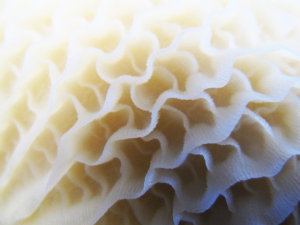
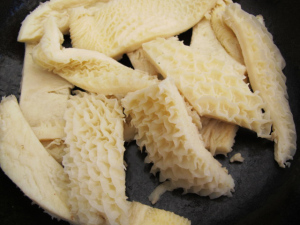
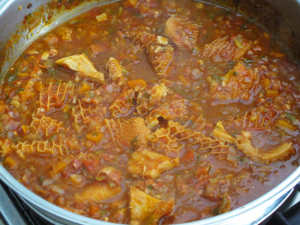
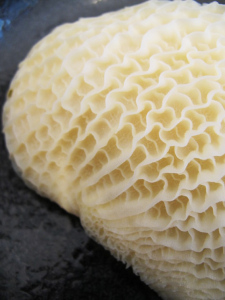
Once thawed, the whole bit of tripe (about 200g) was quite a pretty little pouch of a thing – a kind of soft, frilly sea sponge, and lovely to the touch. Next step was to cut it into strips, make the soffrito, add some bacon (mmm), tomato & vinegar, and then bung in the tripe bits, cook for 30 to 45 minutes. This is where I grew a bit nervous, not knowing what exactly the texture should be.

I decided that I would pretend the tripe was squid – both as a textural guide and to start bending my resistant mind to the possibility of eating it – and was hoping for a similar texture once cooked to tenderness. I consulted Twitter’s resident expert on all things culinary, @crazybrave (aka Miz Zoe who you will recognise from the comments round these parts) who confirmed that I was on the right track. It should have “ a little resistance to the tooth and then be slippery and springy”, she said.

I ended up cooking it for a bit over an hour to get this texture, which was almost right I think. I wonder though if another 10 or 15 minutes might have made it just a tiny bit softer and more pleasing. I tossed a few big spoonsful into a ramekin, topped it with parmesan cheese and bunged it under the grill for a few minutes., as suggested by Stephanie.
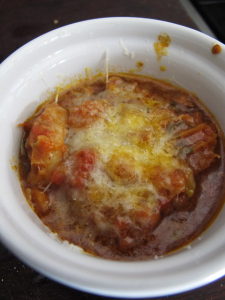
Then came the big moment – I tried one piece, and found it really quite revoltingly springy and chewy, though it was tender enough. What was really quite fascinating to observe was how it was my mind that caused the problem. With every chew, my mind screamed: Stomach lining! Quivery Slimy Thing! Animal Innards! DEATH! 

I decided the size of the piece was an issue, and cut the remaining pieces into much smaller ones – Stephanie recommends a strip 2cm by 6cm, but I would suggest for tripe novices these are too confronting. A much smaller slice, eaten with lots of the extremely delicious sauce, is far easier to contemplate. In this way, and by focusing very hard on imagining how my mind would be working if this were squid – Yum! Springy! Tender! Lovely Surprising Texture! – I chomped happily away on a small ramekin full of tripe. Yes, there was a teeny tiny odd twinge of an unusual flavour – which could just as easily have been my imagination – and yes, the frills certainly added a textural frisson that might take some getting used to. But all in all, it was completely fine.

Senor arrived home just as the eating experiment began, and wolfed into a bowl of tripe himself. Being the iron-guts and utterly unflappable gourmand he is, of course he had no truck whatsoever with my mental carry-on, and pronounced it delicious. We still have three more bits of tripe in the freezer, and Senor has declared he’s going to get into a bit of tripey experimentation himself.
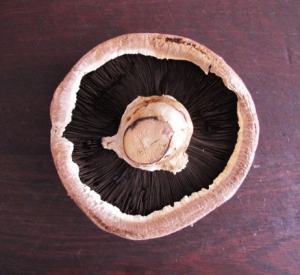
So what’s my verdict? What’s the disgust quotient? Well, it was perfectly fine. I was not revolted, as I had expected. But I didn’t love it, and I am fairly sure it will be a long while before I try cooking it again. I have other adventures in innards to pursue, after all.

But if I visited your house and you plonked down a huge bowlful of this stuff, I would no longer stiffen in terror and allow my stomach to flip over itself in panic and revulsion. I already feel much more grownup about tripe, and as a result have much more interest in exploring other offally avenues. And who knows, on another tasting or two (Senor’s cooking next time) I might even find, as I have with so many foods since childhood, from chilli to muesli to oysters, that it soon grows on me and I like it very much.

So what about you? Any offal fans? When was the first time you ate it, and what made you like it?

h1

How to make a vegetarian smile, pt II

September 17, 2010

The last entirely vegetarian dinner party I cooked was a wintry little number, but very satisfying, with a few  nicely contrasting elements I think. The mainstay was a mushroom ragu served on creamy polenta, paired with a side dish of a punchy green salad with lentils & goat’s cheese.

There are a couple of things that made this work well. First, both the ragu and the lentils used  the roasted vegetable stock, as I described ages ago here. This time though, I took a leaf out of Skye Gyngell’s book – her secret flavour weapons often include tamari sauce and maple syrup, so I added a tablespoon of each to the reduced stock. I swear this little combo, while not leaping out as separate flavours, really gives a layered depth and complexity to the stock.

Next was the assortment of mushrooms. I used about 600g of combined chopped Portobello, field and Swiss brown mushrooms, and later added – importantly – a good tablespoon’s worth of dried porcinis to the mix. Again, this gives a big hit of rich flavour.

Mushroom ragu with creamy polenta

  • 4 tablespoons olive oil
  • 1 medium onion
  • 1 medium carrot, peeled and finely chopped
  • 4 cloves garlic, chopped
  • 1 stalk celery, chopped
  • 600g chopped fresh mushrooms
  • 1 x can peeled tomatoes
  • 1 cup red wine
  • 1 cup roasted vegetable stock
  • 10g dried porcini, rehydrated & chopped
  • 2 bay leaves
  • 2 sprigs thyme
  • 1 sprig rosemary
  • Salt and freshly ground black pepper
  • grated Parmesan, to serve
  1. Heat oil & add celery, carrot, onion, garlic and some sea salt, sauté until soft.
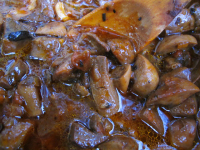
  2. Add a good big knob of butter & a little more oil, turn up the heat and – gradually, in batches – sauté the fresh mushrooms with the mirepoix over a high heat until the mushrooms lose most of their moisture and are nicely browned.
  3. Add wine, tomatoes, stock and herbs and bring to the boil, then turn down to a simmer.
  4. Add the chopped porcini and liquid to the sauce.
  5. Stir, then simmer uncovered for around 30 minutes (or even up to an hour),  till the sauce has reduced and thickened, adding another good slug of oil if it looks too watery. Add stock or water if at any stage it becomes too thick.
  6. Season with salt and freshly ground pepper.

Not long before you’re ready to serve, make the creamy polenta – this is dead simple, as described here, but does take a little time. Just do the onion & milk bit ahead of time, and if you need to, have your guests chat with you in the kitchen while you stir.
Spoon the polenta into shallow pasta bowls, and top with a heap of the mushroom ragu (add a tiny swizzle of olive oil at the last second, if you dare), and sprinkle with Parmesan at the table.

Green salad with lentils & goat’s cheese

This zingy little salad can be made completely ahead of time and simply dressed & tossed just before you eat.

1. Sling half a cup of puy lentils into a pan of hot vegetable stock, and simmer for 20 minutes or till tender. Drain and return to the pan with a splash of olive oil till ready to assemble the salad.

2. Have some slow-roasted tomatoes (scroll down on the Essential Ingredients page) ready to go.

3. When you’re ready to serve, toss some good green salad leaves (specially good with some texturally springy ones, like curly endive and radicchio as well as soft lettuce) together with the scattered lentils and tomatoes in a bowl with a dressing of three-parts good extra-virgin oil to one-part best-quality balsamic vinegar. Then tear up some marinated goat’s cheese  (or even better, your homemade labneh!) and toss it into the salad in chunks. Serve in a bowl at the table.

Sweet ending

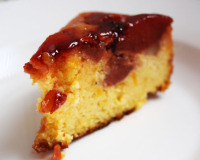
For dessert, I can’t recommend this whole orange cake highly enough – and because it’s made with almond meal instead of flour, it gives your guests another dose of good nutty protein. Serve it with some more yoghurt or cream on the side. Another almondy option is a frangipane tart, and although I haven’t made this particular one, there is a beautiful-sounding recipe here. Otherwise, I’d go for some other fruit-based dessert.

So there you have it – a simple but I think nicely varied vegetarian dinner menu for four, with heaps of punchy flavour and texture, and also providing a reasonably diverse mix of protein, dairy, carbohydrate and lots of other goodies.

I would love to hear comment from our vegetarian visitors about how this combination might be improved – and as well, keep your ideas for zingy vego dinner party dishes coming.

V

h1

You borlotti beauty

August 8, 2010

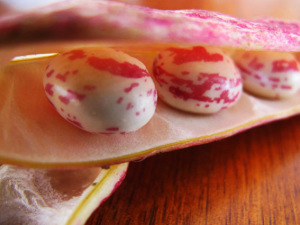
At the risk of having to rename this blog Purely Pulses, I have to tell you about my first encounter with fresh borlotti beans. I am a big fan of the dried variety – and the canned – but until now I’ve never tried cooking fresh ones. But the other day I spied some in the grocery and couldn’t resist their splotchy raspberry-swirl stockings.
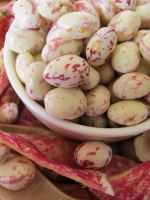
Today I did a test run at lunch with buddies – and am happy to say they made the grade and I officially declare them my New Favourite Thing in the World for this week.

After podding (or shucking! can we say that about beans?) the borlottis from their slinky pink sleeves, I chucked them into boiling water for about 20 minutes and drained them. Then, while they were still hot, I bashed them about a bit with a wooden spoon and then tossed them into a pan in which I had just crisped some exceptionally good bacon, plus a good handful of finely chopped parsley and a clove of minced garlic.

Into a bowl they went, with a generous slurp of Moon Over Martinborough‘s  luscious extra virgin olive oil (which I bought online from NZ after reading this lovely post here and am absolutely loving sloshing around in every veg dish I can at the moment), loads of sea salt and juice of about half a lemon.
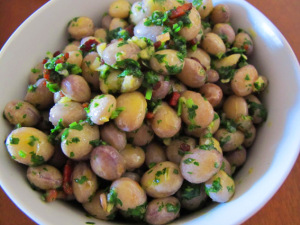
Seriously good result. The fresh beans have a much nicer texture than the canned ones, which can be a bit sludgy, and I reckon the freshies have a beautifully delicate colour too (the canned ones do tend toward a depressingly old-ladies’-underwear hue, don’t you think?).

And if you think the finished dish rather resembles a great many other legume side dishes you’ve seen on this blog, well – you’re right. But it can’t be helped – too much legume love is never enough round these parts.

Now, while I’m here, I wish to draw your attention  to the lovely folk at Feather & Bone, providers of the above-mentioned free range bacon and lots of other meaty goodies we chomp our way through in this house.

Ever since I bought our divine Christmas ham from them last year on the recommendation of Empress Clifford-Smith, Feather & Bone have basically become the guardians of my conscience when it comes to eating animals.

Until I turn vegetarian (will that day ever come, I wonder) I try to do the next best thing, and support farmers who treat their animals as humanely as possible, as well as doing all they can to care for the land in a sustainable way. And what with the whole free-range/organic labelling confusion and misinformation that goes on, the only way I know that I am really doing the best I can by the creatures is to buy from Laura and Grant at Feather & Bone. They do all the research, all the inspecting of the farms and the buying of produce from very carefully selected farmers, based not only on the ethical treatment of animals but just as importantly, the quality and flavour of the meat – and believe me,  they know their stuff. To boot, the glorious goodies are delivered to your door if you wish. What’s not to love?

But you don’t just have to take my word for it – the great news is that just this month, Feather & Bone have been named Delicious magazine’s Outstanding Supplier of the Year. So congratulations to Grant & Laura from me and all who have dined on your efforts in this house. For readers living in Sydney, I can’t recommend F&B highly enough. And we shall be celebrating tomorrow night by roasting a couple of delectable Feather & Bone chooks for Senor’s birthday dinner. Cheers!

h1

The chicken and the egg

December 8, 2009

During this last week I have been bestowed with one of the greatest honours of my life. Booker Prize, you ask? Bip-bow. Pulitzer? Shmulitzer. Miles Franklin? Huh – that old rag!?

Nope – this week, I had a chicken named after me.

That’s right, read it and weep, non-chicken-namesakers.

My friend Mistress Alice of the Mountains, aged eight and a half, and her brother Paddy, four and a half, are the proud new carers of two lovely chooks from the increasingly famous and brilliantly conceived Rentachook, where you rent chooks and coop for six weeks on a try-before-you-buy basis, so you can see if chicken-human cohabitation suits you both.

And I am told that on the journey home to the mountains with the chooks in the back of the car, Paddy and Alice pondered on the names for their new friends. By the time they reached home, Paddy’s chook was named Shirley, and Alice had chosen Charlotte. Both fine chook monikers, I’m sure you’ll agree (although Monica would have been nice too?), and I am assured by Mistress Alice’s parents that Chicken Charlotte genuinely is named for me and not some schoolfriend competitor for Miss A’s affections. Strange but true.

I am more chuffed than I can say. And here she is, above. Has there ever been a more beautiful specimen of chook womanhood?? Read the rest of this entry ?

h1

Shopping vs ‘sourcing’: scrap the sanctimony

October 4, 2009

ecoshoppingIn adding the postscript links to the Julia Child post here the other day I was led to the Julie Powell New York Times op-ed piece on organic food that apparently raised the hackles of foodie multitudes in the States a while back. I happen to agree with every word she writes in this piece about food snobbery and class. Her main objection is the moral high ground taken by those who only eat organic food, and their derision of ordinary folks who shop at crappy supermarkets:

What makes the snobbery of the organic movement more insidious is that it equates privilege not only with good taste, but also with good ethics. Eat wild Brazil nuts and save the rainforest. Buy more expensive organic fruit for your children and fight the national epidemic of childhood obesity. Support a local farmer and give economic power to responsible stewards of sustainable agriculture. There’s nothing wrong with any of these choices, but they do require time and money.

When you wed money to decency, you come perilously close to equating penury with immorality. The milk at Whole Foods is hormone-free; the milk at Western Beef is presumably full of the stuff – and substantially less expensive. The chicken at Whole Foods is organic and cage-free; the chicken at Western Beef is not. Is the woman who buys her children’s food at the place where they take her food stamps therefore a bad mother?

“That’s not cooking, that’s shopping.” This epigram has been attributed to Julia Child and several other chefs of an older generation, in reference to the tenets of California Cuisine. It is sometimes used – often pronounced in a snooty French accent or Childean warble – by devotees of the organic movement (like Doug Hamilton, writer and director of the documentary “Alice Waters and Her Delicious Revolution”) to mock these fusty old-school cooks. For the newer generation, a love for traditional fine cuisine is cast as fussy and snobbish, while spending lots of money is, curiously, considered egalitarian and wise.

Like Powell, I’m as farmers-market addicted as the next gal, and I prefer to buy organic and free range stuff for the sake of the soil and the animals rather than any belief in its ‘safety’ for my own health (the various studies concluding that organic food is no healthier for humans than other food are perhaps dispiriting, but they are there – and claims from organic food producers like this one, that “Eating non-organic food will lead to ill-health with medical costs that will be far greater than the price of healthy eating” are  just simplistic rubbish).

If I’m honest, one of the main reasons I like to ‘source’ (we can’t say ‘buy’ anymore, don’t you know?) food from small fancy grocers and farmer’s markets is that it just feels nicer.

Supermarkets are ugly, and horribly lit, and often more expensive than other shops, and there’s hideous music, and the fresh food has been in cold storage for a year, and one is confronted by more people speaking viciously to their children, and the packaging is aesthetically displeasing and there’s too much plastic, and the cold food section freezes your bones, and the space is vast and impersonal and noisy, and so the whole experience just makes one feel one has been turned into a mindless participant in the whole mass-production, over-processed consumerist nightmare.

So it stands to reason that visiting a market where there’s open air, and one person selling meat, and another selling cheese, and another selling salad (picked leaves in bags rather than whole lettuces, I might add; I’m not averse to that kind of packaging and processing)  and so on, is a whole lot more pleasurable. But morally superior it ain’t. And it can far too easily topple into into fashion-driven pretentiousness (as we’ve discussed before), and, as Powell points out in her piece, can be as unattractively consumerist as any supermarket:

With his gastronomic tests, Brillat-Savarin sought to find others like himself, of whatever economic status, who truly enjoyed food. It’s easy to do the same today, but the method isn’t to assume that everyone at Whole Foods is wise and everyone at the Western Beef benighted.

Instead, look in their carts. Some shop at Western Beef for nothing more than diet cola and frozen bagels; some at Whole Foods for premade sushi and overdesigned bottles of green tea. These people have much in common. So, too, do the professorial types poring over the sweet corn and dewy blueberries at the greenmarket and the Honduran family at the discount grocery, piling their cart high with rice and dried beans and canned tomatoes and all the other stuff you need to make something out of nothing much.

End of rant. Read the whole Powell opinion piece here.


h1

Oils aint oils

September 27, 2009

olive oilThe Lunging Latino’s remarks on his fave Italian olive oil in this post here reminded me of a conversation with my friend C recently, where she declared, having read a bit on the subject, that she would never again buy Italian olive oil.

Apart from wanting to support local olive oil producers and reduce the environmental effects of transporting stuff across the oceans, she told me that Italian olive oils are subject to so much adulteration and fraud that it’s difficult to tell if you are ever actually getting what the label says.

This startling conversation sent me to a disturbing New Yorker article from a couple of years ago setting out the slippery olive oil adulteration issue in Italy. The upshot, according to this article, is that owing to some dodgy labelling laws, lax governmental investigation, corruption and outright criminal fraud, some of the biggest olive oil producers in Italy (Bertolli, Nestle & Unilever, for instance) have sold adulterated oil from other countries as Italian extra virgin olive oil and collected millions of dollars in Italian subsidies designed to support domestic producers.  Olive oil labelled ‘Made in Italy’ apparently may be Turkish, Tunisian, Greek or Spanish, and may just as easily be adulterated with hazelnut, soy, canola or sunflower seed oil and even artificially coloured green to look like olive oil.

A few unnerving quotes from this article by Tom Mueller, which is well worth reading:

  • In 1997 and 1998, olive oil was the most adulterated agricultural product in the European Union, prompting the E.U.’s anti-fraud office to establish an olive-oil task force. (“Profits were comparable to cocaine trafficking, with none of the risks,” one investigator told me.)
  • For the past ten years, Spain has produced more oil than Italy, but much of it is shipped to Italy for packaging and is sold, legally, as Italian oil.
  • The [criminal] ring, which allegedly sold its products in northern Italy and in Germany, is accused of coloring low-grade soy oil and canola oil with industrial chlorophyll, flavoring it with beta-carotene, and packaging it as extra-virgin olive oil in tins.
  • Zaramella, a garrulous sixty-six-year-old former businessman, has made oil from olives grown on his small farm in Umbria since 1985. He began to study olive oil systematically when he found that the local farmer who tended his trees had been cutting his oil with sun-flower-seed oil. “Fraud is so widespread that few growers can make an honest living,” he told me.

Do read this article, as there’s lots more in it than I can reproduce here.

So now I’m thinking I’ll take on C’s policy and buy local olive oil, which presumably is free from this level of adulteration and corruption (okay, so this move was also prompted yesterday by a rather stunning supermarket special of three litre tins of Cobram Estate EV oil for $20 – I bought two tins) – at least for general cooking, if not dressings or other special stuff.

But, apart from your own tastebuds, do any of you know how to tell a good extra-virgin olive oil from a dud? And how can we be sure that our own fledgling olive oil industry is free from adulterated or bogus oils sold as EVO? Would love to hear more from you all about this slippery issue …

h1

Pot, stock (& two smoking barrels)

August 16, 2009

roastvegstockOne of the (let’s be honest, rather many) obstacles to me becoming a vegetarian – as opposed to a passionate lover of all kinds of veg – would be what do to about stock.

I often toy, more than idly, with the idea of abandoning meat for all the good ethical & environmental reasons – but also love the richly layered flavours, velvety texture and million uses for a good chicken stock.

In the past, whenever I have made veg-only stocks, they’ve always been watery and bland affairs. But recently, prompted by dinners for total vego guests, I have begun making a kickarse vegetable stock, given a huge lift in flavour, texture and colour by first roasting all the veg until seriously caramelised.

It’s so simple – chuck whatever veg you have in the fridge into a pan, slather with heaps of olive oil, turn up the heat and blast it in the oven. My latest batch, pictured here midway through the roasting, included pumpkin with skin on, carrots, shallots, red onion, garlic, lots of celery, a bunch of spinach stems and a tomato. Once they’re lovely and roasted almost as dark as you can get them without burning, remove from the oven and toss into a big pot of water with the usual peppercorns, bay leaves, and salt.

I simmered it for a good few hours, reducing by a third and then topping up and reducing again, then straining it. The result is a gorgeously dark golden stock full of flavour and a very light sheen of olive oil.

This stock was perfect for Friday night’s vego dinner for eleven.

The starter, smoking barrel number 1 (stay with me, I’m clutching at headline straws here!)  was a mighty good caprese-style salad with burrata, that decadent mozzarella ball filled with cream, that you break into luscious pieces and plonk down with slices of ripe tomato, torn basil and some salad leaves; I dressed it with the usual balsamic & good oil. SB # 2, dessert, was a high-fat free-for-all known as Karen Martini’s baked lemon cheesecake with pistachio & biscuit base… we’re talking ricotta, cream cheese, goat’s curd – hmm, must add that to the festival of cheesecake from last week.

Returning Now to the point –  stock came in with this pumpkin risotto courtesy of the River Cafe (first cooked for me very recently, like so many good things, by the Empress…). It is delicious and easy. So moreish, in fact, that a guest who “doesn’t eat pumpkin” (and who was somehow swindled by his wife, I believe, into thinking this was sweet potato – a whole other post coming up on food aversions!)  happily hoed into a second helping. The stock, I reckon, certainly helped give it some oomph and silkiness.

h1

Becoming broad-minded…

July 9, 2009

driedbroadbeansHaving got my dried bean anxieties off my chest, I am happy to report that I am now running my fingers through those slippery little beauties at every opportunity (thankyou Steph for the advice to get over myself …)

Once I remember to do the soaking – pretty easy, you must admit – the course is set, and it forces me to actually make the thing I had planned. And everything I’ve done – okay, two things (a repeat of the cassoulet, but with dried beans, and this one) – are tres simple and delicious (even without a pressure-cooker, Empress…)

A couple of years ago we stayed a fortnight in a rented house in Puglia, in the south of Italy, with some educated friends who knew that although Puglia was in the daggy, bogan bit of Italia, it also had the most spectacular coastline, beautiful towns and THE most incredible food. Anything we bought at the supermarket was astoundingly good quality, from chooks to calamari, and if we bought at an actual market market, even better.

Anyway, there are two things I remember very clearly from the menu of one restaurant we went to in the elegant town of Lecce (earlier researched by Italophile Jane, who speaks the language beautifully and knows her food): a rich, tender dark casserole of horse meat, which was meltingly delicious* and a smooth, delicate but complex broad bean puree for dipping stuff into – ditto.

So I was very pleased recently to see this recipe for Pugliese broad bean puree with chicory in Gourmet Traveller’s Italian edition, and made it today. It is the simplest thing in the world (and note to the confused, i.e. me, broad beans are fava beans, apparently) but creamy and delicately layered in flavour and silky in the mouth. I haven’t yet done the chicory and garlic oil bit, but plan to in the next day or two.

Go ahead, make it – basically it’s a broad bean version of hoummus. Lemon juice, garlic, oil, salt, whizzed up with the beans which are earlier cooked in chicken stock. Really good. And aren’t dried broad beans so beautiful to look at, apart from anything else?

*Before anyone freaks out about eating horse, I see no problem with it if, like me, you also eat pork, lamb, etc etc. Morally it’s entirely equivalent – which, I admit, means it is deeply complicated and basically indefensible. But the separating of some animals from others for purely cultural culinary reasons is ridiculous. Same with dogs, crickets, rat, whatever.  If you eat a clever, sensitive animal like a pig, you can’t judge anyone for eating a dog or a horse. And if you feel fine about eating animals of lower ‘intelligence’, why is that? Okay, lecture finished…. sigh. Enjoy the beans.


h1

Reducing your waste line

June 21, 2009

foodwasteAustralians, I am told, throw away three million tonnes of food each year, averaging 145kg of discarded food for every man, woman and child.

And Sydneysiders are apparently the worst offenders – half of our weekly domestic garbage is food. While so many people in the world have no food at all, we throw half of ours away. Obscene. And not just because of the sheer wastefulness of it, but the environmental impact – disastrous levels of methane, a damaging greenhouse gas, arise from all this organic matter going into landfill.

I must admit I’ve been less watchful of this than I should be, and have used the fact that we have a worm farm rather too nonchalantly when it comes to disposal of unused food.

Senor, on the other hand, has always been a vigilante in this area, using my regular Monday evening absence from home to act as a kind of weekly fridge bottom-feeder, eating leftovers and concocting some often rather unusual dinners for one (corn cobs and curry sauce with a mayonnaise & raspberry coulis chaser? Mmm-mm! Just another instance of the usefulness of his iron-clad stomach).

But I hereby declare a personal war on food waste. Last night, having spied a very weary eggplant in the bottom of the crisper, I rang the Empress for a tip or two, then made baba ganoush for the first time ever.  It was easy, pretty quick, and extremely good. And a perfectly usable whole eggplant was saved from the worms.

For other fridge scraps, I invoke the memory of my Aunty Pat, who stayed with me for a month or so many years ago. I worked near home, and would pop home for lunch. Every day there was some incredibly delicious soup she’d made from what I had seen as highly dubious scraps and nubs of past-it veg in the crisper. Occasionally it didn’t do to think of what some of that veg had looked like, but the soup was always amazing.

So, how do you reduce food waste?

There are a few websites devoted to this issue, containing lots of tips and tricks for preventing waste, but I have to say that anyone with half a brain could figure out a good proportion of them (‘freeze leftovers and reheat later’ and ‘keep vegetables in bags to keep fresh longer’ – ingenious!) And the Australian one is rather depressingly skewed towards the use of Tupperware, its major sponsor (no mention of the greenhouse gases produced by manufacture of plastic, of course). And lots of reader tips involve that apparently very popular practice of popping leftovers of all kinds into ice cube trays ["too much bouillabaisse? just pop excess into an ice cube tray for use as needed"], which I have always found amusing. How many ice cube trays does a person have??

The main advice, of course, is not to buy too much perishable food in the first place – sounds crazy, but apparently it works! And secondly, don’t cook too much food.

At the very least, get yourself a worm farm, if not a proper compost bin, so that unusable food scraps don’t go into landfill. We have a spanking new worm farm with two thousand head of worm, ready to chomp. We had to set our old worms free when the building work began, so are hoping our new batch are as ravenous as the old ones. All the advice is that worms won’t eat onions & garlic, but our old lot chowed down on them with relish, so fingers crossed that the newbies are similarly omnivorous.

Anyhoo, check out these sites; some of the readers’ tips are not bad, and quite a few are good for a laugh. However, I reckon we could get a much more interesting list going here.

1. Using up carrots: My first contribution will be ol’ Guillaume’s carrot puree, used to thicken his BB – I made too much, but have used it twice since, in thickening a chicken cacciatore and a lamb and pea mixture for a pie. Wherever a recipe calls for thickening with flour, chuck in your puree. You could even pop it into an ice cube tray to create easy-to-use individual portions!

2. Grow your own herbs: which means only using what you need. I’m forever throwing out half-bunches of parsley or thyme (I know, I should be freezing them into damn ice-cubes – but growing them is more pleasurable and aesthetically pleasing to boot).

Okay, now your turn. What do you do to reduce food waste?


Follow

Get every new post delivered to your Inbox.

Join 89 other followers