Archive for the ‘herbs & spices’ Category

h1

Lawar love affair

October 9, 2011

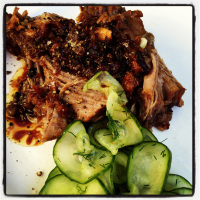
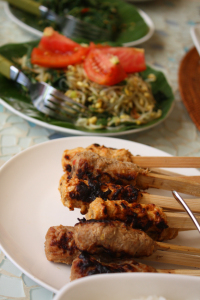
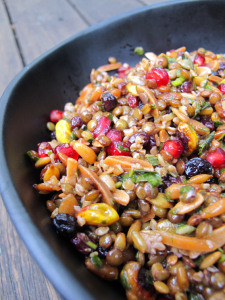
Komang's pork lawar (with blood)Well hello everyone … I am hoping you haven’t all taken your pots and pans and gone home!

Apologies for my long absence; things have been a little overwhelming round here what with trips away and novels coming out and people being nice and whatnot (how’s that for some of the most flagrantly unsubtle self-promotion you’ve seen in a while!?).

You know, I’ve just realised something. Having a book published, even though I’ve done it five times now, is a very strange experience. It’s exposing and flattering (sometimes) and mortifying and exhausting in fast-moving waves. I’ve decided it’s  like being a five-year-old at your own birthday party – you run round shrieking look at me look at me look at me and then when everyone does you’re so hyped up on sugar and presents and nervous energy you feel like throwing up and burst into tears.

But as soon as I opened this page to start typing I felt a lovely calm descend upon me, and I thought, Ah, I’m home. That’s my realisation: that I feel at home here on this blog, and I’m determined to spend a bit more time here in the next while.

So last time I was here I was off to Bali for a week – and I have to say it was the most relaxing holiday I’ve ever had. We lay around reading, sleeping, swimming, feeling our winter skins slough off in the tropical weather, and generally managed what every holiday is supposed to feel like but hardly ever does – a wonderful rest from ordinary life. Serenity, peace, and stunning physical beauty (Bali’s, not ours – thank your lucky stars I am posting no pics of us around the swimming pool as proof). And, of course, absolutely wonderful food.
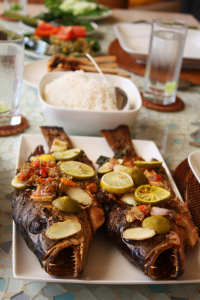
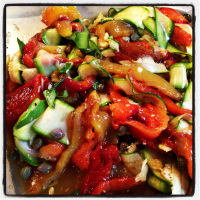
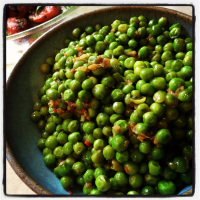
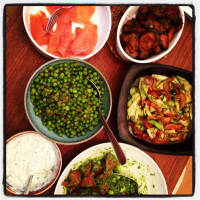
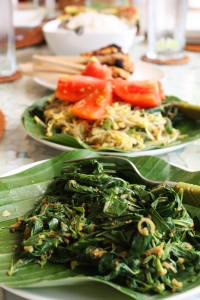
All the pictures here are of food cooked for us by the gorgeous Komang, our host at the villa we stayed in at Sanur (feel free to email me for details because it was just fantastic). I have never, never understood people who go to a country like Bali, dine out at terrible and expensive Italian and French and Japanese restaurants and then come home whining about how bad the food was. We only ate Indonesian food the whole time, and had almost no average meals at all, and certainly no bad ones. In fact the least pleasurable night involved one of the most expensive and chi-chi restaurants on the island, which describes its food as ‘contemporary Balinese’ – it was fine (and the wine was incredible) but we should have stuck to our instincts and the local cheapo joints, all of which were way more fun and generally much better food.

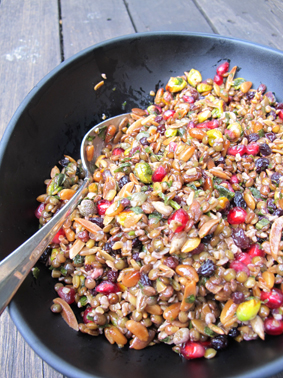
Probably my absolute favourite – among so many good dishes – was a new discovery, a dish called lawar (pictured at the very top). Komang told us his version was made with pork (“but only the skin”), coconut and spices. His was a red colour that I initially thought must be from red rice or just the cooking method, but found no rice in it and learned on our return that this must have been from the pig’s blood, which is often included in this lavish ceremonial dish. But lawar can be made from all kinds of different proteins - this blog here, for instance, says:
No big religious or private celebration would be held without serving this ritual dish. Only the eldest, and most experienced men are allowed to mix the many ingredients. Many versions incorporate raw pounded meat and fresh blood in the dressing. Chicken meat can be replaced with beef, pork, seafood, vegetables or young jackfruit. 

There are recipes for lawar all over the web, which seem slightly different but generally are variations on the same theme; and there’s a great video by Kitchen Insurgency about making it for a big Balinese family feast here. I believe lawar is particularly a Balinese specialty, not made in other parts of Indonesia unlike almost all the other food we ate – but does anyone know more about it than me?

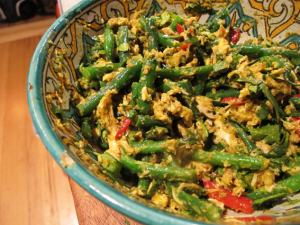
On our return, I tried to emulate some of our favourite holiday dishes in an Indonesian spread for Senor’s colleagues who ran his business so magnificently in our absence – and the pork lawar, indeed, turned out to be the hit of the night with everyone. Sadly I don’t have any photos of it as we gobbled it all too quickly. But I  just used pork mince – no blood, you will probably  be relieved to hear – mixed with green snake beans and the spice paste and coconut. It had a lovely fresh green and turmeric-orange colour scheme going on, and tasted as fresh and vibrant as it looked.
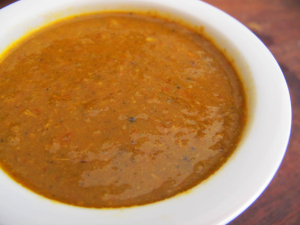
The most time-consuming part is the spice paste, a version of which seems to be used for almost everything Balinese, or at least everything I made that night  (fish sticks, roast chicken in banana leaves, as well as the lawar, along with some stirfried kangkung and some bumbu- the lemongrass & chilli sambal Komang served with every meal). But after the paste is made, the lawar is really just a matter of a quick cook, squidge and mix. So my plan for next time is to make a giant batch of the spice paste and keep it in portions in the freezer, just as I do with chermoula, and then whack this dish together for a quick midweek burst of Bali whenever I get homesick for the sound of gamelan and the scent of tuberoses.

I ended up pretty much using this recipe from SBS Food, partly because I knew I’d be able to get all the ingredients locally. But I used pork mince instead of chicken, and also just dry-fried a cupful of coarse grated coconut (I keep coconut in the freezer, along with all nuts) instead of going to the trouble of cutting up a fresh coconut and roasting it. The result was great, so I don’t think I would do the hard-labour version anytime soon. Oh and I also didn’t find ‘lesser galangal’ so just used ordinary for the whole lot.

Now, any of you have a favourite Indonesian dish – or any dish you’ve eaten on holidays and tried to replicate when you got home? Love to hear more about it, or even better – give us the recipe.

It’s so nice to be back.

h1

Use your mussels

August 7, 2011

It’s not often that Tim Winton gets together with my mother-in-law and Jared Ingersoll in our kitchen, but that’s what happened this week.

Tempted as I am to leave it at that, let me explain …

You may recall a little while ago I made this incredible – and, technique-wise, rather elaborate  – crab bisque from an Ingersoll  recipe. Soon after that we dined with Annie, my husband’s mum, who is a great cook and made the most delicious mussel soup for us (serving it from her beautiful old tureen). Annie’s bisque was just as velvety and rich as our crab version but, it seemed, involved rather less work. Getting the meat out of a mussel is rather easier than taking a hammer to a crab and picking out the shell, let’s face it, and I resolved to try it some time.

Meanwhile, returning home after a writing retreat, this week I checked out the Sustainable Seafood Guide produced by the Australian Marine Conservation Society – of which writer Tim Winton is patron (you really didn’t think I would be able to pull it all together, did you…).

I’m sorry to say that the SSG is a very depressing little booklet – you can buy a copy, or see the online version here.  Hoping for a few tips on the most ecologically sound fish to eat, I was completely stunned to find that almost every type of seafood I have ever eaten is on either the danger list (‘think twice’) or basically completely unsustainable (‘say no’). 

According to the AMCS we should Think Twice before eating wild version of prawns (also farmed ones), barramundi, blue eye trevalla, Balmain bugs, dory, flathead, lobster, ocean perch, among many others.

Even worse, the Say No list includes farmed Tasmanian salmon (or Atlantic or smoked salmon), imported farmed prawns, farmed barramundi, snapper, orange roughy (we knew about this one and haven’t eaten it in years), wild scallops, wild swordfish, farmed trout, wild tuna of various kinds, imported canned tuna, farmed yellowtail kingfish – among others.

Although wild fish populations are being decimated, if you were under the impression you were protecting the environment by eating farmed fish, as I vaguely was, think again.

As the AMCS and the excellent resource Good Fish Bad Fish explain, farmed fish are often  produced in open sea cages with potential for serious pollution and fish escapes into the wild, along with transfer of diseases into wild fish populations. Fish in sea cages are primarily “carnivorous species with significant reliance on wild fisheries to supply feed” – and up to 5kg of fish meal from wild sources is needed to produce 1kg farmed fish.

Other farming involves semi-closed aquaculture systems – like prawn farming – in which water is exchanged between the farm and a natural waterway. These pond systems are often located adjacent to waterways, where coastal wetlands and mangroves are reclaimed for development, resulting in “a vast loss of habitat which is critical for the juvenile stage of many species”. They can also pollute surrounding waterways, and like the cage fish, often rely on wild species to feed the stock.

More acceptable farming methods are the closed aquaculture systems – land-based ponds where there is no risk of pollution to open waters (although wild fish are still often used for feeding) – and “passive-feeding” open systems using sticks, ropes, racks and cages but natural feeding. The latter is used for oysters (hooray!), mussels and other filter-feeder species.

The Good Fish Bad Fish site is rather more cheering than AMCS site, with a brilliantly designed ‘seafood converter’ to push your dinner in a more sustainable direction. However, I can’t help but wonder if turning to the more flexible Good Fish Bad Fish because we don’t like the AMCS advice is simply burying our head in the sand of the sea floor even more. (That said, the GFBF site links to the AMCS site and other resources quite comprehensively, so they are on the same page.)

So far, so deeply dispiriting. But there is some good news –  there are lots of delicious seafood species on the AMCS  ‘Better Choice’ list – including various species of wild mahi mahi, moonfish, leatherjacket, King George whiting, oysters, mussels, squid, calamari, cuttlefish, octopus.

All of which brings me – slowly, I know! – back to my mussel soup. Inspired by Annie’s soup,  Tim’s commitment  and Jared’s recipe (as well as the quite magnificent lobster-topped soup tureen I was given by Annie and my lovely in-laws L&B for my birthday – thanks guys!), I adapted the crab bisque  to come up with an easy and very delicious spicy mussel version.

Before the recipe, a quick note on the texture – on this first attempt I began by using the mouli, then the stick blender, and finally the food processor, but the result was still a little fibrous, especially with strings of celery somehow escaping all pureeing methods. Next time I am going to simply puree all the vegetable and mussel mix before adding to the stock, which is what I’m advising in the recipe below. I would love to hear if you try it, and how it goes.

Spicy mussel bisque – serves 4

  • 1 teaspoon each cumin, caraway, coriander seeds and half a teaspoon fenugreek seeds
  • 1/3 cup soft brown sugar
  • pinch chilli flakes
  • salt and pepper
  • 150ml vegetable oil
  • 1.5 large red capsicums, seeded & chopped
  • 4 cloves garlic, squashed
  • 2 ripe tomatoes, chopped
  • 1 stick celery, roughly chopped (it may be worth peeling this first if you can be bothered)
  • 1 medium fennel bulb, roughly chopped
  • 1 red onion, chopped
  • ½  bunch coriander, leaves & stems separated
  • 1.5kg black (or ‘blue’ mussels)
  • 600ml chicken stock (I used homemade  - if you use packaged, lay off the seasoning of the soup)
  • (optional) 2 tablespoons Yalla harissa – I love this stuff and keep a pot of it in the freezer at all times for digging into to add extra kick to all kinds of dishes. If you don’t want or can’t find this, you could perhaps double the spice mix and chilli at the beginning for some extra kick

Method

  1. Toast the spices in a dry frying pan until fragrant, then grind in mortar & pestle or spice grinder.
  2. Heat a deep roasting tin in the oven or on the stove top and when hot, add the oil and all the vegetables except coriander leaves.
  3. Sprinkle the spices over the vegetables with the sugar, chilli flakes & seasoning and mix well and roast in a moderate oven for about 1 hour.
  4. Meanwhile, scrub and de-beard the mussels, then place in a covered pan over a medium heat with a big glass of white wine for about 10 minutes, or until the mussels are opened. Remove them from the pan to cool, reserving the cooking liquid.
  5. When the shells are cool enough to handle, remove the meat from the shells and set aside.
  6. When the vegetables are soft, smell good and are a little coloured, remove from oven.
  7. Transfer the vegetables and the mussel meat into the large bowl of a food processor and puree till smooth – or keep it coarse if you prefer a more rustic texture.
  8. In a sizable pot add the stock to the mussel cooking liquid, then add the puree and simmer gently for about 15 minutes.
  9. Add the chopped coriander leaves and harissa if using, stir to combine, and serve with crusty bread.
h1

Cruciferous crusader

June 13, 2011

Does anyone else find themselves eating significantly more meat in winter?
Sydney weather has turned utterly miserable in the last little while –  freezing temperatures, wild winds and absolutely bucketing rain. It’s fantastic cooking weather so long as you have a well-stocked pantry and fridge, because going out into the rain to forage is vile. I’ve been on a pastry roll (boom tish) during the past week, as I’m determined to improve my competence in that department and have done some experimenting with blind-baking pie bases versus not doing so, with gratifying results, which I’ll post about soon.

But while this weather is perfect for pastry and all that comes with it – rich meat pies, chicken and mushroom pies and so on – the downside to all this is of course the stodge factor, the high meat factor, and the accompanying risk of increasing boombalahdism.

So my challenge in the next while is to find some hearty and delicious winter dishes that depend more on vegetables than meat. I’m happy to notch up the carbs for a bit, because it just feels right to load up a little for winter, but having worked hard to lose some weight in the first half of the year, I would rather not blow all that by going too crazy with the carbs and fat and meat for the next few months.

Enter the humble Brassica family.

My favourite thing of last week was a cabbage accompaniment to some very good pork chops – an old Jamie Oliver number I posted about way back in the early days of this blog. It’s a delicious fatfest – pork, pears, potatoes and parsnip – and needs a sharp accompaniment to balance all that sweetness and stodge.

Cabbage is one of my favourite overlooked ingredients. I think we can all hark back to childhood for some reasonably ghastly memories of flabby, colourless boiled cabbage and that sad, defeated smell. But when it’s done well, cabbage can provide a wonderfully sparky lift to a meal I reckon.  And there is also the virtuous cancer-fighting glow that comes from consuming any member of the Brassica family (love that it sounds so like a contemporary primary schoolgirl’s name, except of course the spelling would need some adjustment.  “Brassikah! Come here! We have to go pick up Crucifera from ballet!”)

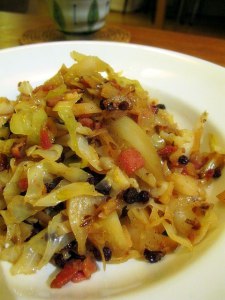
In the summer just gone I was introduced to an incredibly good shredded cabbage and Parmesan salad by Caro (she of the roasted cherry chutney and many other goodies on this blog), which I will tell you more about some other time. But this not being salady weather, this week I adapted a couple of different recipes to come up with the following side dish. I recommend it.  Oh and please forgive the low photo quality – all this getting dark at 5pm makes good evening photography an impossibility…

Cabbage with caraway and currants

  • olive oil
  • ¼ cup (or less) finely chopped bacon, pancetta or speck
  • 2 French shallots, finely chopped
  • few cloves garlic, finely chopped
  • ¼ head of shredded white cabbage
  • ½ cup of cup verjuice
  • large handful currants
  • 2 tsp caraway seeds
  • salt & pepper

Method

  1. Saute the bacon, shallot and garlic in a good splash of oil until soft.
  2. Add the cabbage and stir thoroughly to coat with oil, fry over high heat for a few minutes.
  3. Add the verjuice and stir to mix well.
  4. Add currants and caraway seeds, cover and cook for a few minutes more until cabbage is tender but retains a touch of crunch. Season & serve.

And now I’d love some ideas from you about hearty, warming, non-meat dishes for winter. What are your favourites?

h1

How to get your groove back

February 27, 2011

Regaining your kitchen mojo: the chicken stock method
This week, my dear friend Ms Manners remarked rather sadly that it seemed she never cooked anymore.

She works incredibly hard at a stressful job, her partner is a good cook and happy to do it. But these weren’t the only reasons she had virtually abandoned the pots and pans, she said wistfully. The major problem was that, despite being an excellent cook at various times of her life, it seemed now she had simply lost the zest for it, and didn’t know how to get it back. She’s lost her kitchen mojo.

We all know how this feels, right?  The day you try to come up with an idea  for dinner and decide that, think as hard as you might, there are only two possibilities, grilled chicken drumsticks or pesto, and you’ve had them both already this week. It’s not that you don’t want to cook other dishes – it’s that you simply can’t imagine what other stuff there might be to cook. The books on your shelves, full of recipes and ideas, are like holiday brochures: full of gorgeous places you might like to visit one day, but simply too distant, too exotic, too out of reach for now.

This is a very common syndrome, known as Culinarus Mojous Interruptus. It is characterised by a light melancholy and an overwhelming fatigue whenever the sufferer glances at the cook top. It can last for years, and the same cure doesn’t work for everyone. Fortunately though, there are a few remedies that, taken as directed, can slowly but surely restore the sufferer’s confidence and enthusiasm for cookery.

The other night I found myself in the throes of a syndrome at the complete opposite end of the spectrum; an episode of Culinarus Hyperstimulatus which manifested in waking at 3AM, insomniac with excitement about a bag of chook bones in the fridge.

This was partly inspired by my cooky brother-in-law (one of several!) marvelling recently over why people pay good money for tetra-paks of stock full of salt and perservatives when chicken stock was quick and so simple to make. I confessed I was one of these ninnies; I had not made stock for months, and I often use those cartons (my view remains that using packaged stock is pretty far down the list of culinary sins, so I have no problem with it).
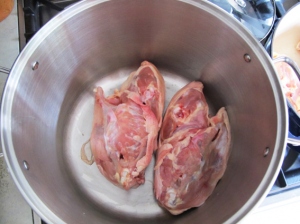
But of course he’s right about it being so easy to make, and cheap. You can buy a bag of chook bones from chicken shops for around a dollar, but since I pledged allegiance to free-range or organic chook only, don’t eat all that much chicken anyway and often buy boneless thigh fillets, my supply of bones has diminished. Until this week, when I came to my senses and asked the lovely peeps at Feather And Bone to sell me some carcasses along with the whole chooks I ordered this week. A bountiful bag of four beautiful, fresh, meaty, free range chook skeletons arrived on my doorstep for the princely sum of $5.

As I flung these into two big stock pots along with the other bits and bobs, it occurred to me that maybe making a pot of chicken stock could be a first step towards regaining one’s vanished culinary mojo.

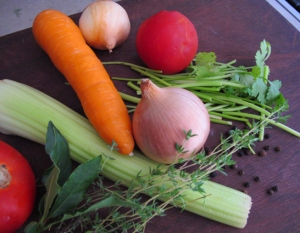
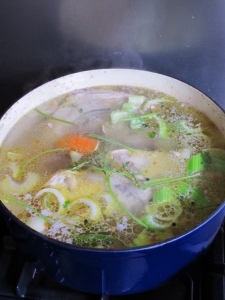
First, there’s no pressure to actually complete a whole dish, and surely there is no less stressful task than hacking up a carrot, an onion, a celery stick and a tomato and tossing it into a pot with a couple of herbs (bay leaf, thyme, parsley, whatever), the chook carcass and some water.

Second, the sensory delight of this little job is immense. For one thing, there’s the luscious smell - our front door was open to the street when I made mine, and I actually saw passers-by stop and peer into my hallway, provoked by the cooking aroma. Then there’s the visual beauty of it – the glistening little baubles of  fat separating and rejoining, the gentle steam, the gradual transformation of your wan bunch of ingredients into a potful of golden goodness.

But most of all, I reckon making chicken stock provides one with an instant and very rewarding Real Cook glow.

Partly it’s to do with the busy productivity of the water toiling and simmering away (while you get to read the paper and drink coffee). Partly it’s to do with the virtue factor involved in making wholesome good use of otherwise wasted vegetable crisper odds and ends – all those tough bits of leek, nubs of carrots, limp herbs and otherwise useless parsley stalks, mushroom trimmings and overripe tomatoes. And partly, of course, it’s the incredible usefulness of the result: a splash or a litre of gorgeous home-made chicken stock can enrich anything from a risotto to pasta sauce to tagine to poaching broth to bouillabaisse to minestrone.

I have mostly made stock by bunging the leftover bones from dinner into a little saucepan with the veg trimmings before the dishwasher is stacked, then simply turned off the heat before going to bed.  Recipes are everywhere and recommended simmering times vary anywhere from twenty minutes to four hours, so it’s pretty much a no-brainer, deadset simple thing to do. But I have to say there is a leisurely pleasure in the long-simmered type that doesn’t really shine through so much in the quick apres-dinner simmer. For me, anyway – I welcome dissent on this!

The other virtue of this stock remedy for getting your mojo back is that you can enter into the kitchen spirit without having to make it a performance – there’s no tricky timing to worry about, no dinner party stress, not even anxiety about a raised eyebrow from your partner, housemate or cat!

So, there’s my first tip for reviving Ms Manners’ enthusiasm for the rounds of the kitchen. Some others I’ve thought of while writing this post include:

  • Have a well stocked pantry & freezer. That way, when inspiration strikes there’s no dreary going to the shops involved. Let’s face it – supermarkets drain the life force out of the most committed cooks, so you don’t want that giant obstacle in your way. My pantry essentials are mostly listed here (and lots of good advice in the comments too), but of course there are much more obvious things – salt & pepper, spices, canned tomatoes, olives, anchovies, pine nuts, etc. For the freezer, my essentials are butter, couple of bits of chicken, some chorizo sausage, a couple of other good sausages, and loads of nuts.
  • Start small, start simple! Don’t try to cook a special dinner for eight until you’re really firing on all burners – you need to rebuild your confidence cooking simple but interesting things. Even if it’s just sparking up a salad with a few nuts or some lentils & goat’s cheese, start small and get the mini-buzz first.
  • Go to a grower’s market or a really good fruit & veg grocer, sniff the air and get inspired (I love Addison Road Sunday market at Marrickville for its lack of pretension, cruisy vibe and good veg stalls).
  • Use good equipment. No need for loads of gadgets, and nothing need be really expensive – but decent saucepans, at least one sharp chef’s knife and a sturdy food processor make otherwise tiresome chores easy and pleasurable. Would love your ideas on the basic essentials.
  • Watch a bit of Jamie Oliver. He has naysayers aplenty, but I love his exuberance and egalitarian insistence that anyone can cook good food. We have two of his books and they’re both great, and I am a huge fan of the 30-minute meals show that screened here recently. Always felt the urge to cook after watching.

Okay, enough from me; it’s your turn. How do you get your mojo back back after a holiday from the hob?


h1

A cool change: heatwave cooking

February 17, 2011

Well, the first real heatwave of the summer hit us with full force on the first weekend in February. I have never felt so hot in my life as I was that Saturday, when the temperature where we were, at beautiful Killcare just north of Sydney, reached 42 degrees Celsius (that’s over 107 F) for most of the day. According to the weather boffins, it was the sixth successive day that the Sydney area had reached sweltering 30-plus temperatures, representing the hottest week in 150 years. Pheeeew….
Sharing a beach house with some friends would appear to be the best thing to do on such a weekend, but that Saturday even the sea breezes worked like an oven’s fan. We swam, once or twice, but the sand was so hot the only way to deal with it was to run, full-pelt, with shoes on, to the water’s edge or risk significant burns to the feet. Then it was a matter of staying in the water for as long as possible, then doing the bolt back across the sand to the car. Our strategy for the rest of the day was to lie around in our bathers, periodically standing under a cold shower and not drying off until the heat forced us back into the shower.

At one stage we were forced to dress and visit the very sweet Hardys Bay RSL club for their air-conditioning, and though the aircon was struggling mightily, it helped for a couple of hours – despite even the club’s fridges breaking down because of the heat, they made do with buckets of ice for drinks.  When we eventually made for home at around 6.30pm the car’s thermometer reported the air temp as a deliciously cool 37 degrees C!

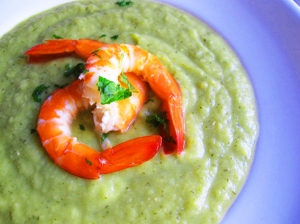
Needless to say, not a lot of cooking took place that day. Luckily, very early that morning before things went crazyhot I had made a pea, cucumber, leek and mint soup, and left it chilling all day. We ate it late that night with cold cooked prawns plonked on top. I think it was possibly the only thing we could have eaten that day with any pleasure.

Not long afterwards, all four of us dragged mattresses and cushions outside to the wooden deck of our little house, doused ourselves from head to toe in mosquito repellent, set up two electric fans and pointed them at ourselves, and tried to sleep. Quite an adventure, and we provided much amusement for passing neighbours the next morning with our little war hospital on the front deck.

Then later that day, a cool change came gusting gloriously in, and we were saved.

What did you eat, if you were in similarly overheated dire straits that weekend? Or if you’re elsewhere in freezing climes, what have you cooked to fight the cold? Love to hear your extreme temp cooking stories.

Meanwhile, here’s the soup – try it next time it’s stinking hot.

Chilled leek, pea & cucumber soup with prawns

A cooling summer lunch or light supper. Unlike many cucumber soups, this one contains no cream but is quite filling. Serves 4

Ingredients

Olive oil

2 leeks, finely chopped

8 Lebanese cucumbers, peeled, seeded & chopped

½ bunch dill, chopped

1 litre chicken stock

½ can cannellini beans, drained & rinsed

1 cup frozen green peas

1 tablespoon chopped mint

12 cooked prawns, peeled (tails left on if desired)

Pepper & salt

Method

  1. Fry leeks gently in olive oil till softened.
  2. Add cucumber & dill and cook for a few minutes.
  3. Add chicken stock, cover and simmer for about 20 minutes or until vegetables are very soft.
  4. Remove from heat, add frozen peas – they will quickly soften & help cool the soup.
  5. Add cannellini beans.
  6. Puree soup with a stick blender or in food processor until smooth or desired consistency – can be rustically thick.
  7. Check seasoning – depending on the saltiness of the stock, salt may not be required.
  8. Cool and then chill in refrigerator for several hours. Can be served at room temperature, but is best served quite cold.
  9. To serve, ladle soup into bowls, top with three prawns per bowl and scatter chopped mint over the dish.

To make this for Vegos, obviously, just skip the prawns and use veg instead of chicken stock. Very refreshing.


h1

All-day luscious lamb

November 22, 2010

If you’re cooking for a crowd, this all-day, slow-roasted leg of lamb has to be just about the easiest – and most meltingly, lipsmackingly good – way to do it. I’ve adapted this recipe slightly from Patricia Wells’ Bistro Cooking, but there are countless recipes around for similarly slow cooked lamb.
For some reason, when I’ve attempted this kind of thing before I have sometimes found that the lamb has been a bit dry and stringy, but this time it was perfect. I suspect in the past I actually haven’t cooked it for quite long enough, but also on too high a heat, so it dried out before getting to the fall-apart stage that makes it so divine. This time, I made sure to use a very large leg – about 3.5kg – and of course, being from Feather and Bone, the meat was top, top quality which I’m sure helped matters. And after an initial blast for browning, I kept the heat very low all day, at about 120 degrees C, and turned off the oven’s fan function.

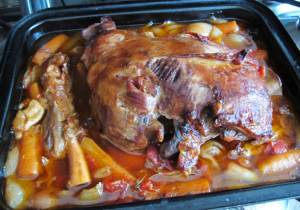
Circumstances made me start this in the oven an hour or so earlier than I would have – had to go out for lunch, poor me – but in hindsight I think this was very good, because it made sure there was plenty of time. In the end, I cooked this for almost nine hours! The outside of the lamb had a burnished, golden crust, but was incredibly moist and succulent beneath the skin, breaking apart at the touch.

Do try this if you get a chance, and let me know how it goes, because I want to see if this recipe is actually foolproof or if it depends too much on ovens and sizes of meat and so on. For serving, I was going to shred the lamb and serve it in a bowl on a bed of the cooked vegetables, but my guests talked me into simply plonking the whole thing on the table in its baking tray, and we all dug in. The meat was so tender you could literally pull it away from the bone with a spoon, so that’s what we did. Rustic and slurpily good. This fed seven guests who are good on the tooth, with a hefty heap leftover, so I think you could safely say it serves eight to 10 people.

Luscious all-day lamb

  • 1 large leg lamb (around 3-3.5kg)
  • 6 onions, quartered
  • 1 head garlic, cloves separated, peeled & chucked in
  • 6 carrots, quartered
  • 6 bay leaves
  • bunch thyme
  • 1 can diced tomatoes
  • 1½ bottles dry white wine
  • tiny chat potatoes, as many as you want

1. Preheat oven to 220°C  (I put ours on the full fan-force setting).

2. Layer the onions, carrots, garlic, bay leaves and thyme over the base of an uncovered large roasting pan (you need one that has a lid – a few layers of foil might work but you need to seal it very carefully at the next stage).

3.  Plonk the lamb on top of the vegetables, rub with salt & pepper and a little olive oil and roast, uncovered, for 30 minutes.

4. Remove from oven and turn the heat down to 120°C. I turned the fan off at this stage, which I think helped keep the meat moist.

5. Pour the wine and tomatoes into the pan, cover with lid or foil and return to the oven.

6. Leave it in there and go about your business, checking from time to time. The first time I opened the oven was after it had been cooking for around four and a half hours. It looked wonderful, but when I prodded it, it didn’t quite yield very easily, so I bunged it back in for another several hours, checking every hour or so. Patricia Wells, who doesn’t turn the heat down, says:

“Timing will vary according to the size and age of the leg of lamb, and type of roasting pan used. But once the wine has been added, it will general take 4 to 5 additional hours of baking. Obviously, it is best to check on the lamb from time to time, reducing the oven heat if the lamb begins to burn or the liquid begins to evaporate too much.”

7.  An hour or so before you want to serve, add the potatoes to the liquid, pushing them down so they are well covered. Cover and return to the oven till the spuds are tender.

There’s no need to rest the meat – to serve, remove the vegetables (now very soft) to a wide, shallow serving dish, pull the meat apart with tongs and pile it on top, and serve the delicious cooking juices separately. Or go rustic and serve directly from the roasting pan as we did, with a green salad on the side, and a good red wine.


h1

Doing the wild thing

October 15, 2010

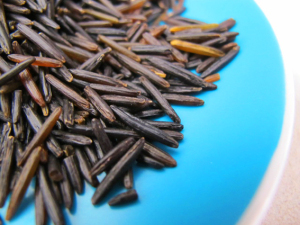
I could spend all day admiring the glossy black spikes of wild rice.
Aren’t they stunning? Like dropped sea urchin spines, or an echidna’s shrugged-off party frock.

There’s something tribal and daring about the look of this rice family’s younger punk sibling, which is apparently not rice at all but a type of aquatic grass,  from the genus Zizania.

I haven’t used it terribly often – have you? – but I love the chewy texture and nutty flavour that comes when the grain splits as it cooks. The stuff I buy comes from North America, where several Zizania species are native. Other species are native to different parts of the world (like China), and there is even a completely different wild rice plant, Potamophila parviflora – not available commercially, which is unsurprising given our water problems - native to  Australia.

I’m told it takes about 45 minutes of boiling for wild rice to properly cook, and in truth I’ve never really measured the time but just drained it when the kernel splits to reveal the white inside – the shorter the cooking time, the chewier the texture.

You may remember that my favourite quinoa salad, a bastardisation of a quinoa dish by the wonderful Yotam Ottolenghi, includes wild rice.  And I’ve used it in stuffing for chicken, with nuts and dried fruit. But I would love to hear how you use wild rice, so do share your ideas.

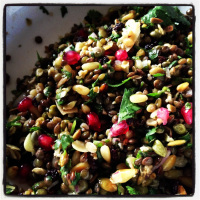
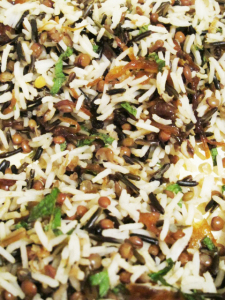
In the meantime, I’ll leave you with an easy rice and lentil side dish I made the other night to accompany some chermoula-barbecued salmon fillets (more on chermoula soon). I just threw this together and liked it so much I’m going to do lentil and rice combinations much more often. We did cheat a bit with this, having brought home a container of seeni sambol, the deliciously sticky, jammy, spicy Sri Lankan caramelised onion sambal from Kammadhenu the other night.  This stuff is the business, to add a kick to any dish you like, from soup to rice to whatever. If you can be bothered making your own, I bet it would be amazing. But otherwise you could just fry some onion till very dark and stir through this pilaffy number at the end.

  • ¼ cup wild rice
  • ½ cup Basmati rice
  • ¼ cup Persian red lentils
  • ¼ cup currants soaked in red wine vinegar
  • 1 tablespoon seeni sambol or 1 whole onion, sliced and fried till very crisp and dark
  • 1 tablespoon torn mint
  • sale & pepper

Cook the rice and lentils in three separate pots of boiling water till tender (the wild rice will take up to 45 minutes), then drain and mix.

Stir through the currants, sambol or onion and mint, check seasoning and serve.

Now your turn. What do you do with this dark and spiky little number?


h1

How to make a vegetarian smile, pt II

September 17, 2010

The last entirely vegetarian dinner party I cooked was a wintry little number, but very satisfying, with a few  nicely contrasting elements I think. The mainstay was a mushroom ragu served on creamy polenta, paired with a side dish of a punchy green salad with lentils & goat’s cheese.

There are a couple of things that made this work well. First, both the ragu and the lentils used  the roasted vegetable stock, as I described ages ago here. This time though, I took a leaf out of Skye Gyngell’s book – her secret flavour weapons often include tamari sauce and maple syrup, so I added a tablespoon of each to the reduced stock. I swear this little combo, while not leaping out as separate flavours, really gives a layered depth and complexity to the stock.

Next was the assortment of mushrooms. I used about 600g of combined chopped Portobello, field and Swiss brown mushrooms, and later added – importantly – a good tablespoon’s worth of dried porcinis to the mix. Again, this gives a big hit of rich flavour.

Mushroom ragu with creamy polenta

  • 4 tablespoons olive oil
  • 1 medium onion
  • 1 medium carrot, peeled and finely chopped
  • 4 cloves garlic, chopped
  • 1 stalk celery, chopped
  • 600g chopped fresh mushrooms
  • 1 x can peeled tomatoes
  • 1 cup red wine
  • 1 cup roasted vegetable stock
  • 10g dried porcini, rehydrated & chopped
  • 2 bay leaves
  • 2 sprigs thyme
  • 1 sprig rosemary
  • Salt and freshly ground black pepper
  • grated Parmesan, to serve
  1. Heat oil & add celery, carrot, onion, garlic and some sea salt, sauté until soft.
  2. Add a good big knob of butter & a little more oil, turn up the heat and – gradually, in batches – sauté the fresh mushrooms with the mirepoix over a high heat until the mushrooms lose most of their moisture and are nicely browned.
  3. Add wine, tomatoes, stock and herbs and bring to the boil, then turn down to a simmer.
  4. Add the chopped porcini and liquid to the sauce.
  5. Stir, then simmer uncovered for around 30 minutes (or even up to an hour),  till the sauce has reduced and thickened, adding another good slug of oil if it looks too watery. Add stock or water if at any stage it becomes too thick.
  6. Season with salt and freshly ground pepper.

Not long before you’re ready to serve, make the creamy polenta – this is dead simple, as described here, but does take a little time. Just do the onion & milk bit ahead of time, and if you need to, have your guests chat with you in the kitchen while you stir.

Spoon the polenta into shallow pasta bowls, and top with a heap of the mushroom ragu (add a tiny swizzle of olive oil at the last second, if you dare), and sprinkle with Parmesan at the table.

Green salad with lentils & goat’s cheese

This zingy little salad can be made completely ahead of time and simply dressed & tossed just before you eat.

1. Sling half a cup of puy lentils into a pan of hot vegetable stock, and simmer for 20 minutes or till tender. Drain and return to the pan with a splash of olive oil till ready to assemble the salad.

2. Have some slow-roasted tomatoes (scroll down on the Essential Ingredients page) ready to go.

3. When you’re ready to serve, toss some good green salad leaves (specially good with some texturally springy ones, like curly endive and radicchio as well as soft lettuce) together with the scattered lentils and tomatoes in a bowl with a dressing of three-parts good extra-virgin oil to one-part best-quality balsamic vinegar. Then tear up some marinated goat’s cheese  (or even better, your homemade labneh!) and toss it into the salad in chunks. Serve in a bowl at the table.

Sweet ending

For dessert, I can’t recommend this whole orange cake highly enough – and because it’s made with almond meal instead of flour, it gives your guests another dose of good nutty protein. Serve it with some more yoghurt or cream on the side. Another almondy option is a frangipane tart, and although I haven’t made this particular one, there is a beautiful-sounding recipe here. Otherwise, I’d go for some other fruit-based dessert.

So there you have it – a simple but I think nicely varied vegetarian dinner menu for four, with heaps of punchy flavour and texture, and also providing a reasonably diverse mix of protein, dairy, carbohydrate and lots of other goodies.

I would love to hear comment from our vegetarian visitors about how this combination might be improved – and as well, keep your ideas for zingy vego dinner party dishes coming.

V

h1

You borlotti beauty

August 8, 2010

At the risk of having to rename this blog Purely Pulses, I have to tell you about my first encounter with fresh borlotti beans. I am a big fan of the dried variety – and the canned – but until now I’ve never tried cooking fresh ones. But the other day I spied some in the grocery and couldn’t resist their splotchy raspberry-swirl stockings.

Today I did a test run at lunch with buddies – and am happy to say they made the grade and I officially declare them my New Favourite Thing in the World for this week.

After podding (or shucking! can we say that about beans?) the borlottis from their slinky pink sleeves, I chucked them into boiling water for about 20 minutes and drained them. Then, while they were still hot, I bashed them about a bit with a wooden spoon and then tossed them into a pan in which I had just crisped some exceptionally good bacon, plus a good handful of finely chopped parsley and a clove of minced garlic.

Into a bowl they went, with a generous slurp of Moon Over Martinborough‘s  luscious extra virgin olive oil (which I bought online from NZ after reading this lovely post here and am absolutely loving sloshing around in every veg dish I can at the moment), loads of sea salt and juice of about half a lemon.

Seriously good result. The fresh beans have a much nicer texture than the canned ones, which can be a bit sludgy, and I reckon the freshies have a beautifully delicate colour too (the canned ones do tend toward a depressingly old-ladies’-underwear hue, don’t you think?).

And if you think the finished dish rather resembles a great many other legume side dishes you’ve seen on this blog, well – you’re right. But it can’t be helped – too much legume love is never enough round these parts.

Now, while I’m here, I wish to draw your attention  to the lovely folk at Feather & Bone, providers of the above-mentioned free range bacon and lots of other meaty goodies we chomp our way through in this house.

Ever since I bought our divine Christmas ham from them last year on the recommendation of Empress Clifford-Smith, Feather & Bone have basically become the guardians of my conscience when it comes to eating animals.

Until I turn vegetarian (will that day ever come, I wonder) I try to do the next best thing, and support farmers who treat their animals as humanely as possible, as well as doing all they can to care for the land in a sustainable way. And what with the whole free-range/organic labelling confusion and misinformation that goes on, the only way I know that I am really doing the best I can by the creatures is to buy from Laura and Grant at Feather & Bone. They do all the research, all the inspecting of the farms and the buying of produce from very carefully selected farmers, based not only on the ethical treatment of animals but just as importantly, the quality and flavour of the meat – and believe me,  they know their stuff. To boot, the glorious goodies are delivered to your door if you wish. What’s not to love?

But you don’t just have to take my word for it – the great news is that just this month, Feather & Bone have been named Delicious magazine’s Outstanding Supplier of the Year. So congratulations to Grant & Laura from me and all who have dined on your efforts in this house. For readers living in Sydney, I can’t recommend F&B highly enough. And we shall be celebrating tomorrow night by roasting a couple of delectable Feather & Bone chooks for Senor’s birthday dinner. Cheers!

h1

A bit on the side: roast cauli & chickpea salad

July 21, 2010

The other day, with a whole heap of folks coming to dinner, I had one of those crises of confidence in which you are suddenly convinced there won’t be enough food.

In our case this is almost always wrong (as indeed it turned out to be this time), but nevertheless the point came during the afternoon before a biggish gathering when Senor and I stood together peering into a huge pot (of Neil Perry’s cinnamon lamb) and asked each other, ‘Do you think there’ll be enough?’

Of course there was. But during that moment of doubt I recalled that in the fridge were a cauliflower and half a bunch of spinach, and the cupboard always has chickpeas. And I had for weeks wanted to try making a version of a delectable simple chickpea, silverbeet & cauliflower number I’d eaten twice now at Bodega (the Surry Hills tapas restaurant which I reckon must have some of the most blindingly delicious and original food in Sydney).

So I gave a version of this salad a try, as a little side dish to go with the tagine and the couscous, and it was not half bad. Next time I’d make the cauliflower florets larger as mine became a little too soft (and the Bodega cauli is deep-fried, I think, rather than roasted), but I have to say the flavour and texture was quite delicious. It’s a perfect quick side dish and chock full of goodness.

Roast cauliflower, spinach & chickpea salad

  • olive oil
  • ½ bunch English spinach, stems finely chopped & leaves roughly torn
  • ½ head cauliflower, broken into smallish florets
  • 1 cans chickpeas, very well drained
  • salt
  • 1 clove garlic, very finely chopped
  • tsp cumin
  • juice 1 lemon
  • few sprigs coriander, to garnish
  1. Break cauliflower into small florets, toss in a bowl with a good few glugs of olive oil till well coated, then spread over a baking tray and roast in a hot oven for around 30 mins or until golden brown.
  2. Meanwhile, heat olive oil over high heat and add drained chickpeas. Add salt & agitate in the pan until the chickpeas are well coated and begin to turn golden.
  3. Remove chickpeas with a slotted spoon to kitchen paper.
  4. Finely chop the spinach stems and add to the hot oil, fry till the pieces begin to crisp. Turn off the heat and add the leaves until they wilt.
  5. Gently mix the chickpeas, roasted cauliflower and spinach with the garlic  in a bowl. Add the lemon juice and cumin, adjusting to taste.
  6. Serve with a little chopped coriander to garnish.

And now, friends of the oyster, I am taking a fortnight away from blogging – am off to a writing retreat to try to finish my novel. See you soon!

Follow

Get every new post delivered to your Inbox.

Join 89 other followers