 Some of you may remember my ill-fated experiment with dhal many mooons ago - an experience that made me gag. Well, thanks to a fantastic vegetarian Indian cookbook I was sent recently, I have not only got back on the dahl horse but the two of us have taken to spending many long, loving hours together.
What I’ve discovered, you see, is that dahl - and my particular favourite, spinach - is quite possibly the perfect desk-side lunch. And what with all the structural editing and rereading and copy-editing and rewriting of my forthcoming novel that’s been happening lately, I have been spending more time than usual glued to the office chair, working away to meet the required deadlines. At times like these, as many of you know, nicking off to the kitchen to potter about making lunch feels way too guilt-inducingly like wagging school.
So after a few goes at making dahl from different recipes, and falling head-over-heels in love with it, one Sunday I prepared for a very intensive week of editing by making a giant pot of spinach dahl. Flavour-wise, I find it improves more with each day (even up to four or five days in). It has the comfort-food factor to boot: soft in the mouth, and deeply nourishing to the body and soul. I have eaten this dahl every day for lunch for almost a week, and not tired of it one little bit.
Once it’s in the fridge, the only lunch preparation required is a bowl, a couple of pings in the microwave, and a spoon. Except, I must add, the one crucial addition when serving is a dollop of spicy chutney or hot pickle - this is absolutely essential in my view.
Another great thing about dahl is that it’s so easy to concoct your own version. After once or twice following a recipe, now I just bung in whatever I feel like on the day, with quantities and textures and ingredients varying each time. I am sure there are some dahl purists out there, and if so I would very much love to hear your views on texture and heat and starchiness and so on. But if you’re a fan of the bung-it-in-and-see-what-happens approach to cooking, this could be your new favourite too. This recipe is a result of combining a Madhur Jaffrey recipe and one from the Mysore Style Cooking book, I think, as well as a few others I read online.
This serves about six people - or enough for one novel’s intensive week-long copy-edit.
Ingredients
- 3 bunches English spinach, thoroughly washed and leaves separated from stems. roughly chop leaves; keep the stems from one bunch and discard the others. Finely chop the stems and set aside.
- 2 cups dahl - I used skinned and split moong dahl, but you could use any old kind of split lentil (there are so many different types of dried lentil, split and whole, that work for dahl - try a few different ones to discover your favourite)
- 1 tsp turmeric
- 1 bay leaf
- vegetable oil
- 2 tsp brown mustard seeds
- 2 tsp cumin seeds
- 2 or 3 onions, finely chopped
- 5cm piece ginger, finely chopped
- 2 tsp salt
- 1 tsp chilli flakes
- green or red chillies, finely chopped, to taste
- 2 tbsp shredded coconut
Method
1. Thoroughly wash the dahl in several changes of water, then add to a heavy based pan with 8 cups water, the turmeric and bay leaf.
2. Stir and bring to a simmer. Cover almost entirely with the lid and leave to simmer gently for up to an hour, or until the lentils are tender.
3. In a separate pan, heat a little oil and fry the mustard and cumin seeds over medium heat until they start to crackle and pop.
4. Add onion, ginger and finely chopped spinach stems, saute gently until translucent.
5. Into the pan put the spinach, firmly packing it in if necessary, and cover.
6. Cook over gentle heat until the spinach is thoroughly wilted and shrinks right down.
7. When the dahl is cooked, combine the contents of the two pans and mix thoroughly over low heat.
8. Add the remaining ingredients, adjusting seasoning and heat to taste, and continue to cook gently until you achieve the texture you prefer. Add more water if it becomes too thick for your liking.
9. Serve in a bowl with a dollop of hot pickle (this one is a standard Patak’s Hot Lime Pickle) or sweet chutney* and some chopped coriander if desired.
*My absolute favourite chutney in the world, first given me by our friend Caro, is this Roasted Cherry Chutney made by a New Zealand company called Provisions of Central Otago. Senor and I became so addicted to it that when we finished the jar Caro brought us back from across the ditch, and I learned my Twitter buddy and food fiend @Reemski was going to NZ, I basically begged her to bring some back for me. She doubled the joy by also bringing their Roasted Nectarine Chutney - lordy me, what a feast. If anyone hears of a local stockist for this stuff, let me know! Otherwise next time I shall be biting the bullet and buying over $50 worth from their website (if they ship to Oz - not sure).

 The sound of summer round here is the whoosh of the barbecue flame as it lights, the clunk of crockery on the outdoor table, the clicking of crickets and cicadas, and the occasional high tinnitus whine of a mosquito in your ear. Lazy, cruisy evenings outside are one of the great pleasures of the season in the suburbs, don’t you think? It’s been so rainy around here lately that we’ve taken every opportunity between showers to eat dinner outside.
 A friend who moved from Melbourne to Sydney a couple of years ago was horrified to find that these beans are all but impossible to find in this city. A major problem, it turns out, because as I discovered this week - with a single precious can given to me by said friend - the flageolets are a completely different creature to all the other siblings in the canned pulse family. Much more buttery in texture, smaller and altogether sweeter and more delicious than cannellinis or borlottis, these babies are just too good to miss.
 Ingredients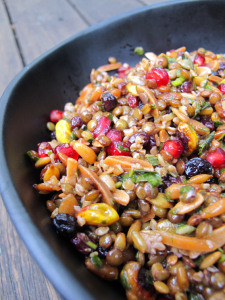
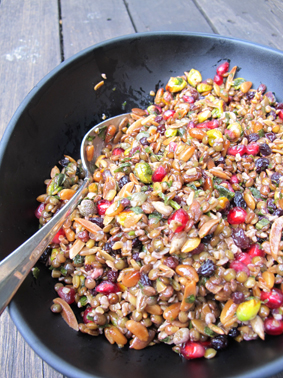




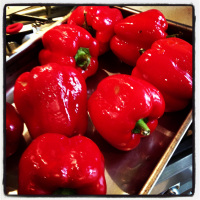
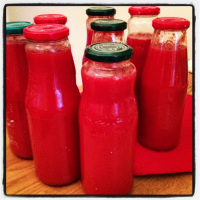
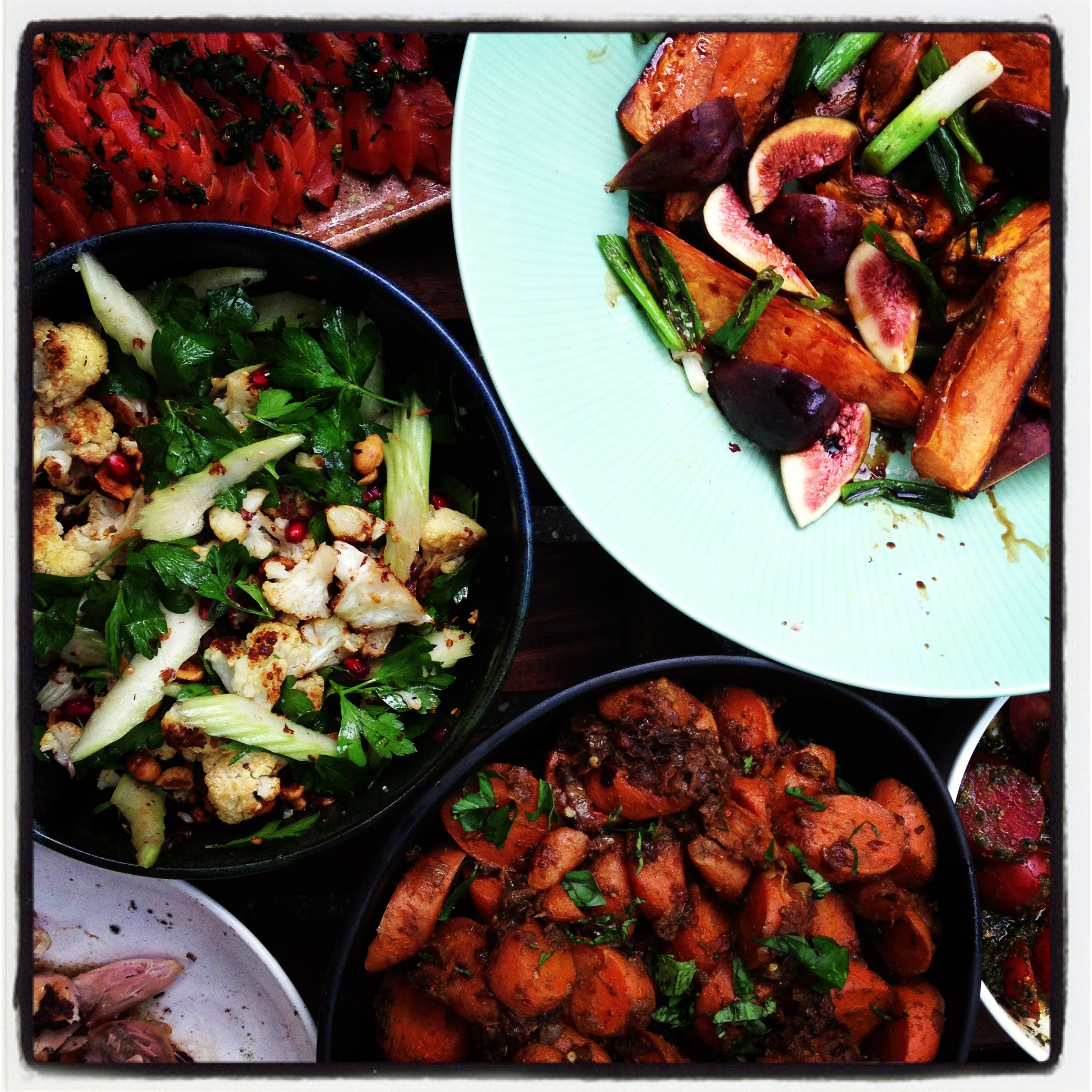
 It seems a bit early to report on my first week as a vegetarian seeing as it’s actually only day four of our VegFeb month, but what the hell. I am already finding it an interesting experience.
 I’ve been doing loads of food writing lately: a couple of features for national magazines coming out in the new year, as well as
 Sunday is my favourite day for cooking, especially as the weather warms up. It helps that the
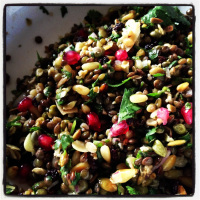
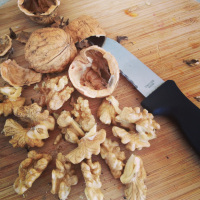
  The hit of the evening was the beetroot, both in the cake and in this walnut, beetroot and feta salad. I have till recently been a bit confused about walnuts - for some reason they, alone among all the nuts, invariably give me a small, unpleasant and instantaneous pain in the upper stomach as soon as I eat them. Don’t really understand this and am loath to investigate too much in case I am banned from eating delicious things - so my preferred tactic has always been to grin and bear it.
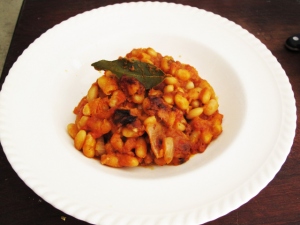 You may recall that following our highway harvesting a couple of weeks ago I found myself with a kilo of fresh borlotti beans and no idea what to do with them. Until I asked good old Twitter for ideas (so useful for a quick shout-out, that place) and @BZB suggested Boston baked beans - bingo!
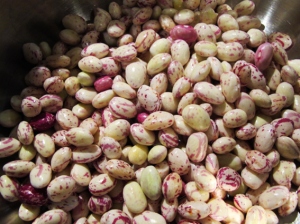 With our lovely fresh roadside borlottis (pictured podded here) there was no soaking involved, obviously. In fact despite being a bit unsure of what to do, I just tossed them uncooked into the saucy mix and baked them for several hours - while I was off attending a pro-carbon tax rally, to be precise. And let me tell you, there’s nothing like a bit of good old-fashioned sign-waving, foot-stomping, slogan-shouting protesting for working up an appetite for these babies! (and no, I won’t be sullying this blog with the gags about gases and emissions that are just begging to be made right here; you’ll have to enjoy those in the privacy of your own home…!)
 Well, the first real heatwave of the summer hit us with full force on the first weekend in February. I have never felt so hot in my life as I was that Saturday, when the temperature where we were, at beautiful
  When Senor came home from a garage sale one day grinning and brandishing a battered copy of this book, I cheered. It’s a classic, as many of you well know, but one I had never gotten round to looking at. It went on the cookbook shelf - and was promptly forgotten, till last night, when I finally dipped in.
 subscribe
 How to shuck an oyster