Archive for the ‘seafood’ Category

h1

What I ate on my holidays

January 18, 2013

Salad days

It’s been 46.2 degrees Celsius here in Sydney today – that’s over 112 degrees for you Farenheit fans – at the end of my first week back in the office for a loooong time. Luckily this room is air conditioned  unlike the rest of the house, but I’m wondering what on earth to cook for dinner. Last time it got nearly this hot I made this, but I think I have a batch of Karen Martini’s amazing Syrian chicken in the freezer, so I think we’ll have that (actually it’s ours, not Karen’s – but the recipe is hers…)

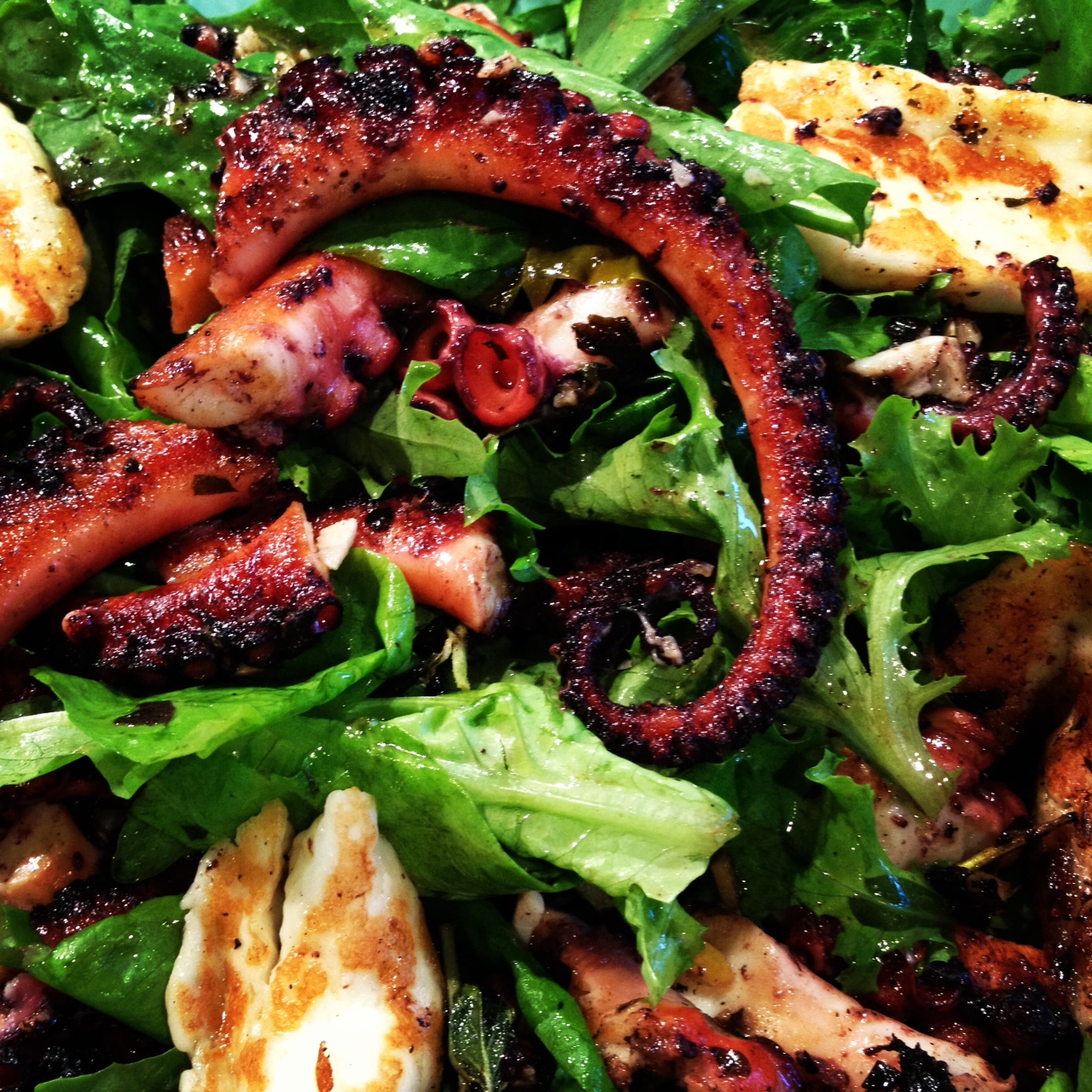
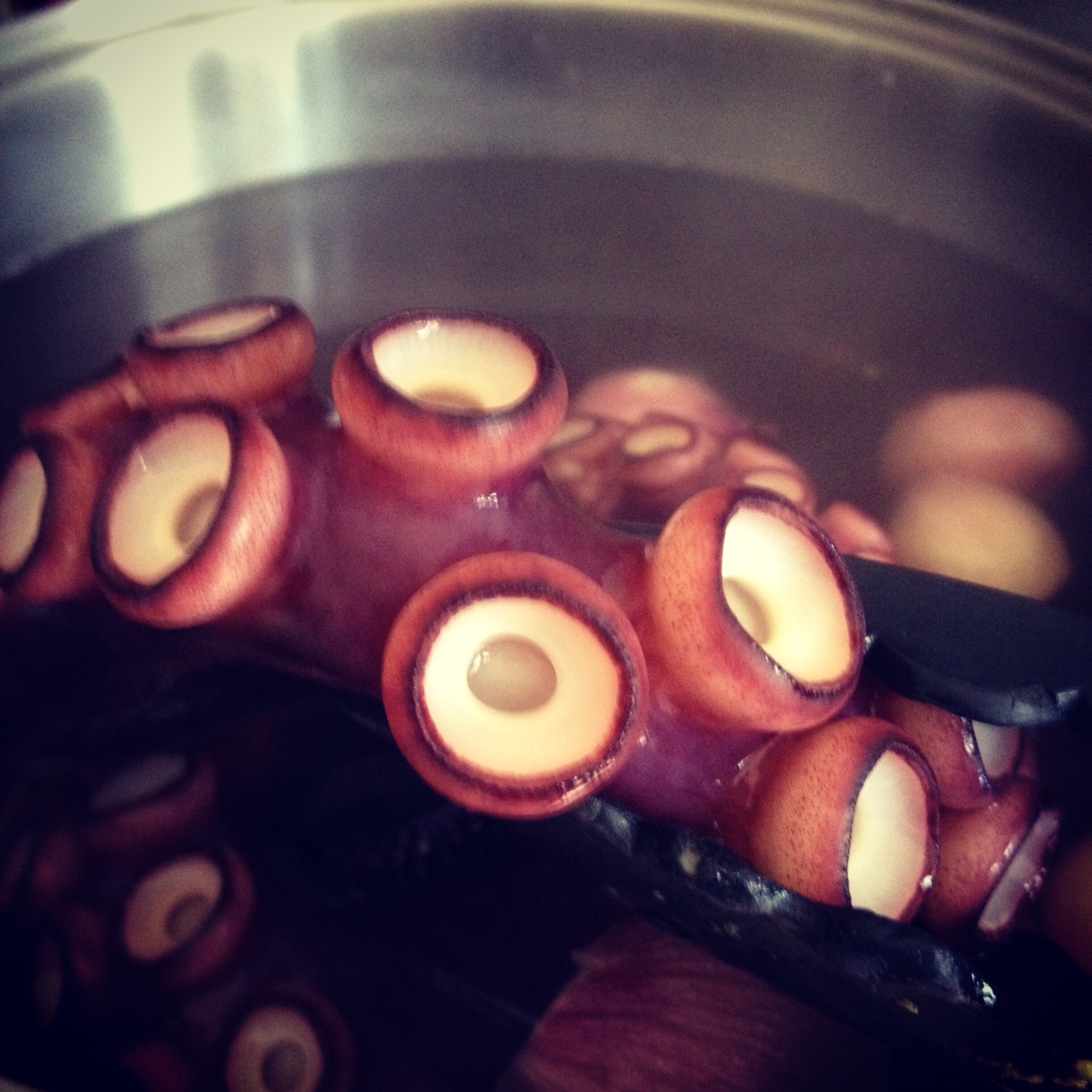
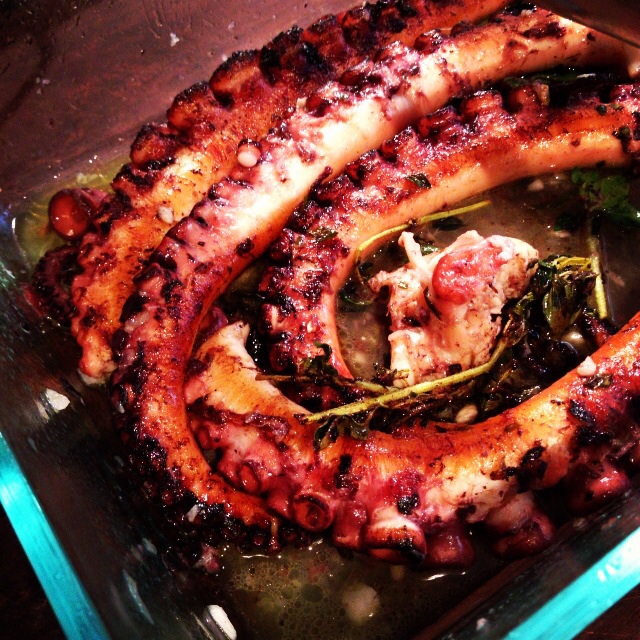
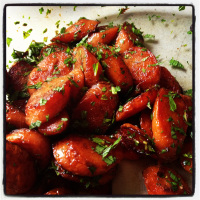
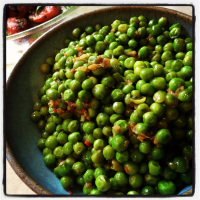
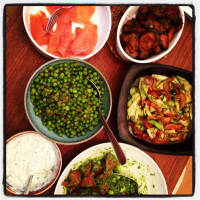
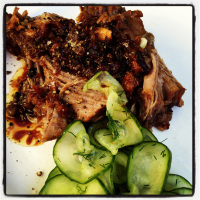
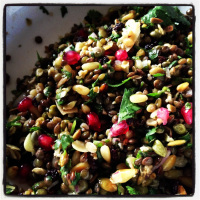
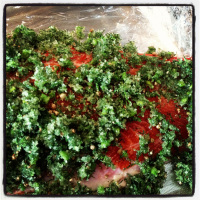
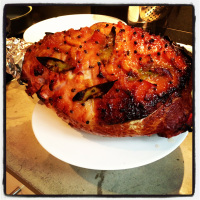
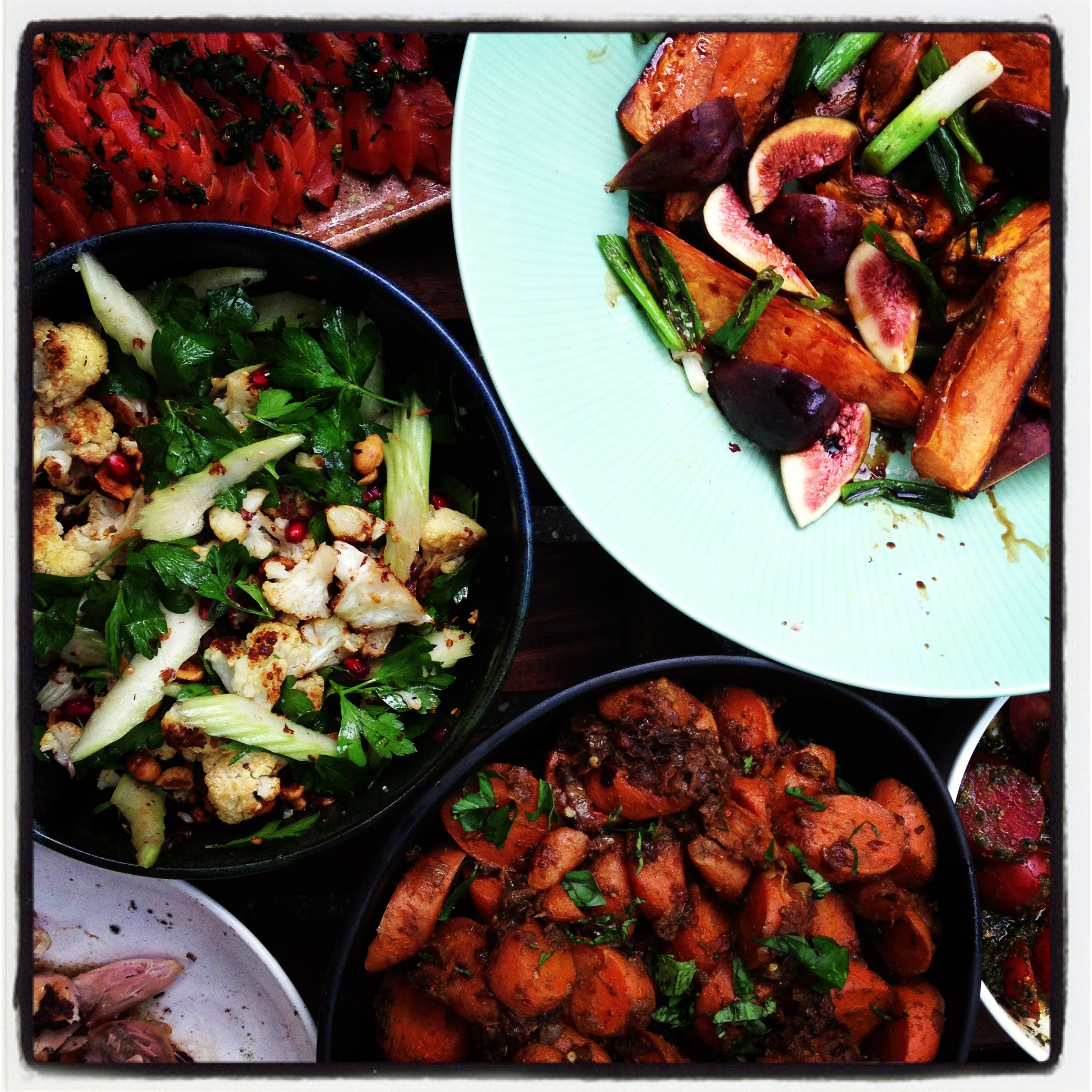
January has been perfect salad weather so far. So in lieu of a very, very overdue posting – and just before I go and find a cooling bevvy in the fridge – I’ve decided instead of writing here I will merely present a pictorial history of my favourite bits of holiday cooking and eating. Salads, salads, salads and more salads, with the odd bit of protein thrown in. Have been inspired again by the wonderful Ottolenghi lads, as I was given this fantastic book for Christmas, but also have revived lots of old favourites. Hope to be back here soon with some recipes … if you’re in Australia, stay cool folks!

Oh look, the cool change is here! Aaaaahhhh….

h1

On shopping, surliness & sustainability

August 21, 2012

I have always been rather afraid of stir-frying fish.

I have visions of fish fillets falling apart and turning to soggy mush, making not so much a stirfry as a soupy mash. As I think I’ve discussed here before, my thoroughly inland childhood meant I came late to seafood and, unlike my beachy husband, I still lack a natural confidence in cooking much seafood.

This is one of the reasons I love Neil Perry’s recipes for cooking fish and seafood – his instructions are always so exact and clear, especially in Good Food, one of my essential books.  So when I saw Mr Perry’s stir fried blue eye in last weekend’s paper I determined to look again at stir fried fish.

The recipe is for blue eye trevalla, which, while recommended for its firmness of flesh and ability to stand up to robust flavours, the sustainable seafood gurus GoodFishBadFish put in the category ‘Think Twice’. ”Stocks are currently fully fished, with localised depletions. Some bycatch concern,” they say.

However, given that so much of the other seafood we like to eat is firmly in the “Say No” category, I find myself thinking that everything’s relative, and so blue eye is not so bad after all. GoodFish folks suggest alternatives of mulloway or coral trout, neither of which my nearest fish shop stocks.

I know I should ask them about mulloway, and start talking about sustainability, and “building a relationship” for future reference. But I’m weirdly, ridiculously shy of such conversations. I don’t know why, exactly. But with things like this I’m reminded of Julian Barnes’ amusing piece on food shopping in his Pedant in the Kitchen, where the author admits that for him, as for most of us, the idea of “developing a relationship” with or “instructing” one’s butcher, fishmonger or candlestick maker is as realistic as “advising” one’s local policeman or garbage collector.

This is why the Pedant’s morale is rarely lifted by a recipe beginning “Instruct your butcher to…” or “Telephone your fishmonger in advance and ask…” Now I know some excellent butchers, fishmongers and fruit ‘n’ veggers, though I don’t think of any of them as “mine”. Equally, I sometimes encounter a needlessly surly butcher who, when you hesitantly propose what you might require, will seize something in a flurry of hands, offer it for a nanosecond’s inspection with a lip-curling “That do?”, and have it on the scales and off again before your eyes can refocus, while calling out a weight and price which could well be a touch speculative.

I can imagine the look of bafflement on my fish shop man’s face if I quizzed him on his sustainability credentials. I suspect it would resemble the response of the woman behind the counter at a terrible local store laughingly called a “deli”, when I asked her about the origins of one of her four slabs of unmarked, unlabelled cheese. “I dunno,” she said, crossly. I tried again, valiantly. Might she know what kind of cheese it was? She sighed, cast her eyes to the ceiling, and shot me a look of undisguised contempt as she said: “English”.

Sometimes I wonder if avoiding this kind of exchange  is part of the reason some people actually prefer supermarket shopping. (It’s also one of the reasons, apart from the amazing quality of the meat and the ethical aspects, I buy almost all our meat from Feather & Bone – they actually do like to talk to you, are happy to help, and are generally Lovely Humans.)

Anyhoo, back to fish!

I bought blue eye trevalla from my surly fish man, and with it made a bastardised version of Neil Perry’s recipe last night. I marinated the chunks of fish as per his recipe, but from there returned to the old faithful stir fry combo taught to me a thousand years ago by my friend Ricardo: red capsicum, lots of sliced garlic, 3cm batons of green onion, a couple of birdeye chillis, split lengthwise, and then half a bunch of basil leaves tossed in at the end. Add to this a goodly slosh of fish sauce (I tend to go for at least one tablespoon, sometimes more) and a good pinch of brown sugar.

Method wise, I began as Neil suggests:

1. Heat a wok with a little vegetable oil until just smoking, then add the fish pieces with the marinade, spreading these evenly around the wok.

2. “Cook undisturbed for 1 minute, allowing the fish to start to brown” – then I turned the chunks once until almost cooked, then removed them and set aside.

3. I then added the vegetables but not the basil to the wok and stirfried them for a few minutes (adding a little boiling water), then returned the fish, slooshed in the fish sauce and brown sugar and gently stirred to combine, still at high heat.

4. As I turned off the heat, I threw the basil leaves in, put the rice in one serving bowl and the fish in another. By this time the basil leaves had wilted just nicely.

It was excellent.

Do you stir-fry seafood much? any problems? And what about “your” butcher, fishmonger or baker? How do you begin the conversations I’m too chicken to have? I would really love your views.


h1

Fish out of water

January 27, 2012

Our (almost) vegetarian adventure

Some of you already know about the culinary experiment I am forcing on Senor for February – the two of us are going veg for a month.

Last year it was Febfast, giving up the booze, which was a chore, to say the least. I expect to enjoy this February a whole lot more than last, for I have no doubt we will be eating very well indeed.

We’re trying out a version of vegetarianism for a few reasons, apart from my increasingly obvious lapsed-Catholic attachment to some annual ritual festival of denial – any other ex-Catholics out there with these weird lenten leanings?

First, I just want to see what it feels like to go without meat for a month, because I realised some time ago that I have never forgone meat (either red meat, or chicken, pork, bacon, chorizo, fish, seafood etc) for even one week, let alone a month. And even though I feel that we have cut down our meat consumption substantially, I took note of everything we ate while away last week – a holiday filled with delicious salads and veg dishes provided by excellent cooks – and realised that even then, not a day went by without some bit of animal flesh – fish, or ham, or chicken. So actually, the only thing we’ve really cut down on is red meat.

Second, I am hoping it will help us shift a few kilos of the blubber that returned rather insistently over the latter quarter of the year. As I said to Senor, I’ve never known a fat vegetarian, my eyes glazing over and mouth watering with images of all the butter and cheese (and organic ghee kindly delivered to our door by our friend Guy the other day!!) that we will be chowing down on. And then Senor most unhelpfully pointed out that we do know a couple of portly vegos, which sort of ruined my fantasy of the kilos dropping daily with zero effort on our part at all. But I still will be interested to see how it affects weight and general health and feeling of zinginess, to substitute meat with other things.

Third, I am keen to see what kind of a reboot my cooking repertoire receives from this change in routine. When I’m busy I, like most of us I’m sure, tend to fall back on the usual contenders for the evening meal – but this will force me to try new things and extend the range a bit, I hope. As well, one of the things I’ve always believed is that to make interesting, really flavoursome  veg food requires more effort than a meat diet does. And now I’m a full-time student (starting a PhD in Creative Writing, eek) I will be financially less well off but have more time and flexibility. If there is ever a time to do this, it’s now – in summer when salads are inspiring, when one doesn’t crave rich, stodgy food as I do in winter, and early in my studies when I can retain the illusion I have plenty of time to do everything.

Finally, there will be the nice fuzzy glow of knowing we’ve spared the lives of a few critters, but I can’t pretend that this is really high on the list of reasons. While in recent years I have thought a lot about my love of meat, and eating it has caused me guilt and unease, I have recently come to a position of moral acceptance that it’s okay to eat animals that have been humanely raised and which have not been made to suffer unnecessarily (hence shopping at Feather and Bone, and proper free range eggs and chooks and all that jazz that you probably all do as well). We’ve cut down a lot on red meat, as I’ve said, and become much firmer in a commitment to real free range pork and chicken (I think conventionally raised lamb and beef, in this country, have better lives than they do in wholly grain-fed operations like those in the US, and have better lives here than our pigs and chickens do, even accounting for beef being finished on grain), but we also try now to only buy red meat from either F&B for that reason. I do welcome any commentary on this, by the way, because I am always keen to hear more about ethical meat production.

All that said, and in noting that we’re only going veg, not vegan, we’re doing this with a few caveats in place.

The first and most important for me is that, while we’re telling all our friends and family about this trial and some have already booked us in for veg meals with them, we won’t be refusing meat at someone’s house if it feels rude to do so. Given that this is an experiment rather than a life choice, I won’t be imposing our vego status on our friends. And to me, conviviality and respect for the person who offers you food is as ethically important as respect for the life of an animal, as the fabulous Tammi Jonas has written about so eloquently here.  So there is bound to be the odd evening we eat a bit of meat rather than reject someone’s hospitality, though we’ll try as much as possible to minimise the chances.

Second – and this has no ethical basis whatsoever – I can’t give up anchovies. I just can’t. I love those little salty bombs as much as bacon, which I know I really will miss, for a hit of flavour in everything from chickpea salads to lamb roasts to onion tarts to antipasto. I completely accept the hypocrisy of feeling warm and fuzzy about a cow but not a fish, no matter how small. I hope I have never claimed to be free of hypocrisy (one of my favourite lines on hypocrisy is this, from the philosopher and psychologist Jonathan Haidt: “Stop smirking. One of the most universal pieces of advice from across cultures and eras is that we are all hypocrites, and in our condemnation of others’ hypocrisy we only compound our own.”  That came to me via Hal Herzog’s wonderful book Some We Love, Some We Hate, Some We Eat: Why It’s So Hard to Think Straight About Animals).

So now, in honour of our beloved salty little fishy bombs, and in farewell to meat for a month, I offer you this recipe which includes anchovies. It’s a very slight adaptation of a Neil Perry recipe from Good Weekend some time ago, and it is excellent. He used blue eye trevalla but as there was none when I went to our local fish market I bought royal basa and it was good. That said, next time I would try harder to buy a more sustainable fish, given the bloody ethical minefield that seafood shopping entails (god it’s tiring, isn’t it?).

I added chickpeas and zucchini to this to make it a serious one-pan dinner of gorgeousness. I also used dried rather than fresh oregano (just a teaspoon). Highly recommended with or without those additions.

This will be the last fleshy recipe from me until March – but I hope to be posting at least a few updates of how we’re faring throughout vegetableFeb.

Neil Perry’s Roast blue-eye trevalla with fennel & olives

  • 1 bulb fennel, finely sliced
  • 1 red onion, finely sliced
  • 2 tablespoons oregano, chopped
  • 2 tablespoons thyme, chopped
  • 60 ml olive oil
  • 1 red capsicum, finely sliced
  • 4 tomatoes, chopped (NP peels and deseeds, but I am too lazy for that and almost never do it)
  • 2 tablespoons capers, rinsed and drained
  • 6 anchovies
  • handful of olives
  • 1 tsp chilli flakes
  • 1 cup white wine
  • 4 x blue eye trevalla fillets – we used basa, but any firm white fish fillet would work
  • 2 tablespoons chopped parsley (I forgot this but it mattered not)
  • Additions: 1 can or equiv cooked chickpeas; 2 small zucchinis, chopped into 3cm lengths
  1. Preheat oven to 200 degrees C.
  2. Toss fennel, onion, herbs, capsicum, tomato, capers, anchovies, olives, chilli flakes together in a roasting tin. Pour the wine in and roast for about half an hour, or until the vegetables are soft.
  3. Add the chickpeas and zucchini and return to oven for 20 minutes or so until zucchinis are just tender.
  4. Nestle the fish fillets into the mix, drizzle with a little more oil and return to the oven for about 10 minutes or until fish is just cooked.
  5. Remove tray from oven, leave to rest for about five minutes and then serve a fillet on each plate, topped with the vegetable mix, garnish with parsley and season.

Any of you ever done the vegetarian thing? I’m very interested to hear about it if you have, and if you still are, what kind of foods you missed when you first gave up meat – and if you went back to meat, what tipped your decision…

h1

From offal to octopus

December 21, 2011

I’ve been doing loads of food writing lately:  a couple of features for national magazines coming out in the new year, as well as a blog post for the wonderful Kathryn Elliott which I’ll put up here shortly. And I am about to start checking the first pages of my book about cooking coming out in May – all of which is very gratifying but has left little time for hanging round here, my most comfy corner of the internet. Coming back here is kind of like flopping on the couch in your trackydaks after being out in the grownup world…

One of the mag pieces was another foray into the world of offal  (I’ll let you know when it’s published so you can read the whole horror show then if you like), an attempt to overcome the aversions I spoke about a while back. And while I certainly received a comprehensive innard education this time round and the experience was well worth it, I’m afraid I haven’t yet been seduced over to the dark (in)side.

There was one excellent side effect though – cooking this stuff gave me a few ideas for new (offal-free!) dishes to try. The kidney I made from Stephanie Alexander’s recipe, for example, came with a truly delicious spinach in a marsala sauce, which I would never ever have come across if I hadn’t been forced to go there for the K-word. And while my tripe was not something to write home about by any stretch – again – the braising liquid and other ingredients were incredibly good. The whole time we ate it I was thinking how good it would be with octopus instead of tripe, and so I made it at the earliest opportunity. And my oh my, it delivered.

Braised octopus is one of those dishes you need to eat before you can fully understand its appeal – it’s good simple peasant food with layers of kickarse flavour, but a lovely sumptuous texture as well. A few weeks after I made ours we dined with the Empress who served the most delicious ‘French-style braised octopus’ from a Kylie Kwong recipe that’s handily online here. One of the things I have always loved about our Empress’s cooking is her confident, natural flair with a really simple dish. This one she served with a green salad and some excellent sourdough, and nothing could have provoked more blissed-out groans from the table. Lord it was good.

The other great thing about octopus (apart from its unnerving intelligence, capacity for problem-solving and using tools, not to mention camera theft – they really are going to take over the world, you know) is that it gets the thumbs up for sustainability, unlike nearly every other kind of fish and seafood we eat. And – bonus of bonuses – it’s cheap.  I am about to embark on life as a full-time student next year, which I suspect means this blog will be taking on a whole new shade of Dining Broke frugality, given that the vast bulk of our household spending goes on food and wine … so occy dinner is de riguer student food methinks.

Anyhow, here’s my version of braised octopus, mangled together from various recipes – the photo doesn’t show the white beans, which were an addition to leftovers the next day, but were so good I’m putting them in the final recipe.

Who says offal never gave me anything?

Braised baby octopus with chorizo & white beans

  • 3 rashers bacon cut into chunks
  • 1 large onion, roughly chopped
  • 1 head garlic, cloves roughly chopped
  • 1 stick celery, finely chopped
  • 2 bay leaves
  • 400ml or more red wine
  • 2 tbsp dried oregano
  • 1 bottle (700g) tomato passata
  • 1 litre chicken stock
  • 2 red chillies, split
  • 1 kg cleaned baby octopus
  • 10 halved cherry tomatoes or equivalent small tomatoes, roughly chopped
  • Half to 1 chorizo sausage, sliced & fried
  • 1 cup (or more) cooked /canned & drained white beans
  • Salt & pepper

  1. Heat some oil in a heavy based casserole and fry the bacon, onion, celery and garlic till soft, with bay leaves.
  2. Add wine, oregano, passata and stock and bring to the boil. Add octopus and simmer for 30 minutes.
  3. Stir in chopped tomatoes, white beans and chorizo rounds and cook gently for another 15 minutes or until octopus is tender.
  4. Check seasoning and serve in shallow bowls.

Have you made a version of this? Or do you have another cephalopod favourite you’d like to share?

h1

Use your mussels

August 7, 2011

It’s not often that Tim Winton gets together with my mother-in-law and Jared Ingersoll in our kitchen, but that’s what happened this week.

Tempted as I am to leave it at that, let me explain …

You may recall a little while ago I made this incredible – and, technique-wise, rather elaborate  – crab bisque from an Ingersoll  recipe. Soon after that we dined with Annie, my husband’s mum, who is a great cook and made the most delicious mussel soup for us (serving it from her beautiful old tureen). Annie’s bisque was just as velvety and rich as our crab version but, it seemed, involved rather less work. Getting the meat out of a mussel is rather easier than taking a hammer to a crab and picking out the shell, let’s face it, and I resolved to try it some time.

Meanwhile, returning home after a writing retreat, this week I checked out the Sustainable Seafood Guide produced by the Australian Marine Conservation Society – of which writer Tim Winton is patron (you really didn’t think I would be able to pull it all together, did you…).

I’m sorry to say that the SSG is a very depressing little booklet – you can buy a copy, or see the online version here.  Hoping for a few tips on the most ecologically sound fish to eat, I was completely stunned to find that almost every type of seafood I have ever eaten is on either the danger list (‘think twice’) or basically completely unsustainable (‘say no’). 

According to the AMCS we should Think Twice before eating wild version of prawns (also farmed ones), barramundi, blue eye trevalla, Balmain bugs, dory, flathead, lobster, ocean perch, among many others.

Even worse, the Say No list includes farmed Tasmanian salmon (or Atlantic or smoked salmon), imported farmed prawns, farmed barramundi, snapper, orange roughy (we knew about this one and haven’t eaten it in years), wild scallops, wild swordfish, farmed trout, wild tuna of various kinds, imported canned tuna, farmed yellowtail kingfish – among others.

Although wild fish populations are being decimated, if you were under the impression you were protecting the environment by eating farmed fish, as I vaguely was, think again.

As the AMCS and the excellent resource Good Fish Bad Fish explain, farmed fish are often  produced in open sea cages with potential for serious pollution and fish escapes into the wild, along with transfer of diseases into wild fish populations. Fish in sea cages are primarily “carnivorous species with significant reliance on wild fisheries to supply feed” – and up to 5kg of fish meal from wild sources is needed to produce 1kg farmed fish.

Other farming involves semi-closed aquaculture systems – like prawn farming – in which water is exchanged between the farm and a natural waterway. These pond systems are often located adjacent to waterways, where coastal wetlands and mangroves are reclaimed for development, resulting in “a vast loss of habitat which is critical for the juvenile stage of many species”. They can also pollute surrounding waterways, and like the cage fish, often rely on wild species to feed the stock.

More acceptable farming methods are the closed aquaculture systems – land-based ponds where there is no risk of pollution to open waters (although wild fish are still often used for feeding) – and “passive-feeding” open systems using sticks, ropes, racks and cages but natural feeding. The latter is used for oysters (hooray!), mussels and other filter-feeder species.

The Good Fish Bad Fish site is rather more cheering than AMCS site, with a brilliantly designed ‘seafood converter’ to push your dinner in a more sustainable direction. However, I can’t help but wonder if turning to the more flexible Good Fish Bad Fish because we don’t like the AMCS advice is simply burying our head in the sand of the sea floor even more. (That said, the GFBF site links to the AMCS site and other resources quite comprehensively, so they are on the same page.)

So far, so deeply dispiriting. But there is some good news –  there are lots of delicious seafood species on the AMCS  ‘Better Choice’ list – including various species of wild mahi mahi, moonfish, leatherjacket, King George whiting, oysters, mussels, squid, calamari, cuttlefish, octopus.

All of which brings me – slowly, I know! – back to my mussel soup. Inspired by Annie’s soup,  Tim’s commitment  and Jared’s recipe (as well as the quite magnificent lobster-topped soup tureen I was given by Annie and my lovely in-laws L&B for my birthday – thanks guys!), I adapted the crab bisque  to come up with an easy and very delicious spicy mussel version.

Before the recipe, a quick note on the texture – on this first attempt I began by using the mouli, then the stick blender, and finally the food processor, but the result was still a little fibrous, especially with strings of celery somehow escaping all pureeing methods. Next time I am going to simply puree all the vegetable and mussel mix before adding to the stock, which is what I’m advising in the recipe below. I would love to hear if you try it, and how it goes.

Spicy mussel bisque – serves 4

  • 1 teaspoon each cumin, caraway, coriander seeds and half a teaspoon fenugreek seeds
  • 1/3 cup soft brown sugar
  • pinch chilli flakes
  • salt and pepper
  • 150ml vegetable oil
  • 1.5 large red capsicums, seeded & chopped
  • 4 cloves garlic, squashed
  • 2 ripe tomatoes, chopped
  • 1 stick celery, roughly chopped (it may be worth peeling this first if you can be bothered)
  • 1 medium fennel bulb, roughly chopped
  • 1 red onion, chopped
  • ½  bunch coriander, leaves & stems separated
  • 1.5kg black (or ‘blue’ mussels)
  • 600ml chicken stock (I used homemade  - if you use packaged, lay off the seasoning of the soup)
  • (optional) 2 tablespoons Yalla harissa – I love this stuff and keep a pot of it in the freezer at all times for digging into to add extra kick to all kinds of dishes. If you don’t want or can’t find this, you could perhaps double the spice mix and chilli at the beginning for some extra kick

Method

  1. Toast the spices in a dry frying pan until fragrant, then grind in mortar & pestle or spice grinder.
  2. Heat a deep roasting tin in the oven or on the stove top and when hot, add the oil and all the vegetables except coriander leaves.
  3. Sprinkle the spices over the vegetables with the sugar, chilli flakes & seasoning and mix well and roast in a moderate oven for about 1 hour.
  4. Meanwhile, scrub and de-beard the mussels, then place in a covered pan over a medium heat with a big glass of white wine for about 10 minutes, or until the mussels are opened. Remove them from the pan to cool, reserving the cooking liquid.
  5. When the shells are cool enough to handle, remove the meat from the shells and set aside.
  6. When the vegetables are soft, smell good and are a little coloured, remove from oven.
  7. Transfer the vegetables and the mussel meat into the large bowl of a food processor and puree till smooth – or keep it coarse if you prefer a more rustic texture.
  8. In a sizable pot add the stock to the mussel cooking liquid, then add the puree and simmer gently for about 15 minutes.
  9. Add the chopped coriander leaves and harissa if using, stir to combine, and serve with crusty bread.
h1

Risky bisqueness

June 6, 2011

Smash it up: Jared Ingersoll’s crab & harissa soup

The other weekend Senor and I were looking for a punchy little entree to accompany a roast lamb dinner for friends, and he happened upon Jared Ingersoll’s recipe for this crab soup.

Unusually, the recipe involved roasting the blue swimmer crab along with other ingredients for a whole hour in the oven.  Simple enough, you think, and it is.  The only demanding bit  is that periodically through the cooking you are required to take ‘a heavy mallet or a rolling pin’ to the crab, smashing it to simithereens.

Have you ever used a mallet to smash a crab shell? I haven’t, but I have sat across the dining table from Senor and our friend Ms J years ago while they went beserk with a hammer on a mud crab as Mr J and I cowered in fear, doing our best to shield ourselves from crabby debris.  I recall that there followed many weeks of picking crab shell off  Mr & Ms J’s paintings and nearby soft furnishings  (I recall, too, Mr J’s and my anxious glances at one another on seeing how powerfully – and gleefully – our respective spouses wielded the blunt instrument).

Suffice it to say that if you want to make this soup, you must prepare for a splatter fest, given that the smash-up here involves not only crab but a soupy mix of roasted capsicum and onion and tomatoes.  I started out trying to prevent crab on the ceiling by leaning over the pan and hoping my apron would take the brunt, but eventually I just gave in and bashed away with the rolling pin, picking bits of crab and roasted capsicum and tomato off the walls and my face as I went, pitching the bits back into the pan as best I could. I even confess to a certain amount of pleasurable abandonment to the process after a while.

The hardest part of this recipe is not the bashing, but the last step. After you’ve whizzed the mixture (which by now includes fish stock)  with a stick blender to mash it all up as best you can, it’s mouli time. I have never used a mouli before, but bought one specially for this dish (I’ve been trying to think of an excuse to get one for a while now) and I would say that it would be almost impossible to make this soup without one – or without some other way of sieving the mixture so that, as Jared instructs, you “take time to squeeze out as much of the soup as you possibly can; only stop using the mouli when you are left with a dry crumbly mixture on top”.

If all this sounds like one giant headache, it kind of is. But the result, I must tell you, is pretty fantastic: a deep, velvety, richly spicy soup. The quantity, which looked small when we finally had the soup finished, was just right – it’s so rich and luscious that a little goes a long way. This recipe comes from the book Sharing Plates, which is full of good stuff including our favourite orange and quince cake recipe and is accompanied by a recipe for zucchini fritters that we’ve not yet tried.
Unfortunately we forgot to take a photo of the final result, so you’ll have to imagine for yourself  a rich mahogany-coloured, velvety-looking soup in a little white ramekin and a sweet, spicy, roast crab aroma in the air.

Jared Ingersoll’s crab and harissa soup 

Ingredients

  • 3 blue swimmer crabs (we didn’t kill our own although the recipe calls for live ones)
  • 1 teaspoon each cumin, caraway, coriander seeds and half a teaspoon fenugreek seeds
  • 1/3 cup soft brown sugar
  • pinch chilli flakes
  • salt and pepper
  • 150ml vegetable oil
  • 3 red capsicums, seeded & chopped
  • 2 cloves garlic, crushed
  • 4 ripe tomatoes, chopped
  • 1 red onion, chopped
  • 1.5 litres fish stock (I used half packaged fish stock and half homemade chicken stock)
  • 1 bunch coriander
  • a few sprigs of mint and of parsley
Method
  1. Clean and quarter the crabs, removing the finger-like gills but keeping the brown meat if there is any.
  2. Toast the spices in a dry frying pan until fragrant, then grind in mortar & pestle or spice grinder.
  3. Sprinkle the spices over the crab with the sugar, chilli flakes & seasoning and mix.
  4. Heat a deep roasting tin in the oven or on the stove top and when hot, add the oil and then the spiced crab mix.
  5. Mix everything together well, bung in the oven for about 20 minutes.
  6. Remove pan from oven, mix in the remaining ingredients and continue to cook in the oven for about an hour, periodically bashing the shit out of the crab with your rolling pin or hammer, as discussed above. I think I did it about three or four times during the whole process.
  7. When it smells good and everything is soft and a little coloured, put the pan on the stove top and add the stock, simmering gently for about 15 minutes.
  8. Transfer to a saucepan and whizz with stick blender, then mouli as thoroughly as you can, as described above. I checked obsessively for shell, thinking there was no way the mouli could get it all, but found no shell at all. I would still suggest warning your guests about the possibility, however.

If this sounds good to you, I would love to know if you make it – probably best for a day when you have a few frustrations to pound out. And in the meantime, I would love to hear any other crabby tales you might have to tell.

h1

A cool change: heatwave cooking

February 17, 2011

Well, the first real heatwave of the summer hit us with full force on the first weekend in February. I have never felt so hot in my life as I was that Saturday, when the temperature where we were, at beautiful Killcare just north of Sydney, reached 42 degrees Celsius (that’s over 107 F) for most of the day. According to the weather boffins, it was the sixth successive day that the Sydney area had reached sweltering 30-plus temperatures, representing the hottest week in 150 years. Pheeeew….

Sharing a beach house with some friends would appear to be the best thing to do on such a weekend, but that Saturday even the sea breezes worked like an oven’s fan. We swam, once or twice, but the sand was so hot the only way to deal with it was to run, full-pelt, with shoes on, to the water’s edge or risk significant burns to the feet. Then it was a matter of staying in the water for as long as possible, then doing the bolt back across the sand to the car. Our strategy for the rest of the day was to lie around in our bathers, periodically standing under a cold shower and not drying off until the heat forced us back into the shower.

At one stage we were forced to dress and visit the very sweet Hardys Bay RSL club for their air-conditioning, and though the aircon was struggling mightily, it helped for a couple of hours – despite even the club’s fridges breaking down because of the heat, they made do with buckets of ice for drinks.  When we eventually made for home at around 6.30pm the car’s thermometer reported the air temp as a deliciously cool 37 degrees C!

Needless to say, not a lot of cooking took place that day. Luckily, very early that morning before things went crazyhot I had made a pea, cucumber, leek and mint soup, and left it chilling all day. We ate it late that night with cold cooked prawns plonked on top. I think it was possibly the only thing we could have eaten that day with any pleasure.

Not long afterwards, all four of us dragged mattresses and cushions outside to the wooden deck of our little house, doused ourselves from head to toe in mosquito repellent, set up two electric fans and pointed them at ourselves, and tried to sleep. Quite an adventure, and we provided much amusement for passing neighbours the next morning with our little war hospital on the front deck.

Then later that day, a cool change came gusting gloriously in, and we were saved.

What did you eat, if you were in similarly overheated dire straits that weekend? Or if you’re elsewhere in freezing climes, what have you cooked to fight the cold? Love to hear your extreme temp cooking stories.

Meanwhile, here’s the soup – try it next time it’s stinking hot.

Chilled leek, pea & cucumber soup with prawns

A cooling summer lunch or light supper. Unlike many cucumber soups, this one contains no cream but is quite filling. Serves 4

Ingredients

Olive oil

2 leeks, finely chopped

8 Lebanese cucumbers, peeled, seeded & chopped

½ bunch dill, chopped

1 litre chicken stock

½ can cannellini beans, drained & rinsed

1 cup frozen green peas

1 tablespoon chopped mint

12 cooked prawns, peeled (tails left on if desired)

Pepper & salt

Method

  1. Fry leeks gently in olive oil till softened.
  2. Add cucumber & dill and cook for a few minutes.
  3. Add chicken stock, cover and simmer for about 20 minutes or until vegetables are very soft.
  4. Remove from heat, add frozen peas – they will quickly soften & help cool the soup.
  5. Add cannellini beans.
  6. Puree soup with a stick blender or in food processor until smooth or desired consistency – can be rustically thick.
  7. Check seasoning – depending on the saltiness of the stock, salt may not be required.
  8. Cool and then chill in refrigerator for several hours. Can be served at room temperature, but is best served quite cold.
  9. To serve, ladle soup into bowls, top with three prawns per bowl and scatter chopped mint over the dish.

To make this for Vegos, obviously, just skip the prawns and use veg instead of chicken stock. Very refreshing.


h1

Feeling a little crabby?

December 6, 2010

In which practice actually does make perfect

Flicking through the recipe books in search of something special for a friend’s birthday dinner the other week, I happened upon Damien Pignolet’s crab soufflé. But I soon grew daunted by the gazillion steps, and then breathed a big sigh of relief when I remembered one of our guests can’t eat gluten, as the soufflé had flour in it. Then another idea struck: crab mousse! Retro enough to be surprising – or possibly raise a laugh – but I figured it would also involve just enough velvety lusciousness and feel-the-love effort to make a birthday girl feel special.

Next step, hello internets. My friends, there are so many bad recipes online, have you noticed? Obviously there are squillions of brilliant ones too (*bats eyelashes*), but lordy me. Google ‘crab mousse’ and you will find yourself immersed in more lists of cream cheese, powdered onion soup, gelatine, emulsifiers and other icky goop than you can poke a whisk  at.

Happy was I, then, to find this baked crab mousse recipe from  Tamasin Day-Lewis. But never having baked such a thing as mousse before I decided, most uncharacteristically, to give it a practice whirl a few days before the birthday do. Usually I don’t bother practising, being blessed with forgiving friends who are usually happy to be experimented upon and whose manners are impeccable even when served less-than-fabulous meals (Ms A, I’m thinking particularly of you and the grass-clippings chicken a short while ago – you were a model of composure).

Anyhoo – in this instance practice was a good idea. The first time I made the recipe I kept the oven at its standard fan setting, but it was too hot. I also used the recipe’s method of covering each mousse with greaseproof paper but that was a total dud idea for us, as the paper simply curled up, and given the hot oven the thing began to brown round the edges, which is not what you want on a delicate, pale, crabby moussy thing like this. Also, served after five minutes as recommended was way too hot. And finally, presentation-wise it tended to look a little wan and needed a bit of bling. However, the texture was not bad and the flavour was good. So good. So very good.

On the second attempt – birthday dinner day – everything went swimmingly. I used foil to completely cover the ramekins instead of the paper; I turned the fan function off on the oven; I cooked the mousse a little longer and let them cool for longer in the pots. And as a garnish I added a blob of creme fraiche with torn dill and a teeny dollop of caviar. And I am here to tell you it was good. The birthday girl loved it and so did we.

Baked crab mousse with dill & caviar

Adapted from Tamasin’s Great British Classics

Serves 6

Ingredients

  • meat picked from body & claws of 4 cooked blue swimmer crabs, or about 250g crab meat
  • 4 eggs, beaten
  • 400ml thickened cream
  • 4 tsp dry sherry
  • 2 tsp Dijon mustard
  • biggish pinch cayenne pepper (be careful – taste at half a pinch first)
  • 2 tbsp finely grated Parmesan
  • 6 dollops of creme fraiche
  • a few fronds of dill
  • caviar or salmon pearls
  • salt & pepper

Method

1. Preheat the oven to 170C. If you have an adjustable fan setting, turn it off or to lowest setting.

2. Lightly grease 6 small ramekins.

2. Puree crab meat, eggs, cream, pepper, mustard and sherry until smooth.

3. Stir in the Parmesan and season to taste.

4. Spoon the mixture into the prepared ramekins and cover each with a round of aluminium foil.

5. Sit the ramekins in a roasting pan and pour enough near-boiling water into it to come halfway up the sides of the ramekins.

6. Bake for 25 minutes and check. If they are still very wobbly in the centre, keep cooking for another five or ten minutes. The centre should be just lightly set.

7. Remove pan from oven and leave on the stove top, leaving ramekins covered in the water bath until ready to serve. I left them sitting for a little over an hour, and the temperature was perfect – just slightly warm is the perfect temperature.

8. Remove foil lids, wipe away any condensation from the rims and top each one with a dollop of creme fraiche, a tiny spoonful of salmon pearls or caviar and a teensy frond of dill.

9. Serve with champagne & teaspoons.

In this case, practice made (almost) perfect, and I’m glad I did the test run. I doubt I’ll take up testing recipes first on a regular basis – who can be bothered? – but would love to know if you do. Are you a routine practiser or do you use your friends as guinea pigs? Any fabulous disaster stories? Do tell.


h1

Smoke on the water

August 15, 2010

Tea smoked salmon salad with crisp pancetta & horseradish cream

I was recently reminded about the earthy beauty of tea-smoked fish by that television show. You can see the MasterChef video here – well worth watching to see the technique working easily. Thank God MasterChef is over, is all I can say, because now I have my life back.  I feel as though I was in a cult for a while there (much like my favourite Twitter MC commentator, Ben Pobjie – read about his amusing MC addiction here).

Years ago I used to make a rather complicated but luscious Neil Perry tea smoked ocean trout with spring onion cake from the Rockpool book, and had forgotten all about it until watching the telly reminded me that the complicated aspects of that recipe were the sauce and other  bits, but that the smoking itself was really quite simple.

So, during a couple of beachside weekends with friends last fortnight (lucky us, no?) I decided to give tea smoking another go, minus the difficult stuff. Tea-smoking can be a tiny bit time-consuming, but the rich, complex flavour is well worth it. The first time we did the smoking using a wok and a barbecue; the second time, we borrowed the Empress‘s proper smoking box.  The latter was much quicker but because the smokiness was more intense we finished cooking the fillets with a few minutes in a moderate oven to prevent it tasting more like an ashtray than salmon. The first – if you do it right – is easy and doesn’t require special gear.

The smoking mixture

The MasterChef chaps used hickory chips combined with the smoking mixture, and so did I – but my original version of Neil Perry’s one only used the tea, rice and sugar, and except for the fact we now have a sizable bag of the chips (available from barbecue shops) I wouldn’t bother with the woody stuff again.

Most recipes I’ve seen for smoking are the same – equal parts (say, a cup of each) jasmine rice, jasmine tea and brown sugar.  You can see the mix with the chips pictured here – you just toss them all together and mix. The first time, using the wok, I thought it would be neat to use an alumnium tray to hold the mixture, but this turned out to be a tres stupid idea, because it took forever for the mix to get hot enough. Next time, I would do as everyone advises, and simply put the mix in some foil directly on the base of the wok. Simple stuff – you need maximum contact between the mix and the heat. Duh.

__________________________________________________________________________________________________________________________________________________

Next, get the fish on a wire rack. The video advises putting the fish on baking paper first, which we did the first time, but didn’t bother the second time. Again, I think best is maximum circulation of the smoke and our quantity of fish meant the paper worked as another barrier between the heat & smoke and the fish. So on our second attempt I simply oiled the rack to ensure non-sticking, which worked fine.

The advantage of the wok method is that you can fit lots of fish in there at once. Then you put the wok on the barbecue, and put a lid on to ensure the smoke stays inside. Problem number three for our first attempt was that I have no wok lid, so used a metal bowl instead. I think if I’d had the mix directly on the foil & base of wok instead of the tray this wouldn’t have been a big issue, but it would be better to have a tighter fit between the lid and the wok so the smoke stays within the space as much as possible. As it was, we improvised a little tin-foil pashmina to wrap around the whole thing where ‘lid’ met wok, which did help a great deal to keep the smoke inside.

Which brings us to the great advantage of the smoker box – the seal, made by a sliding lid,  is very tight and the tray is very close to the mix itself.  Slight drawback for us, in cooking for ten, was that we had to do two batches. But then again, that allowed a couple of different levels of smokiness which allowed people to choose which flavour they liked best from the platter.

In retrospect I think you are supposed to get the thing smoking before putting the fish in, but both times we started with the fish in place, which seemed fine. The fish was beautifully moist both times, so I don’t think there’s much danger of overcooking.

The heat source on the smoking box is a sweet little pot of methlated spirits which sits beneath and outside the box and puts out a surprisingly powerful flame. With the wok, we just used the barbecue. You could easily use your stovetop as they do in the video, but the smoky smell might be difficult to get out of any nearby soft furnishings so I’d advise doing this outside if you can.

___________________________________________________________________________________________________________________________________________________

Here is the smoked fish after about eight minutes in the smoking box – highly smoked on the outside, but a couple of pieces were quite raw beneath the exterior. Another five minutes or so in the oven fixed that, but several pieces were just cooked through enough to leave as they were.

With the wok smoking (when it finally got going, about half an hour after starting – but as discussed, this delay should be prevented by foil-cup-direct-to-wok-surface method), the smoking was subtler but the cooking more even. You should see white droplets reaching the exterior as it begins to cook within.

_________________________________________________________________________________________________________________

So, once your salmon – or trout, or ocean trout or I imagine even chicken or whatever else you fancy! – is ready, all you need to make this salad is some good springy green leaves, some crisped bacon, pancetta or proscuitto, and a creamy dressing we made this time with creme fraiche, fresh horseradish and finely chopped dill, salt & pepper. A mix of good Greek-style yoghurt, dill and horseradish cream would do just as well. I dressed the leaves first in my standard three-parts-oil-one-part-balsamic vinegar dressing, then over that arranged the chunks of salmon, then topped with the bacon and a few dollops of the creamy dressing (keep the rest in a jug on the side – believe me, it’ll go).

All that remained was to pour a glass of bubbles, sling the platter into the centre of the table and then admire the ocean view before hogging into this for lunch.

I am now in love with the whole idea of hot-smoked fish, and am ready to play around with the flavours, with different fish, different teas and so on. Have any of you ever done this? Tempted to give it a try? I can seriously recommend the flavour – it’s so delicately musky – but also the flesh stays so satiny and moist, the texture is just as good a reason to do it. If you do give it a try, please come back and tell me how you go!

h1

A fine kettle of fish

May 23, 2010

Sunday lunch in winter is a very fine thing, and a big pot of shellfish stew has gotta be up there as one of the easiest ways to make it happen. I don’t think I’ve ever made a proper bouillabaisse according to a recipe, but over the years various versions of this fishy number have made their way to our table.

Great for a crowd or just few, as we discovered today it must also be one of the easiest meals to take to someone else’s place – just make the stock base at home, stick it in a container, then throw it in a pot with the seafood five minutes before you’re ready to eat. The prawn stock is the important bit. This quantity makes a hefty bowl for four.

Ingredients

  • 12 large prawns
  • 1 small fennel bulb, roughly chopped
  • 1 leek, finely chopped
  • 3 cloves garlic, finely chopped
  • 1 stick celery, chopped
  • splosh white wine
  • 1 can diced tomatoes
  • 1 litre chicken stock
  • 3 strips orange peel
  • few threads saffron
  • pinch dried chilli flakes
  • ½ kg black mussels, cleaned
  • ½ kg perch or other firm white fish, cut into 4cm chunks
  • 1 blue swimmer crab, cleaned & quartered
  • 1 tablespoon chopped fresh dill
  1. Peel & devein prawns, leaving tails on and setting aside the shells & heads.
  2. Heat oil & toss in shells & heads, stirring over high heat till pink, then add leek, fennel, garlic & celery and stir till softened & starting to caramelise.
  3. Deglaze with the wine, then add stock.
  4. Remove as much of the prawn shells & heads as much as you can using tongs – but if a bit of leg or shell remains, what’s a smidge of crunchy crustacean between friends?
  5. Add tomatoes, saffron, orange peel & chilli flakes. Bring to the boil and simmer for around 30 minutes.
  6. A few minutes before you’re ready to eat, add the fish and cleaned seafood and turn the heat to low or even off.
  7. Check for seasoning, serve in big bowls with a drizzle of olive oil.

Make sure you have some great bread for dunking. Today our family from the beachside burbs provided some incredibly good sourdough baguette from Iggy’s Bread in Bronte – I’d never heard of this guy before today, but he’s obviously the business.

And if you have any other fishy stewy recommendations or ideas for giving this version some extra zing (a la a splash of Pernod), I’m all ears…

Follow

Get every new post delivered to your Inbox.

Join 285 other followers