Recently, the wonderful Sydney Review of Books published as an essay a speech I gave in May to editors at Australia’s Residential Editorial Program 2014, held at Varuna, The Writer’s House. I thought I’d reprint the essay here. The Sydney Review of Books, in case you don’t know it, is an excellent online publication of thoughtful, intelligent reviews and discussions about literature and books. It is refreshingly separate from the world of marketing and turnover of product that dominates many books pages – and it’s free. It is edited by the latest winner of the Pascall Prize for Criticism, James Ley.
‘I have had my vision’: Four ideals to write by
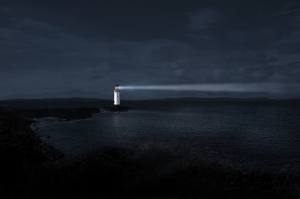
WHEN I read Virginia Woolf’s To the Lighthouse for the first time last year, of course it was the struggles of amateur painter Lily Briscoe that lingered in my mind, and linger still.
Lily’s fears and condemnations (women can’t write, women can’t paint), her sudden revelations, her dreamy habitation of her work during boring dinner conversation – all of these were familiar to me, for of course in writing of painting Woolf was writing about writing.
What I want to talk about today is the quest to discover and fulfill a book’s creative vision. Note that I have not said ‘the writer’s vision’, because it is my experience that any vision is a fragmentary, partially glimpsed, faltering thing, never fully present – certainly never in my possession – until the work itself is complete. And so this potential vision is the space the writer and editor enter together.
Looking back over my experiences of editing, apart from a few striking moments, I find I can’t elucidate what those experiences have taught me. They have nourished me, that is certain, but the details have entered so far into my depths as a writer that when I look for them, all I hear is their echo, like the lotus-leaf imprint left on the surface of the water after a whale dives deep.
What I have learned in the past largely now feels trivial and obvious, and what is most urgent to me now is not what I already know, but what I still need to learn. Any artist, one hopes, is always reaching forward to new knowledge, that insight just beyond their grasp.
Perhaps this inability to articulate what I’ve learned from past edits is to also do with the fragmentary nature of creative knowledge. One learns essential lessons – is even elated by their profound nature – and yet, almost instantly, they are absorbed and replaced by the lost feeling that returns each time as one discovers, yet again, that one does not know how to write this book. One’s work is illuminated for a moment, then plunged into darkness again, over and over.
Ruminating on what has been important to me about editing, I have come to rest on four particular qualities. Perhaps we can think of them each as a brief wash of light, one of those long, steady strokes from Virginia’s lighthouse, to bathe in for a moment and then let pass, until the next time it returns.
The first of these illuminations is the quality of generosity.
My first two novels I wrote in a kind of innocent dream, it seems to me now.
Pieces of a Girl, my first, was a tiny, mysterious and menacing book which, if I had been more conscious of the market or the perils of publishing or What Readers Want, I would never have begun. As it was, I was oblivious to all those things, and wrote this dark little book out of pure instinct, and bewilderment, and a love of language. When I think about it now I shiver, not just for its weirdness, and for how starkly I was displaying my own, but at my own infatuation with the richness and beauty of words. For many years after I wrote it I was ashamed – it seemed so childish, so macabre, so strange.
And yet, it had something. And I’m grateful to it because it introduced me to the esteemed editor Judith Lukin-Amundsen, who sat with me and talked me through what I’d done, and suggested ways to help my odd little book enter the world outside my own imagination. She persuaded me, with her quiet, unerring logic and sensitivity, to remove a dreadful ending I had been convinced was genius itself. And she praised me.
I can’t remember what she said, but I remember that it shocked me, and confused me, and somehow frightened me. And then it made me brave.
I’ve heard it said that writers live on praise. I think this is true, though it feels shameful to admit it, because it seems to imply that we are all desperate conceit and needy self-love.
But what Judith understood, as have other fine editors I’ve worked with since, is that an editor’s praise is not simply about ego-stroking – it’s about ideas. Especially for a first novelist like the one I was, ungainly and shy, with no idea what I was doing, or why, or if I could ever do it again, if I even wanted to do it again, praise of the right kind – which is to say understated, and calm and, most importantly, honest – performs some much deeper task than flattery. The right kind of praise draws a writer out of safety and into abundance, and risk.
Woolf herself put it this way, writing in her diary about the public reception of To the Lighthouse. “What is the use of saying one is indifferent … when positive praise, though mingled with blame, gives one such a start on that instead of feeling dried up one feels, on the contrary, flooded with ideas?”
Another element of an editor’s praise – especially for new writers who perhaps need it the most – is that to a writer of any sensitivity it provides only the smallest counterbalance to the terror of exposure. This is an inexplicable phobia, because exposure is of course also what we most desire.
When Lily Briscoe, mid-painting, suddenly realises Mr Bankes is standing beside her and looking at her work, she is appalled.
She would have snatched the picture off the easel, but she said to herself One must. She braced herself to stand the awful trial of someone looking at her picture. One must, she said, one must. And if it must be seen, Mr Bankes was less alarming than another. But that any other eyes should see the residue of her thirty-three years, the deposit of each day’s living, mixed with something more secret than she had ever spoken or shown in the course of all those days was an agony. At the same time it was immensely exciting. (My emphasis)
It is the generosity of that first viewer’s gaze that makes this last sentence possible. And, when offered honestly, without gush or fizz, an editor’s praise can give rise to more ideas, revived energy, greater courage, and, one hopes, better art.
The second quality I think is essential for both writers and editors is humility.
This is not the kind of self-abnegation one sometimes hears even now in discussions of editing: that seamstressy, handmaideny downtroddenness that surely sucks all richness from the enterprise, and which any self-respecting editor must reject. I don’t want a handmaiden or seamstress as an editor, I want an equal. I doubt Gordon Lish or William Maxwell or Robert Gottlieb or Beatrice Davis or Diana Athill or Hilary McPhee ever thought of their work in such cringing terms, and nor should any good editor.
The humility I’m talking about is a much more textured, creative quality than meekness. It is a humility that allows close, dedicated attention to seemingly small things.
For a writer, this humility might also be a willingness to bow down to the work, to surrender yourself to it. To accept that much of what emerges in your writing is somehow beyond you, that you are not so much its controller as its listener. You need humility to understand that your work will reveal things about you that you might not like, but that if they are true, you must say them.
For Lily Briscoe, the artist’s humility lies in being truthful about the painter she is rather than the one she might wish to be. The spectre of ‘Mr Paunceforte’, the successful painter admired by all, is ever-present in Lily’s mind. In one scene, when she looks at her painting:
She could have wept. It was bad, it was bad, it was infinitely bad! She could have done it differently of course; the colour could have been thinned and faded; the shapes etherealised; that was how Paunceforte would have seen it. But she did not see it like that.
I think all artists have at some stage made this forlorn discovery; I am not like others, and all I have to offer is my own perception. George Saunders put it this way: “You can choose what you write but you can’t choose what you make live.”
How does this necessary humility of the writer translate to the work of an editor? I don’t exactly know, but it is to do with this same particular surrender, an attentiveness to the potential of this book, here, now – that promise lying just beneath the surface to be discovered if only we sit quietly enough, listening hard.
The most important lesson in narrative structure I ever had was from Judith’s copy edit of my second book, The Submerged Cathedral. Every page of that novel was covered in marks, so much so that I believe the publisher’s production editor braced herself for tears from me. But when I saw those pages, I saw a master class in craft. For the first time I began to understand what narrative tension actually was, I began to see how essential momentum was, to any story. I learned that beautiful language is not enough – and worse, that it can sometimes even hamper, or mislead. With that intricately generous copy edit I learned to pay proper attention to all the work my words could do, not just their jeweled surface.
I gather it’s not so fashionable to talk about line editing now. The big splashy stuff is apparently what gets attention – the brute cutting out of characters, the shifting of chapters, the hiving off endings or the point of view switch. What is perhaps too often forgotten, by writers most of all, is how magnificently a manuscript can be improved by painstaking work on the line. This is humble work, exacting and slow. On the line there is no breathtaking gamble or magician’s flourish. Instead it is quiet, demanding, thoughtful labour, word by word by word. And it can transform a book.
The editor and writer Janet Burroway has written about how she managed the suggestion that her novel lose ten thousand words.
“I set myself the task of identifying where I had used one too many images, phrases, sentences. And it was a revelation. I found that I tended to put four instead of the magic three things in a series, that in my eagerness to show, I often described one gesture more than the reader needed. Sometimes I killed a paragraph with an anticlimactic sentence … I ended by cutting the ten thousand words without cutting a whole paragraph anywhere.”
Editors, Burroway said, should not be afraid to ask this of an author, and authors should not be afraid to try.
But line editing is not just about reduction, of course. Jonathan Cape editor Alex Bowler has extolled the abundantly creative possibility of the copy edit.
‘While there’s a perception that it’s the lowest rung on the editorial ladder,’ he writes, ‘There is a rich and serious pleasure to copyediting which goes beyond those of the pedant.”
When an editor has the time, says Bowler – and I would add the humility – to copyedit well, “you develop a unique, intimate knowledge” of the book; “you start to see patterns, structures, traits, secrets, and feel that for a week or so you’re closer than any reader in the world to the strange, alchemic magic that makes a book great.”
Amanda Lohrey told me last year that ‘small unorthodox manoeuvres can have potent effects’. This is an important point, for while the word humility might evoke smallness, its effects can be the opposite: a powerful sense that the book you are working on remains open and dynamic, that the truth one seeks to tell a little more precisely, with a little more force and beauty – all of this potential remains alive and vibrant as sea coral, right up until the printer’s press starts rolling.
As I wrote my third and fourth novels The Children and Animal People I set out with some deliberate aims – greater control of my craft, which was all about the reader, and greater honesty, which was all about myself. By this time I had learned a few skills and it was time to try some things I didn’t know how to do. With The Children that meant an attempt at more heightened drama, less understatement, more visibility. With both books I wanted to risk another thing: a more direct exposure of myself and who I was, without hiding behind the opaque screen of language, a poetic flourish, a lyrical turn of phrase. With help from my editor and other readers, I think my work grew tougher, ruder, sharper. It’s not for me to say whether those books are better than the earlier ones, but I feel I learned a little more from them, from risking new things, and stretching myself. The editorial work on those books was less intricate, more practical. As with a perennial plant, the seeds of earlier edits bore fruit in these books. A diligent student, I had learned my lessons, more or less.
But the artist, as I said earlier, is always seeking something new, groping for something just out of reach. What has satisfied in the past will do so no longer. And so after Animal People, I found myself plummeting into darkness once more, into the inchoate, gloomy world of an unformed novel I did not know how to write. What I learned from those other books no longer helped or interested me, as another smudgy, misshapen idea began to form, and crumble, and form again, and dissolve and slowly build again.
When the lighthouse’s beam sweeps around this time, it falls upon the third ideal, a quality I have decided to call imaginative courage.
This is a different kind of bravery than that required to step up and do what you know is needed. I’m told, for example, that editors sometimes find writers’ reputations intimidating, and that the greater the reputation, the more reticent an editor might be. Of course you know what’s needed here: to stand your ground, to query everything your professional instincts tell you to, to graciously exercise your rightful authority.
(As an aside, I would suggest to newer editors, as I have done often to newer writers, that authority will not be somehow bestowed upon you. You have to seize it. Nobody will tell you that now you’re allowed to be confident, and no writer will recognise your authority before you have created it yourself. As Tim Winton has said, confidence is a discipline*.)
The imaginative courage that I refer to here manifests in a spirit of adventure. After years of diligently learning about shapeliness and reader satisfaction and storytelling craft, what I’m edging towards is the nerve – paradoxically, perhaps dangerously – to abandon the reader. For I am surprised to find that what most thrills me as a reader these days, is … well, mess.
Not any old mess, I hurry to point out. Not unconsidered mess, or mess born of ignorance or laziness, or blind inexperience. I’m talking about a structural and creative wildness, and the imaginative courage on both editor and writer’s part, to find it.
It’s much safer of course to remain in the realm of the known, the orderly. The refuge of narrative arcs and rising tensions and resolutions and What Readers Want. But there are so many books, and so little time, and when a writer stays in this refuge against their will, it becomes a cage.
As a point of reference, let’s look at To The Lighthouse, a most bizarrely designed book. The novel is like two rooms of almost equal size and space, joined by a dark, strange corridor – a section called Time Passes, in which nothing happens in an empty house, and the death of the main character occurs in a sentence, after the fact, in parentheses. It is breathtaking, shocking, thrilling.
I think also of the stories of Alice Munro, which so often move towards a shapely, inevitable, satisfying form – and then spring a leak, or sprout a new branch, moving beyond all reader expectation to another, more difficult and more rewarding plane of revelation.
Recently I was jolted by Joyce Carol Oates’ terrifying novella The Corn Maiden, which similarly moves with swift, compelling inevitability towards resolution – and then takes a jarring left turn and as one reviewer said, “We find that the true ending lies somewhere unexpected, and that it makes the characters whole. “
Closer to home, I have been thrilled by the almost anti-narrative stance of three completely different novels: New Zealander Emily Perkins’ The Forrests, with its stunning leaps through time and intimate sensation, our own Alexis Wright’s The Swan Book, with its dreamlike arcs and swoops, and the immensely restrained debut, Letters to the End of Love by West Australian Yvette Walker, in which three pairs of lovers write elegiacally to one another, with only the faintest, allusive connecting thread between them. All these novels showed me things I had never seen, and the visions were made possible not despite but because of their departures from conventional expectations of what a reader ‘wants’.
In 2011 the erratic, sometimes brilliant Jeanette Winterson said this:
“Editors have become linear and timid. They worry about how things follow and Emma Bovary’s eyes change colour unexpectedly, and no one minds. As Virginia Woolf wrote, “all my facts about lighthouses are wrong”. So there is wrong that is right, and that is better than rigid rightness that is wrong … I would like to see zest for difficulty making a comeback. Must we always be transparent?”
The painter Georges Braque said the function of art is to disturb, while David Simon, creator of the operatic television series The Wire, put this rebellion more crudely:
“My standard for verisimilitude is simple and I came to it when I started to write prose narrative: fuck the average reader. I was always told to write for the average reader in my newspaper life. The average reader, as they meant it… knows nothing and he needs everything explained to him right away, so that exposition becomes this incredible, story-killing burden. Fuck him. Fuck him to hell.”
Now, I want to be clear that I do not advocate contempt for the reader; nor, I think, despite his vehemence, does Simon. Indeed, these words are a call to respect the reader – to invite her work harder, for deeper satisfactions than the tinsel on the surface of a work. I think Simon’s words were a cry against art as mere entertainment, a frustration with stories that must always please, never confuse or frighten or shock except in the most generic, prurient ways.
The more I go on, the more I am convinced that a great book is the one which leads its readers away from the worn path of what they already know, to a wild and unfamiliar place where new logics and understandings can take hold. But of course there is nothing new in this – it really is only what any gifted editor has always known: that each book is its own wild creature, and that sometimes it is in disorder and inconsistency and ambiguity where the greatest art lies.
But how is a writer or an editor to recognise which kind of mess this manuscript might be? Whether this chaos before them is the untidiness of great art, or simply the disarray of the unresolved, the lazy, the incompetent?
Well, I don’t know. I do know that greatness is not correlative with experience, for an experienced writer is perhaps even more likely to fall back on what they already know, what has worked before. I also believe most strongly that even greatness must be questioned, interrogated, sculpted, distilled. All writers should be pushed, and challenged, if we are to keep reaching for something beyond what we know we can do. For competence, as Michelle de Kretser noted in The Lost Dog, is the enemy of art.
And so we fall back into darkness, to ponder this question – how does one navigate the line between dull reader ‘satisfaction’ and potential reader exhilaration, and where is the path towards that knowledge?
I have one last quality to consider tonight.
Of his long career, the legendary editor and exquisite novelist, William Maxwell, observed this: “After forty years, what I came to care about most was not style, but the breath of life.”
The breath of life: that virtue of naturalness, of suppleness, or spaciousness of prose, the one Italo Calvino, in the first of his famous lectures, Six Memos for the Next Millennium, called Lightness.
“My working method,” said Calvino, “has more often than not involved the subtraction of weight … above all I have tried to remove weight from the structure of stories and from language.”
Importantly, he makes this distinction: “Lightness for me goes with precision and determination, not with vagueness and the haphazard.”
Similarly, when I think of the breath of life I am not calling for an editor to stay out of a text. I know, from that long-ago copy edit, how what might at first appear a heavy editorial hand can in fact untether a work from the burden of its own prose, softly and steadily unclipping the moorings, removing weight, so that in the end the writing is indeed set free.
And yet, at the same time, one does need to intuit when to step back, and let a work move in its own loose and lovely way. To recognise when the breath of life is already present, and where there may be danger of suffocation with rules and pedantry.
But what can any of this mean for an editor who is not working with Calvino or Woolf or Maxwell, or Munro or Wright? What relevance can these virtues possibly have for those of you toiling on a cookbook, for example, or a cricket tome, a romance novel or political memoir?
Well, funnily enough I think these ideals still hold. In any work, I believe, an editor who is alert can find opportunities to practise them: the generosity of fully entering into the work with the writer. The humility of paying close attention to its sentences and heart. The imaginative courage to challenge the writer just a little more, to trawl for a more original solution than the ones you have always offered before. And to seek out and encourage – or simply allow, in any work – the breath of life.
Now, with those steady circling strokes of the lighthouse, we return once more to Lily, on the lawn, with her painting. Ten years from when she first began, she starts again. And then finally:
With a sudden intensity, as if she saw it clear for a second, she drew a line there, in the centre. It was done; it was finished. Yes, she thought, laying down her brush in extreme fatigue, I have had my vision.
It is striking in Woolf’s novel how Lily’s final declarative line is in fact the one she has always instinctively known is needed, but only in that last second can she glimpse how it can be drawn.
At the start I talked about how for me a book’s vision so often only coalesces in those last days, as the work is completed. Like Lily Briscoe, I have often found completion to involve a final seizing of some resolution that has always been present but only dimly, in the foggiest corners of my mind.
It is in the company of a skilled editor’s meticulous attention to the fine grain of a work – not the last book, not another book like it, but this one – that writer and editor together might uncover and mark that precious resolving line, and with it bring the book, finally and fully into the light.
This is an edited version of the keynote speech delivered at the Residential Editorial Program, Varuna House, Katoomba, on 5 May 2014
REFERENCES

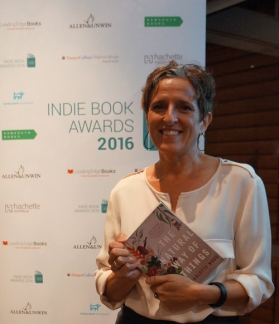 Just before that Richard and I were celebrating Australia’s independent bookselling scene, because our beloved indie stores yesterday chose my novel


 Hello friends. It’s the first cool day of late summer here in Sydney today. It’s kind of nice, even for a heat-loving old girl like me. So I’m thinking about changeable weather and new seasons.

![photo 2[2]](https://charlottewood.files.wordpress.com/2013/12/photo-22.jpg)


![photo 1[2]](https://charlottewood.files.wordpress.com/2013/12/photo-12.jpg)
![photo 3[2]](https://charlottewood.files.wordpress.com/2013/12/photo-32.jpg)


 How to shuck an oyster