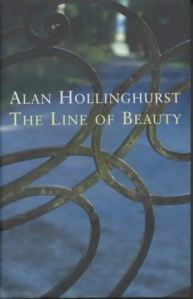
 I’m loving The Line of Beauty, immersing myself in it at last after having avoided it for years because of Booker hype (how many of us, do you think, are turned off rather than on to a book by literary prize hoohaa?). But I’m having that thrill of discovery of a writer one instantly loves, knowing there are more of the author’s books lining up after this one to be enjoyed.
I so admire Hollinghurst’s psychological precision and the superfine texture of every passing moment. Tricky to pull off for long without making the prose drag, but right now it’s making me see how lumpen and heavyhanded are my own clumpings through scenes, and is particularly instructive for the novel I’m working on at the moment, which I now realise demands a much, much finer net in which to haul along its catch, if that makes any sense at all.
Anyway, of course this novel is all about class, being set in Thatcher’s England, when the young protagonist Nick is coming gloriously, though secretively, into his new love life as a gay man. He’s staying with family of his old Oxford friend Toby Fedden, Toby’s father being the up-and-coming parliamentarian Gerald. I am only a quarter of the way in, so have no idea what’s to come, but am loving the writing itself so much that I hope it takes a long time to unfold. But as Nick’s ultra-rich Tory hosts aren’t entirely aware that he’s gay, and his lover Leo is black and working class, I predict trouble at mill.
Last night I came to this passage about a long, ghastly dinner party full of homophobic old politicians, uptight matrons and pretentious upper-class claptrap. The beast in question comes from a family estate, prepared by the family’s ‘help’, Elena, in the afternoon and then served at dinner by pompous Gerald.
Elena hurried in from the pantry with the joint, or limb, of venison, plastered up in a blood-stained paste of flour and water. The whole business of the deer, culled at Hawkeswood each September and sent to hang for a fortnight in the Feddens’ utility room, was an ordeal for Elena, and an easy triumph for Gerald, who always fixed a series of dinner parties to advertise and eat it. Elena set the heavy dish on the table just as Catherine came down from her room, with her hands held up like blinkers to avoid the sight. ‘Mm - look at that, Cat!’ said Badger.
‘Fortunately I won’t even have to look at you eating it,’ said Catherine; though she did quickly peer at it with a kind of relish of revulsion.
…. [later]
When the venison came in Gerald yapped, ‘Don’t touch the plates! Don’t touch the plates!’ so that it sounded as though something had gone wrong. ‘They have to be white hot for the venison.’ The fact was that the fat congealed revoltingly if the plates were less then scorching. ‘Yes, my brother-in-law has a deer park,’ he explained to Morden Lipscomb. ‘A rare enough amenity these days.’ The guests looked humbly at their helpings. ‘No,’ Gerald went on, in his bristling way of answering questions he wished someone had asked, ‘this is buck venison … comes into season before the doe, and very much superior.’ He went round with the burgundy himself. ‘I think you’ll like this,’ he said to Barry Groom, and Barry sniffed at it testily, as if he knew he was thought to have more money than taste.
 Another taste of food-in-fiction from the superlative
 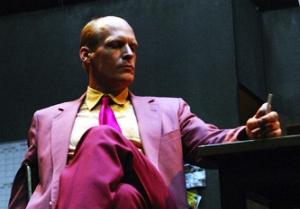 The show is hard to describe, but anything that keeps one riveted for seven hours, with only two 15-minute and one 1-hour break, is a feat of wonder. It’s a stunning reading of the entire book by one spectacularly talented chap, Scott Shepherd as Nick Carraway, along with a supporting cast of 12 including the elusively beautiful Jim Fletcher as Gatsby (pictured). And it’s also got another wordless story running along beneath it, of the futile melancholy of office life - but that is another story. The originality and wit of the direction makes this an inventive, gloriously playful, surprising and - when it should be - desperately sad production.
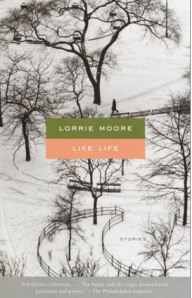 In Lorrie Moore’s story Two Boys (Like Life, 1990), the protagonist Mary compares the two men she’s unhappily involved with.
 This week, happenings in the lives of others have reminded me about the beauty of a compassionate act in the face of an unbearable thing … a dying friendship, a ghastly stranger, a rejection, an illness, a death. Back on the first aid food track I guess, food being such a simple way of making an offering - peace, sorrow, love. After I wrote the
 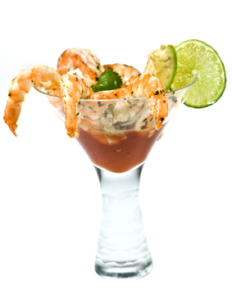 When my novel The Children came out I received several very gratifying emails from readers who particularly liked the family barney in the fictional country town of Rundle’s RSL Club restaurant, which featured an escalating argument between two adult siblings, Mandy and Stephen, sparked by a dish on the menu described thus: ‘Adriatic Salad: Cajun prawns, sweet potato, snow peas and lime mayonnaise.’
  subscribe