Archive for the ‘herbs & spices’ Category

h1

How to make a vegetarian smile, pt II

September 17, 2010

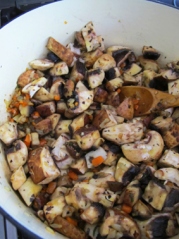
The last entirely vegetarian dinner party I cooked was a wintry little number, but very satisfying, with a few nicely contrasting elements I think. The mainstay was a mushroom ragu served on creamy polenta, paired with a side dish of a punchy green salad with lentils & goat’s cheese.

There are a couple of things that made this work well. First, both the ragu and the lentils used the roasted vegetable stock, as I described ages ago here. This time though, I took a leaf out of Skye Gyngell’s book - her secret flavour weapons often include tamari sauce and maple syrup, so I added a tablespoon of each to the reduced stock. I swear this little combo, while not leaping out as separate flavours, really gives a layered depth and complexity to the stock.

Next was the assortment of mushrooms. I used about 600g of combined chopped Portobello, field and Swiss brown mushrooms, and later added - importantly - a good tablespoon’s worth of dried porcinis to the mix. Again, this gives a big hit of rich flavour.

Mushroom ragu with creamy polenta

  • 4 tablespoons olive oil
  • 1 medium onion
  • 1 medium carrot, peeled and finely chopped
  • 4 cloves garlic, chopped
  • 1 stalk celery, chopped
  • 600g chopped fresh mushrooms
  • 1 x can peeled tomatoes
  • 1 cup red wine
  • 1 cup roasted vegetable stock
  • 10g dried porcini, rehydrated & chopped
  • 2 bay leaves
  • 2 sprigs thyme
  • 1 sprig rosemary
  • Salt and freshly ground black pepper
  • grated Parmesan, to serve
  1. Heat oil & add celery, carrot, onion, garlic and some sea salt, sauté until soft.
  2. Add a good big knob of butter & a little more oil, turn up the heat and - gradually, in batches - sauté the fresh mushrooms with the mirepoix over a high heat until the mushrooms lose most of their moisture and are nicely browned.
  3. Add wine, tomatoes, stock and herbs and bring to the boil, then turn down to a simmer.
  4. Add the chopped porcini and liquid to the sauce.
  5. Stir, then simmer uncovered for around 30 minutes (or even up to an hour), till the sauce has reduced and thickened, adding another good slug of oil if it looks too watery. Add stock or water if at any stage it becomes too thick.
  6. Season with salt and freshly ground pepper.
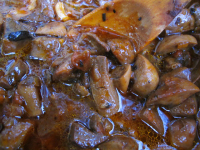
Not long before you’re ready to serve, make the creamy polenta - this is dead simple, as described here, but does take a little time. Just do the onion & milk bit ahead of time, and if you need to, have your guests chat with you in the kitchen while you stir.

Spoon the polenta into shallow pasta bowls, and top with a heap of the mushroom ragu (add a tiny swizzle of olive oil at the last second, if you dare), and sprinkle with Parmesan at the table.

Green salad with lentils & goat’s cheese

This zingy little salad can be made completely ahead of time and simply dressed & tossed just before you eat.

1. Sling half a cup of puy lentils into a pan of hot vegetable stock, and simmer for 20 minutes or till tender. Drain and return to the pan with a splash of olive oil till ready to assemble the salad.

2. Have some slow-roasted tomatoes (scroll down on the Essential Ingredients page) ready to go.

3. When you’re ready to serve, toss some good green salad leaves (specially good with some texturally springy ones, like curly endive and radicchio as well as soft lettuce) together with the scattered lentils and tomatoes in a bowl with a dressing of three-parts good extra-virgin oil to one-part best-quality balsamic vinegar. Then tear up some marinated goat’s cheese (or even better, your homemade labneh!) and toss it into the salad in chunks. Serve in a bowl at the table.

Sweet ending

For dessert, I can’t recommend this whole orange cake highly enough - and because it’s made with almond meal instead of flour, it gives your guests another dose of good nutty protein. Serve it with some more yoghurt or cream on the side. Another almondy option is a frangipane tart, and although I haven’t made this particular one, there is a beautiful-sounding recipe here. Otherwise, I’d go for some other fruit-based dessert.

So there you have it - a simple but I think nicely varied vegetarian dinner menu for four, with heaps of punchy flavour and texture, and also providing a reasonably diverse mix of protein, dairy, carbohydrate and lots of other goodies.

I would love to hear comment from our vegetarian visitors about how this combination might be improved - and as well, keep your ideas for zingy vego dinner party dishes coming.

V
h1

You borlotti beauty

August 8, 2010

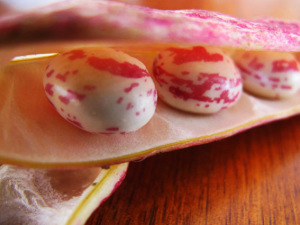
At the risk of having to rename this blog Purely Pulses, I have to tell you about my first encounter with fresh borlotti beans. I am a big fan of the dried variety - and the canned - but until now I’ve never tried cooking fresh ones. But the other day I spied some in the grocery and couldn’t resist their splotchy raspberry-swirl stockings.

Today I did a test run at lunch with buddies - and am happy to say they made the grade and I officially declare them my New Favourite Thing in the World for this week.

After podding (or shucking! can we say that about beans?) the borlottis from their slinky pink sleeves, I chucked them into boiling water for about 20 minutes and drained them. Then, while they were still hot, I bashed them about a bit with a wooden spoon and then tossed them into a pan in which I had just crisped some exceptionally good bacon, plus a good handful of finely chopped parsley and a clove of minced garlic.

Into a bowl they went, with a generous slurp of Moon Over Martinborough‘s luscious extra virgin olive oil (which I bought online from NZ after reading this lovely post here and am absolutely loving sloshing around in every veg dish I can at the moment), loads of sea salt and juice of about half a lemon.
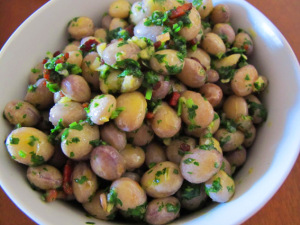
Seriously good result. The fresh beans have a much nicer texture than the canned ones, which can be a bit sludgy, and I reckon the freshies have a beautifully delicate colour too (the canned ones do tend toward a depressingly old-ladies’-underwear hue, don’t you think?).

And if you think the finished dish rather resembles a great many other legume side dishes you’ve seen on this blog, well - you’re right. But it can’t be helped - too much legume love is never enough round these parts.
Now, while I’m here, I wish to draw your attention to the lovely folk at Feather & Bone, providers of the above-mentioned free range bacon and lots of other meaty goodies we chomp our way through in this house.

Ever since I bought our divine Christmas ham from them last year on the recommendation of Empress Clifford-Smith, Feather & Bone have basically become the guardians of my conscience when it comes to eating animals.

Until I turn vegetarian (will that day ever come, I wonder) I try to do the next best thing, and support farmers who treat their animals as humanely as possible, as well as doing all they can to care for the land in a sustainable way. And what with the whole free-range/organic labelling confusion and misinformation that goes on, the only way I know that I am really doing the best I can by the creatures is to buy from Laura and Grant at Feather & Bone. They do all the research, all the inspecting of the farms and the buying of produce from very carefully selected farmers, based not only on the ethical treatment of animals but just as importantly, the quality and flavour of the meat - and believe me, they know their stuff. To boot, the glorious goodies are delivered to your door if you wish. What’s not to love?

But you don’t just have to take my word for it - the great news is that just this month, Feather & Bone have been named Delicious magazine’s Outstanding Supplier of the Year. So congratulations to Grant & Laura from me and all who have dined on your efforts in this house. For readers living in Sydney, I can’t recommend F&B highly enough. And we shall be celebrating tomorrow night by roasting a couple of delectable Feather & Bone chooks for Senor’s birthday dinner. Cheers!

h1

A bit on the side: roast cauli & chickpea salad

July 21, 2010

The other day, with a whole heap of folks coming to dinner, I had one of those crises of confidence in which you are suddenly convinced there won’t be enough food.
In our case this is almost always wrong (as indeed it turned out to be this time), but nevertheless the point came during the afternoon before a biggish gathering when Senor and I stood together peering into a huge pot (of Neil Perry’s cinnamon lamb) and asked each other, ‘Do you think there’ll be enough?’

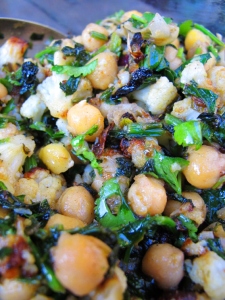
Of course there was. But during that moment of doubt I recalled that in the fridge were a cauliflower and half a bunch of spinach, and the cupboard always has chickpeas. And I had for weeks wanted to try making a version of a delectable simple chickpea, silverbeet & cauliflower number I’d eaten twice now at Bodega (the Surry Hills tapas restaurant which I reckon must have some of the most blindingly delicious and original food in Sydney).

So I gave a version of this salad a try, as a little side dish to go with the tagine and the couscous, and it was not half bad. Next time I’d make the cauliflower florets larger as mine became a little too soft (and the Bodega cauli is deep-fried, I think, rather than roasted), but I have to say the flavour and texture was quite delicious. It’s a perfect quick side dish and chock full of goodness.

Roast cauliflower, spinach & chickpea salad

  • olive oil
  • ½ bunch English spinach, stems finely chopped & leaves roughly torn
  • ½ head cauliflower, broken into smallish florets
  • 1 cans chickpeas, very well drained
  • salt
  • 1 clove garlic, very finely chopped
  • tsp cumin
  • juice 1 lemon
  • few sprigs coriander, to garnish
  1. Break cauliflower into small florets, toss in a bowl with a good few glugs of olive oil till well coated, then spread over a baking tray and roast in a hot oven for around 30 mins or until golden brown.
  2. Meanwhile, heat olive oil over high heat and add drained chickpeas. Add salt & agitate in the pan until the chickpeas are well coated and begin to turn golden.
  3. Remove chickpeas with a slotted spoon to kitchen paper.
  4. Finely chop the spinach stems and add to the hot oil, fry till the pieces begin to crisp. Turn off the heat and add the leaves until they wilt.
  5. Gently mix the chickpeas, roasted cauliflower and spinach with the garlic in a bowl. Add the lemon juice and cumin, adjusting to taste.
  6. Serve with a little chopped coriander to garnish.

And now, friends of the oyster, I am taking a fortnight away from blogging - am off to a writing retreat to try to finish my novel. See you soon!

h1

Dusky secret: the power of porcini

July 15, 2010

You know those slightly unusual ingredients that give a layer of extra flavour and complexity to any dish they’re in?
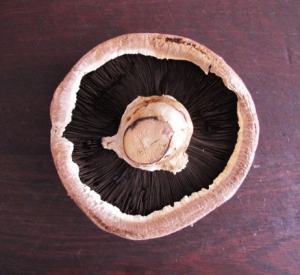
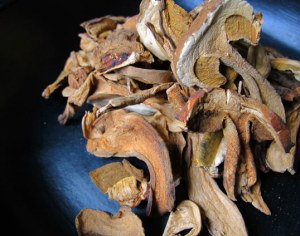
Well, I think the porcini mushroom - Boletus edulis - is one of these, and certainly deserves its own entry on the essential ingredients page. Apart from being lovely to look at, they’re earthy in flavour, silky in texture, store well and have a cooking aroma to die for - which in my book makes them a perfect zing-thing pantry staple.

I’ve used both dried porcini and the frozen fresh variety, but the frozen seemed to have only about as much flavour as a good fresh mushroom, whereas the dried really pack a punch (if you are very keen, there’s a long discussion about the comparative flavours here).

The way to use the dried porcini, of course, is to toss them into a cup with a little water to rehydrate, and then chop roughly to throw into any ragu or mushroom dish. I use them in mushroom risotto along with other fresh ones, but lately I’ve also used them a couple of times in this very luscious duck ragu.

From what I can tell a typical Italian ragu is basically any Bolognese-type meat sauce for pasta, cooked as slowly as possible depending on the meat you choose.

I made this ragu by combining elements of this recipe from The Cook and the Chef (oh, how I miss them!) and this one from Mario Batali. Duck legs can be hard to find; I’ve made this both with fresh duck meat from the wonderful peeps at Feather & Bone and with confit duck legs from the butcher - either way it’s delicious. (If you use the confit, just shred the meat, put it into the sauce after it’s been cooking for a good hour and warm the meat through. I left it for a couple of hours to absorb the flavour of the sauce.)

This is quite a simple but decadent dish to serve when you want something fancier than spag bol. And with the addition of the mushrooms, it becomes even richer and more velvety. What’s not to love?

Duck ragu with porcini

  • 4 duck legs and thighs, skin removed
  • 4 tablespoons olive oil
  • 1 medium onion
  • 1 medium carrot, peeled and finely chopped
  • 4 cloves garlic, chopped
  • 1 stalk celery, chopped
  • 1 bottle red wine
  • 2 x cans tomatoes
  • 1 cup chicken stock
  • 30g dried porcini, rehydrated & chopped
  • handful chopped fresh field or other mushrooms
  • 2 bay leaves
  • 2 sprigs thyme
  • 1 sprig rosemary
  • Salt and freshly ground black pepper

  1. Remove as much fat & skin as possible from the legs & discard, then remove meat from the bones & chop into small pieces.
  2. Heat oil & add celery, carrot, onion, garlic and some sea salt, sauté until translucent. Add the bones from the duck.
  3. Add wine, tomatoes, stock and herbs and bring to the boil, then turn down to a simmer.
  4. In a separate pan, heat some oil and add a pinch of salt and sauté the duck meat till lightly browned, and just cooked. Set aside.
  5. In the same pan, fry the chopped fresh mushrooms till liquid has evaporated, then add these and the chopped porcini and liquid to the sauce. Stir, then simmer uncovered for around 30 minutes or till the sauce has reduced by half.
  6. Remove the bones, add the duck meat and cook over low heat for another 20-30 minutes or until the meat is tender and the sauce is thick and rich. Add stock or water if at any stage it becomes too thick.

Serve with rigatoni or papardelle or other boofy pasta, plus grated Parmesan or Pecorino.

Have you used porcinis in other ways? Do tell …

h1

A paean to the pea

July 6, 2010

Regular visitors to this blog will know that I am an avid fan of the legume (see here, here, here and here, just for a few examples).

And those of us who love the legume have good reason. The Asia Pacific Journal of Clinical Nutrition points out here that a diet high in legumes, indeed, is “the most protective dietary predictor of survival amongst the elderly, regardless of their ethnicity.”

This same study goes on to report that:

“the significance of legumes persisted even after controlling for age at enrolment (in 5-year intervals), gender, and smoking. Legumes have been associated with long-lived food cultures such as the Japanese (soy, tofu, natto, miso), the Swedes (brown beans, peas), and the Mediterranean people (lentils, chickpeas, white beans).”

Given all this and the fact that my (cough) birthday is around the corner, I think the time is right to declare my adoration for the humble frozen pea.

What’s not to love about this little green baby? It’s virtually instant food, packed with nutritional goodness (unlike soggy, sodden canned ones - ugh), and so versatile. Chuck half a cupful into soups and curries, mash them up with a little with olive oil and prawns in linguine, puree with roasted garlic to serve under pan-fried fish, mix steamed peas with chopped bacon or pancetta, mash peas with some pecorino and olive oil (and broad beans!) and pepper to serve on toast.

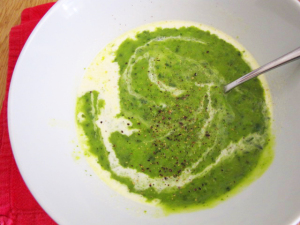
I know you legume-lovers must have your own ideas of pea perfection, so do share … Meanwhile, here is a very simple minted pea and lettuce soup I made on the weekend. The flavour is sweet and fresh, the texture velvety, the colour is gorgeous and (perhaps because the pea, I believe, is a complex carbohydrate?) this soup is surprisingly filling.

Minted pea soup

Serves 4-6

  • olive oil
  • 1 leek, finely chopped
  • 3 cloves garlic, chopped
  • 2 baby cos lettuce, thoroughly washed & roughly chopped
  • 400-500g frozen peas
  • pinch sugar
  • 1½ cups chicken (or vegetable) stock
  • ½ bunch mint
  • salt & pepper
  • dash cream, to serve
  1. Sauté leek & garlic till soft.
  2. Add shredded lettuce & peas to the pan with sugar and a little of the stock.
  3. When lettuce and peas are soft, remove to a food processor and puree till smooth, adding mint and as much stock as needed for a smooth mixture.
  4. Return mixture to pan and gradually add the remainder of the stock until the soup is the thickness you like (as water if still too thick) and season to taste.
  5. To serve, add a spoonful of cream to the base of each bowl, then add the soup and swirl cream through.

h1

A fine kettle of fish

May 23, 2010

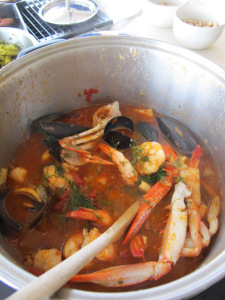
Sunday lunch in winter is a very fine thing, and a big pot of shellfish stew has gotta be up there as one of the easiest ways to make it happen. I don’t think I’ve ever made a proper bouillabaisse according to a recipe, but over the years various versions of this fishy number have made their way to our table.
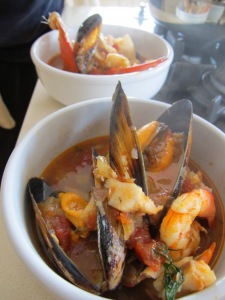
Great for a crowd or just few, as we discovered today it must also be one of the easiest meals to take to someone else’s place - just make the stock base at home, stick it in a container, then throw it in a pot with the seafood five minutes before you’re ready to eat. The prawn stock is the important bit. This quantity makes a hefty bowl for four.

Ingredients

  • 12 large prawns
  • 1 small fennel bulb, roughly chopped
  • 1 leek, finely chopped
  • 3 cloves garlic, finely chopped
  • 1 stick celery, chopped
  • splosh white wine
  • 1 can diced tomatoes
  • 1 litre chicken stock
  • 3 strips orange peel
  • few threads saffron
  • pinch dried chilli flakes
  • ½ kg black mussels, cleaned
  • ½ kg perch or other firm white fish, cut into 4cm chunks
  • 1 blue swimmer crab, cleaned & quartered
  • 1 tablespoon chopped fresh dill
  1. Peel & devein prawns, leaving tails on and setting aside the shells & heads.
  2. Heat oil & toss in shells & heads, stirring over high heat till pink, then add leek, fennel, garlic & celery and stir till softened & starting to caramelise.
  3. Deglaze with the wine, then add stock.
  4. Remove as much of the prawn shells & heads as much as you can using tongs - but if a bit of leg or shell remains, what’s a smidge of crunchy crustacean between friends?
  5. Add tomatoes, saffron, orange peel & chilli flakes. Bring to the boil and simmer for around 30 minutes.
  6. A few minutes before you’re ready to eat, add the fish and cleaned seafood and turn the heat to low or even off.
  7. Check for seasoning, serve in big bowls with a drizzle of olive oil.

Make sure you have some great bread for dunking. Today our family from the beachside burbs provided some incredibly good sourdough baguette from Iggy’s Bread in Bronte - I’d never heard of this guy before today, but he’s obviously the business.

And if you have any other fishy stewy recommendations or ideas for giving this version some extra zing (a la a splash of Pernod), I’m all ears…

h1

Purple reign

May 19, 2010

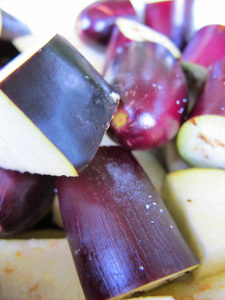
Aren’t aubergines beautiful?

I routinely wish for a luxury garment in that exact glossy colour, and have never found anything near it. The search goes on …

Winter has finally arrived here. Last weekend while staying at our friends’ cocoonish beach house (thankyou Caro & D…) I revisited Neil Perry’s recipe for ‘Cinnamon Scented Lamb’ casserole, of which eggplant / aubergine is a central ingredient. The recipe is a corker, from that big fat white book of his (and theirs) called Food I Love. I don’t yet have it, but it does have an awful lot of good things in it and I think it must go on my list.

Not only because I love pictures of aubergine, but also because it is a very good recipe, I’m sharing here a very slightly adapted version of Mr Perry’s dish, which is full of those irresistible Middle Eastern flavours. This quantity is quite generous for seven or eight, I’d say.

Ingredients

  • 1.5 kg lamb shoulder, cut into chunks
  • 2 solid small aubergines, cut into large chunks
  • 6 baby aubergines, thickly sliced into rounds
  • salt
  • olive oil
  • 4 tablespoons currants
  • 4 tablespoons red wine vinegar
  • 1 brown onion, halved & then sliced
  • 4 cloves garlic, finely chopped
  • 1 can diced tomatoes & juice
  • 1 small red chilli, split
  • 1.5 cups chicken stock
  • 2 tsp turmeric
  • 2 tsp cumin
  • 2 tsp ground coriander
  • 2 tsp cinnamon
  • juice 1 lemon
  • ½ bunch chopped mint
  • ½ bunch chopped coriander

Method

  1. Sprinkle the aubergine generously with salt and leave for half an hour. Then rinse salt and any liquid away, and dry eggplant with paper towel or clean tea towel.
  2. Soak currants in vinegar in a cup or bowl.
  3. Using a cast iron cassserole or heavy pot, fry eggplant in batches in hot olive oil until golden on both sides; remove & drain on paper towel.
  4. Add lamb pieces to the pan in batches over high heat till lightly browned; set aside.
  5. Fry onion & garlic till soft, then add tomatoes, currants, chilli, spices & stock, return lamb to pan and bring to the boil, then simmer gently for 1 to 1.5 hours or till lamb is very tender.
  6. Return cooked aubergine to pan along with lemon juice & seasoning, and stir to combine. When well combined, remove from heat and add herbs.

This dish is great served with plain couscous (or rice) and steamed green beans.
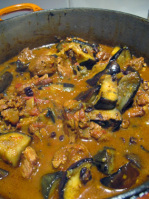
While winter evenings are fab for cooking, not so great for photography - but here’s a pic of the casserole anyway to give you an idea. Shame about the lack of natural light … it actually looks much more luscious than this in real life.

Anyhoo, if you’re a meat eater, I urge you to have a go with this one. And I think I might have a crack at a vegetarian version too, with chickpeas - do you think that would work?

h1

Secrets of a corn star

February 22, 2010

Every time I opened the fridge door on Saturday I was accused by three shrinkwrapped corn cobs bought two weeks ago. Food waster! Abandoner! they cried, in their tiny little corny voices.
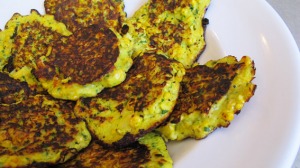
They were a teeny bit worse for wear, and it was lunchtime, and I was home alone. The thought of eating three corn cobs there and then didn’t appeal. But corn fritters did. I checked a recipe and then made my own version according to what I had in the house - using yoghurt instead of ricotta cheese and rice flour instead of ordinary flour. And they were pretty darn good! I ate several and froze the rest.

Then Sunday morning, when Senor was hankering for something luxurious, I whipped up the most fab breakfast in minutes (I was sooo Bill Granger - shame about the non-matching teeth): into the pan went the corn fritters, a few shreds of proscuitto; half a chorizo sausage, thinly sliced; leftover roasted tomatoes. I think it may have been the best breakfast I have ever made.

Corn fritters

  • 3 cobs corn kernels
  • 4-5 tablespoons rice flour
  • 1 tablespoon yoghurt
  • 1 handful each finely chopped basil, parsley, chives
  • 2 eggs
  • 1/2 teaspoon chilli flakes
  • salt & pepper

1. Shuck the corn (don’t you love that word?) by standing the cob on its end and running a knife sharply down the side.

2. Mix everything in a bowl, adjusting the flour if it gets too watery (it does look unnervingly runny, but that doesn’t really matter in the end).

3. I threw two-thirds of the mix in the food processor and pulsed just a couple of times to get a rough blend, then returned to the bowl.

4. Heat some oil in a non-stick pan over med-high heat and cook the fritters in batches. Depending on the amount of oil you use and the runniness of your mix, the texture tends more to the pikelet than fritter, but either is delicious.

5. Drain on kitchen paper before serving.

h1

The incredible lightness of bean

February 10, 2010

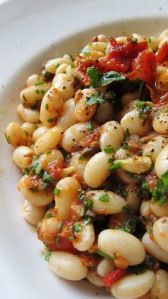
The other night Senor and I went with Sister & Beau to the very good Da Gianni Trattoria in Annandale. Great food. And accompanying my delicious lamb was a very fine, very simple white bean & tomato number that I kept yearning for later on. As you know, round these parts we love anything with a pulse - but unlike lots of bean dishes this one was zingy, light and fresh. So I had a shot at replicating it a few days later, and while mine wasn’t exactly as good as the restaurant’s, it was near enough to get the compliments we kitchen kids secretly crave …
Happily, I was able to use some of the slow-roasted tomatoes I had already made (from the home-grown glut, you understand *preen*). You could use canned cannellini beans but one of the best things about this dish was the only-just-tender, firm texture of the beans, and I reckon canned ones could go a bit slushy. So I say live dangerously, do the soaking thing and the result will be much better. I used whatever white dried beans were in the pantry (since I solved my bean dilemmas of yore I have given up caring what the difference may be between navy, cannellini, haricot & so on).

  • 1 cup dried white beans
  • 4 slow-roasted tomatoes (there’s a bit here on slow-roasting - easypeasy, but takes time)
  • 6 anchovies, finely chopped
  • 1 clove garlic, finely chopped
  • juice ½ lemon
  • 1 bunch chives, finely chopped (if you use garlic chives, skip the garlic above)
  • 4 basil leaves, cut into fine ribbons
  • 1 slug best quality olive oil
  • salt & pepper

1. Soak the beans overnight, drain and cook in boiling water until just tender. Drain & cool.

2. Chop the tomatoes as finely as possible without turning to mush.

3. Ditto with the anchovies.

4. Gently toss all ingredients together, adjusting the balance of oil, lemon & salt as you go. Done, and delicious.

h1

Go nuts!

February 6, 2010

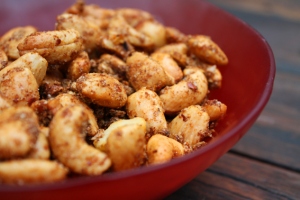
A couple of people have asked me for this recipe, which constituted one of the bits of our Christmas present to family & a few friends. These are totally delicious and very easy, even when I was making ten times the quantity.

It’s a Karen Martini recipe, from that second book, Cooking at Home, one of the better books in my collection (mind you, it may shortly be replaced in my affections by the fabulous-looking Bistro Cooking, by Patricia Wells, which the Empress just gave me!)

I used a mix of cashews, almonds and pecans but you could throw any raw nut in I reckon - these are very good with drinks. We made sure to spend lots of time with family over Christmas so we could eat theirs as well as ours. I packaged them up in cellophane bags and then threw them in the freezer, and just pulled out before giving them away.

Karen Martini’s Spanish-Inspired Spiced Almonds

40g unsalted butter
3 tablespoons extra virgin olive oil
400g large blanched almonds (or a mix of other nuts)
3 large cloves garlic, bruised with the back of a knife
4 tablespoons sea salt flakes
1 tablespoon coriander seeds
2 teaspoons castor sugar
2 teaspoons ground cumin
1 teaspoon dried chilli flakes
1 teaspoon smoked paprika
1 teaspoon sweet paprika
2 pinches cayenne pepper
½ egg white, lightly whisked

Preheat oven to 170 degrees Celcius and line a baking tray with baking paper. Melt butter and olive oil in a large frying pan over medium heat. Add almonds and garlic and stir constantly for 4-5 minutes or until golden brown. Drain on paper towels, discard garlic and put almonds in a large bowl.

Place salt and coriander seeds in a mortar and pestle and grind into a powder. Add the sugar and spices and mix well. Add the spice mix and egg white to almonds and toss together.

Spread almonds on baking tray and toast in the oven for 5 minutes. Remove and cool completely on the tray, then store in an airtight container for up to a week - or in the freezer forever.

Follow

Get every new post delivered to your Inbox.

Join 294 other followers