
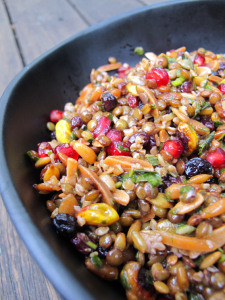
 Have you noticed how certain dishes can end up defining a time or a season in your memory? In our house this seems especially true of salads, and of summer. In the past we’ve had the Summer of Quinoa, and the Summer of Citrus Couscous (the latter remaining the strongest food memory of a road trip we took with dear friends to Perth and back over a decade ago, camping and couscous-ing all the way).
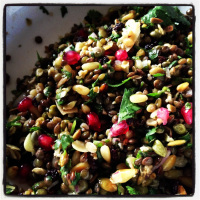
Well this summer of 2012-13 will most definitely be remembered as The Summer of the Cypriot Salad. Or maybe the Jewellery Box Salad, as I’ve come to think of it. It’s so beautifully colourful and baubly to look at, I find myself gazing adoringly at it almost for longer than I spend eating it each time. It’s also become fondly known as the Freaky Salad because it uses freekeh (the nutty and chewy green cracked wheat which can be found in some health food stores, but can be quite difficult to get hold of ).
In my last post I think I mentioned how much we loved Hellenic Republic’s “Kipriaki salata dimitriakon - Cypriot salad of grains, pulses, nuts, yoghurt” that we ate during a visit to Melbourne in December. I couldn’t stop thinking about it even days after we got home; the sign of a great dish, don’t you think?
A hunt around the internet yielded this recipe. However, the ratio of lentils to freekeh here didn’t really match my memory (or preference) so I tweaked it a bit to come up with an ever-changing version that we’ve made over and over. The restaurant version included a dollop of yoghurt and, I think, some cumin, both of which are delicious additions although I have tended not to bother with either over time.
It’s the kind of dish where quantities hardly matter, to be honest, so you will find your own way with whatever you have to hand. The only non-negotiable essential is the puy lentils, I think – and although I have made it without the pomegranate seeds, it is so very much better with them that I’m not sure I’d bother going without. The pumpkin and sunflower seeds are also quite necessary for the salad’s lovely surprising crunch.
This dish has two huge advantages apart from being swooningly good to eat. First, it keeps in the fridge for days and days and days without any noticeable fade in quality, and it is incredibly filling. I discovered just how seriously so for both factors when we made a huge amount for a lunch party and then spent the entire rest of the week eating the leftovers for lunch and dinner.
So here we go – all quantities are debatable; I generally chuck in a handful or so of whatever I feel like. I do prefer a lentil-freekeh ratio of around three to one, even four to one. I find the salad can get a little gluggy if there’s too much freekeh. I have also very often used a handful or two of wild rice in its place, which works just as beautifully and has the added advantage of being fine for gluten-free folk. This quantity should work for at least six people, but don’t quote me until you’ve tested it for yoursel
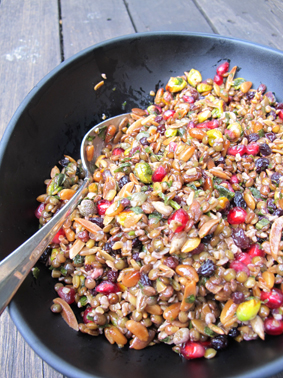 Jewellery Box Salad
viaHellenic Republic
- Juice 1 orange
- Olive oil
- ½ cup currants - or combined currants, dried cranberries, raisins
- ¼ cup capers, rinsed
- 1 cup puy lentils
- ¼ cup freekeh or wild rice
- 1 cup nuts – pine nuts, pistachios, slivered almonds are nice
- ½ cup mixed pumpkin & sunflower seeds
- ½ bunch parsley, finely chopped
- ½ bunch coriander, finely chopped
- Juice ½ a lemon
- Seeds of half a pomegranate
- Salt & pepper
- Soak the dried fruit and capers in the orange juice while you prepare the rest of the dish.
- Cook the lentils and freekeh or wild rice separately in boiling water until just tender – I cook the lentils for about 15 or 20 minutes and the freekeh or rice for longer; you want them to retain a tiny bit of bite while still being properly cooked.
- When lentils are cooked, drain and then immediately sloosh with some olive oil and salt to give a nice glossy coating and stop them sticking. Add the grain or rice when drained and stir well.
- While that’s happening, toast the seeds and nuts in the oven or on the stove top – the usual advice about not looking away applies! If any of them really burn, throw them out and learn your lesson – the bitterness of burnt nuts will taint the whole dish.
- Remove the seeds from the pomegranate making sure to avoid the pith – the easiest method is the satisfyingly violent one detailed here.
- When the nuts are coolish, chuck all ingredients into a bowl and mix gently but thoroughly. Add more lemon juice or olive oil to taste, season well and present with a flourish.
Now your turn - what’s been the defining dish of your summer so far? Any favourites to share?




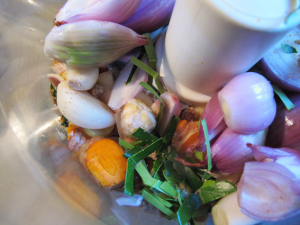 So, into the whizzer went the paste ingredients:
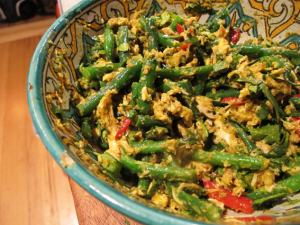 Once the beans were just crisp and refreshed in cold water, I added them to the chicken with about ½ a cupful of thinly sliced red capsicum and the previously browned coconut.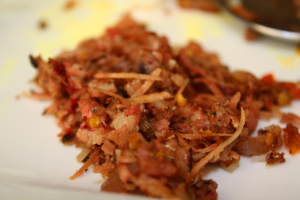
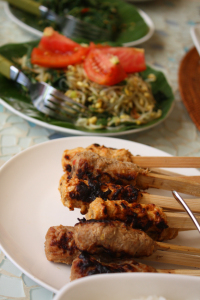 So last time I was here I was off to Bali for a week - and I have to say it was the most relaxing holiday I’ve ever had. We lay around reading, sleeping, swimming, feeling our winter skins slough off in the tropical weather, and generally managed what every holiday is supposed to feel like but hardly ever does - a wonderful rest from ordinary life. Serenity, peace, and stunning physical beauty (Bali’s, not ours - thank your lucky stars I am posting no pics of us around the swimming pool as proof). And, of course, absolutely wonderful food.
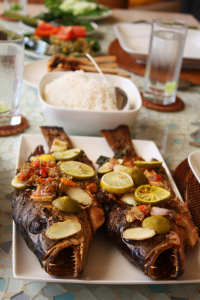 Probably my absolute favourite - among so many good dishes - was a new discovery, a dish called lawar (pictured at the very top). Komang told us his version was made with pork (“but only the skin”), coconut and spices. His was a red colour that I initially thought must be from red rice or just the cooking method, but found no rice in it and learned on our return that this must have been from the pig’s blood, which is often included in this lavish ceremonial dish. But lawar can be made from all kinds of different proteins -
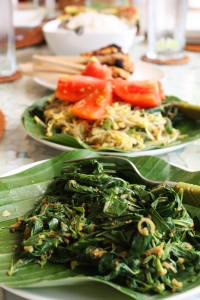 On our return, I tried to emulate some of our favourite holiday dishes in an Indonesian spread for Senor’s colleagues who ran his business so magnificently in our absence - and the pork lawar, indeed, turned out to be the hit of the night with everyone. Sadly I don’t have any photos of it as we gobbled it all too quickly. But I just used pork mince - no blood, you will probably be relieved to hear - mixed with green snake beans and the spice paste and coconut. It had a lovely fresh green and turmeric-orange colour scheme going on, and tasted as fresh and vibrant as it looked.
 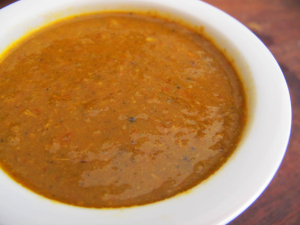 It’s not often that Tim Winton gets together with my mother-in-law and Jared Ingersoll in our kitchen, but that’s what happened this week.
 Does anyone else find themselves eating significantly more meat in winter?
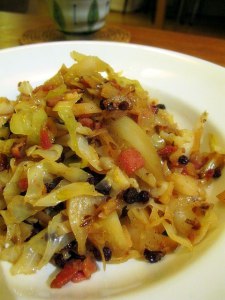 Cabbage with caraway and currants
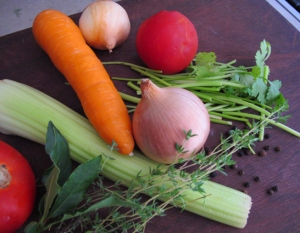 Regaining your kitchen mojo: the chicken stock method
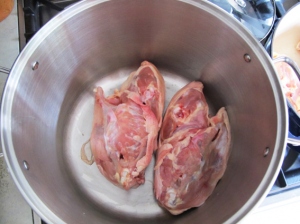 This was partly inspired by my cooky brother-in-law (one of several!) marvelling recently over why people pay good money for tetra-paks of stock full of salt and perservatives when chicken stock was quick and so simple to make. I confessed I was one of these ninnies; I had not made stock for months, and I often use those cartons (my view remains that using packaged stock is pretty far down the list of culinary sins, so I have no problem with it).
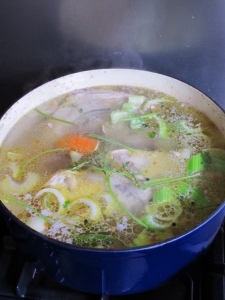 Second, the sensory delight of this little job is immense. For one thing, there’s the luscious smell - our front door was open to the street when I made mine, and I actually saw passers-by stop and peer into my hallway, provoked by the cooking aroma. Then there’s the visual beauty of it - the glistening little baubles of fat separating and rejoining, the gentle steam, the gradual transformation of your wan bunch of ingredients into a potful of golden goodness.
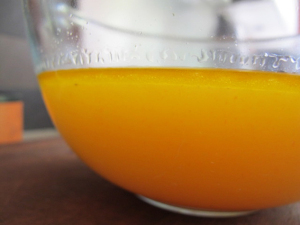 I have mostly made stock by bunging the leftover bones from dinner into a little saucepan with the veg trimmings before the dishwasher is stacked, then simply turned off the heat before going to bed. Recipes are everywhere and recommended simmering times vary anywhere from twenty minutes to four hours, so it’s pretty much a no-brainer, deadset simple thing to do. But I have to say there is a leisurely pleasure in the long-simmered type that doesn’t really shine through so much in the quick apres-dinner simmer. For me, anyway - I welcome dissent on this!
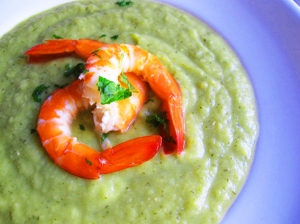 Well, the first real heatwave of the summer hit us with full force on the first weekend in February. I have never felt so hot in my life as I was that Saturday, when the temperature where we were, at beautiful
 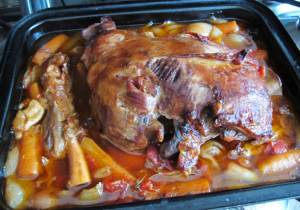 If you’re cooking for a crowd, this all-day, slow-roasted leg of lamb has to be just about the easiest - and most meltingly, lipsmackingly good - way to do it. I’ve adapted this recipe slightly from Patricia Wells’ Bistro Cooking, but there are countless recipes around for similarly slow cooked lamb.
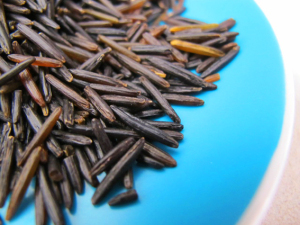 I could spend all day admiring the glossy black spikes of wild rice.
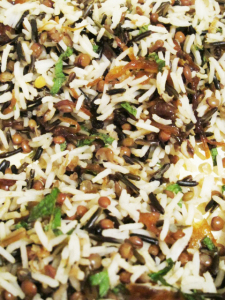 ¼ cup wild rice
 subscribe
 How to shuck an oyster